
Westminster’s controversial Karabakh inquiry threatens fragile Armenia Azerbaijan peace
Akbar Novruz
Read moreIn diplomacy, words matter. So do names. When a British legal body announced an inquiry into the alleged destruction of Armenian cultural heritage in “Nagorno-Karabakh”, the terminology alone was enough to trigger protests in Baku. Azerbaijan insists that no such administrative unit exists. Karabakh, it argues, is sovereign Azerbaijani territory, recognised as such by the United Kingdom and the wider international community. To frame an investigation under a name associated with a defunct separatist entity is, in this view, not a technical slip but a political statement.
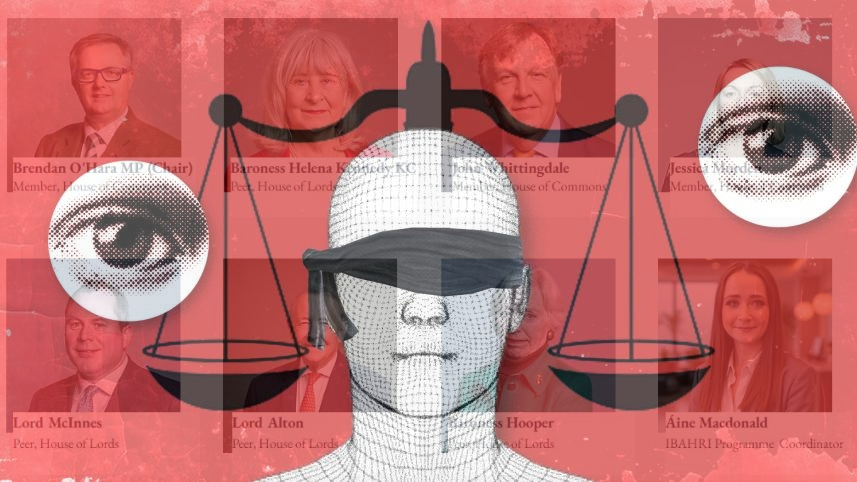
The controversy centres on an initiative launched by the Human Rights Institute of the International Bar Association. The body has announced hearings in Westminster examining claims about cultural destruction following Azerbaijan’s restoration of control over the region. Critics in Baku say the inquiry’s structure betrays its conclusions in advance.
Their argument rests on three pillars.
First, timing. The conflict between Armenia and Azerbaijan has formally ended, and the text of a bilateral peace agreement was finalised and initialled at a summit in Washington last August. Negotiations are delicate but ongoing. Against that backdrop, an external parliamentary-style probe risks being interpreted not as neutral fact-finding but as political intervention. If reconciliation is the stated Western aim, Baku asks, why introduce a process that may harden narratives and embolden revanchist sentiment?
Second, the method. According to Azerbaijani officials and public figures, no state institutions in Baku were formally consulted during the inquiry’s initial phase. Questions circulated by organisers, they contend, are framed in a manner that presupposes violations rather than neutrally seeking to establish facts. Submissions, at least at one stage, were reportedly accepted by email, raising eyebrows about procedural robustness. Fair process is not merely about what is concluded; it is about how conclusions are reached.
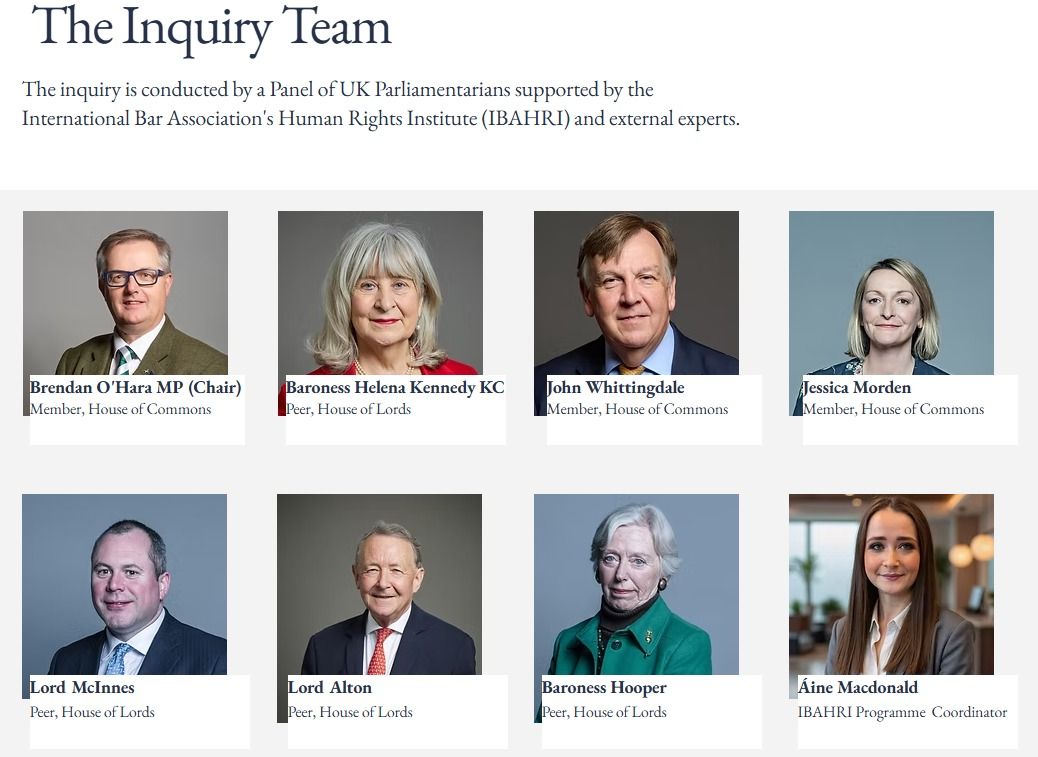
Third, composition. The panel convened in London includes parliamentarians long associated, in Azerbaijani eyes, with strongly pro-Armenian positions. Absent are figures seen as neutral arbiters of a complex post-conflict landscape. At its first hearing, the institute invited a group whose published materials, critics say, present the region’s history through a separatist lens and question Azerbaijan’s sovereignty over Karabakh. To Baku, this looks less like balanced inquiry than curated advocacy.
The irony is that the institute in question presents itself as a guardian of the rule of law and impartial international fact-finding. Its website speaks of objectivity. Yet the perception in Azerbaijan is that law is being instrumentalised, deployed as a lever in geopolitical argument rather than as a dispassionate tool.
None of this erases the genuine sensitivities surrounding cultural heritage in post-conflict zones. Monuments, cemeteries, and places of worship carry emotional weight far beyond their stones. Allegations of destruction deserve scrutiny wherever they arise. But scrutiny gains credibility only when it acknowledges the full historical ledger.
For nearly three decades prior to 2020, vast swathes of Azerbaijani territory were under Armenian control. Baku maintains that hundreds of Azerbaijani cultural and religious sites in Karabakh and Eastern Zangezur were destroyed, altered or repurposed during that period. It also recalls the displacement of hundreds of thousands of Azerbaijanis and the documentation of war crimes. Why, its critics ask, is this chapter absent from the current legal spotlight?
Britain has cultivated strategic partnerships with both Azerbaijan and Armenia and has publicly supported normalisation, especially with Azerbaijan. An inquiry perceived as one-sided risks complicating that posture. It also feeds a narrative, common in parts of the non-Western world, that human-rights mechanisms can be selectively mobilised.
Behind the procedural quarrel lies a larger question about the evolving architecture of international justice. In an era when conflicts end not with signed capitulations but uneasy recalibrations, external actors must tread carefully. Fact-finding that appears to pre-judge facts may entrench rather than resolve disputes.
Azerbaijan’s critics will argue that transparency demands uncomfortable questions. Azerbaijan’s defenders reply that transparency must be even-handed. Between those positions lies a principle that legal institutions ignore at their peril: legitimacy is not asserted; it is earned.
If law is to serve peace, it must avoid becoming another front in the conflict it seeks to illuminate.
Here we are to serve you with news right now. It does not cost much, but worth your attention.
Choose to support open, independent, quality journalism and subscribe on a monthly basis.
By subscribing to our online newspaper, you can have full digital access to all news, analysis, and much more.
You can also follow AzerNEWS on Twitter @AzerNewsAz or Facebook @AzerNewsNewspaper
Thank you!