
Moscow’s dream of return collides with changed South Caucasus
Akbar Novruz
Read moreFor four years, the war in Ukraine has ground on, steadily burying the early bravado that it would be over in days. That claim, authored in Moscow, now reads like a dispatch from a vanished world. Wars rarely distribute gains neatly, but this one has inflicted on Russia a wound that is proving stubbornly incurable: the erosion of hegemony. Power, once lost in public, is hard to reclaim in private.
Since launching its campaign, Russia has watched its leverage drain away across regions it once treated as assured footholds, from Central Asia and the South Caucasus to the Middle East and parts of Africa. Some losses came through overreach, others through distraction. Perhaps Moscow has not stopped talking. On the contrary, it has grown louder, as declining powers often do. The latest refrain, periodically resurfacing over recent months, is that Russia will, or must, "return" to the South Caucasus.
The idea was aired most bluntly by Alexander Dugin, a philosopher and publicist who, in Western caricature and sometimes in Russian reality, is treated as an ideologue of the Kremlin. In a recent interview, he questioned the very legitimacy of sovereignty across the post-Soviet space, warning that if Moscow does not impose control, the South Caucasus would become a "forward outpost of other poles". Sovereign Armenia, Georgia, Azerbaijan, and even states as far afield as Kazakhstan or Uzbekistan, were dismissed as historical clutter. Sovereignty, he said, was "over".
This is not the musings of a marginal blogger shouting into the void. Dugin’s concepts of a "Russian world" and contemporary Eurasianism have seeped, in diluted but recognisable form, into official discourse. When a figure with such reach declares the nation-state obsolete, selectively so, and only beyond Russia’s borders, it functions less as philosophy than as political signalling.
A cruder note followed. Konstantin Zatulin, deputy chairman of the Russian State Duma committee on CIS affairs, reacted hysterically to verdicts delivered by a Baku military court against Armenian defendants. Issuing a provocative statement on behalf of the Lazarev Club council, he accused Azerbaijan of "arbitrariness and betrayal". It was another attempt to play to multiple galleries at once: to placate nationalist sentiment at home while needling Baku abroad.
More polished and the latest language soon appeared. Mikhail Galuzin, Russia’s deputy foreign minister, told Izvestia that Moscow favours continued international discussions on security in the South Caucasus, but only on a platform that "satisfies all sides". Switzerland, he argued, no longer qualifies because it has sided with Ukraine; Russia would prefer a new, "neutral" venue. The tone was diplomatic, the aim familiar: to regain relevance by redesigning the room in which others now talk without you.
More recently, Mikhail Galuzin met in Moscow with Azerbaijan’s ambassador, Rahman Mustafayev. According to the Russian foreign ministry, the sides discussed "pressing issues of the bilateral agenda" and reaffirmed commitment to the 2022 Declaration on Allied Interaction. The statement was notably general, the kind typically issued when specific matters are addressed but not intended for public disclosure. Schedules of future political contacts were reviewed; views were exchanged on regional and international questions.
On paper, it sounded routine. In practice, relations between Moscow and Baku have been in what might best be described as a managed frost. No significant positive momentum is visible. Russia has yet to formally acknowledge responsibility for the downing of an Azerbaijani civilian aircraft. Citizens of both countries remain imprisoned in each other’s jurisdictions. The contrast was difficult to ignore: diplomatic reaffirmations upstairs; prosecutions and pressure downstairs.
There is a whiff of theatre about this. There is a small, yet important nuance here. We have seen and experienced these platforms of Russia. At their zenith, Russia’s power brokers imagined a grand future for the Commonwealth of Independent States. Unified armed forces, shared air defence, a single currency, Russian border guards patrolling the "external perimeter", all floated seriously in the 1990s. The Khojaly genocide, carried out with the complicity of the 366th regiment, occurred amid those debates, a brutal demonstration of how exposed newly independent states could be without genuine control over their own security. What remains of that vision today are Russian guards on Armenia’s borders with Iran and Türkiye, and little else.
The CIS was marketed as a "civilised divorce". In practice, it was often treated as a holding pen for a post-imperial space where international law applied selectively. Even as newer integration projects, the Eurasian Economic Union and the Collective Security Treaty Organisation emerged, Moscow continued to test the waters of supranational control, sometimes in domains as banal as language policy.
The results are now plain. Georgia exited the CIS after the war of 2008. Ukraine followed Crimea’s annexation. Moldova is edging toward the door. Kazakhstan remains formally committed to pro-Russian blocs but bristles at insinuations about its northern territories. Tajikistan has lodged formal protests over the treatment of its citizens in Russia. Uzbekistan has begun rehabilitating nationalist figures once denounced by Soviet lore.Nevertheless, diversification - political and economic has turned into a trend.
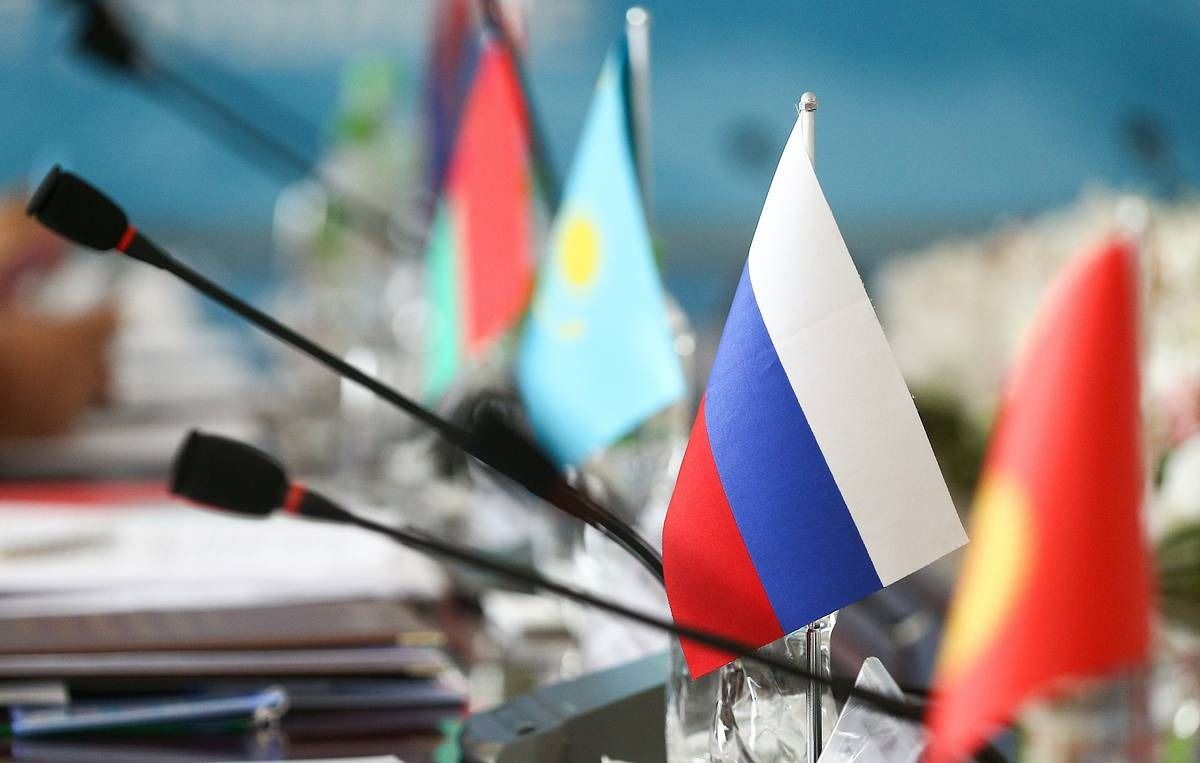
What, then, can Moscow offer? Investment, while under sanctions and fiscal strain? Security, after Ukraine? Threats of a second "special military operation" against Azerbaijan or Central Asia only underline the problem. Meanwhile, alternatives are multiplying. The Organization of Turkic States is growing more assertive. China, the European Union, and the United States are advancing their interests with cautious persistence. Russian influence, once a dam, now leaks.
Azerbaijan watches this with a cool eye. Baku has long treated its relationship with Russia with respect and pragmatism, avoiding gratuitous provocation. Normally, it is rare to see Azerbaijan ever dismantle any relationship. Perhaps a special relationship in that matter has always seemed impossible. Yet respect does not require acquiescence to fantasies of return. Talk of "re-invading" the South Caucasus reads less like a strategy than like a funeral oration for a dead man still insisting he is walking.
Until recently, Azerbaijan did not publicly contemplate leaving the CIS. That calculus shifted after the tragedy involving an Azerbaijan Airlines flight brought down by Russian air defences. Errors happen in complex systems; what defines them is the response. Moscow’s reflex, misdirection, implausible explanations, shielding of those responsible and the quiet burial of the case spoke volumes. In reply, Ilham Aliyev has twice declined to attend CIS summits.
Russia, in short, is looking for a new platform because the old ones no longer deliver obedience. But platforms cannot substitute for power, nor rhetoric for legitimacy. The South Caucasus has changed. So has the world around it. Pretending otherwise may keep Moscow briefly in the headlines, but it will not restore the authority that once made those headlines unnecessary.
Here we are to serve you with news right now. It does not cost much, but worth your attention.
Choose to support open, independent, quality journalism and subscribe on a monthly basis.
By subscribing to our online newspaper, you can have full digital access to all news, analysis, and much more.
You can also follow AzerNEWS on Twitter @AzerNewsAz or Facebook @AzerNewsNewspaper
Thank you!