
Azerbaijan’s post-war expertise puts it on radar in Trump’s new peace framework
Akbar Novruz
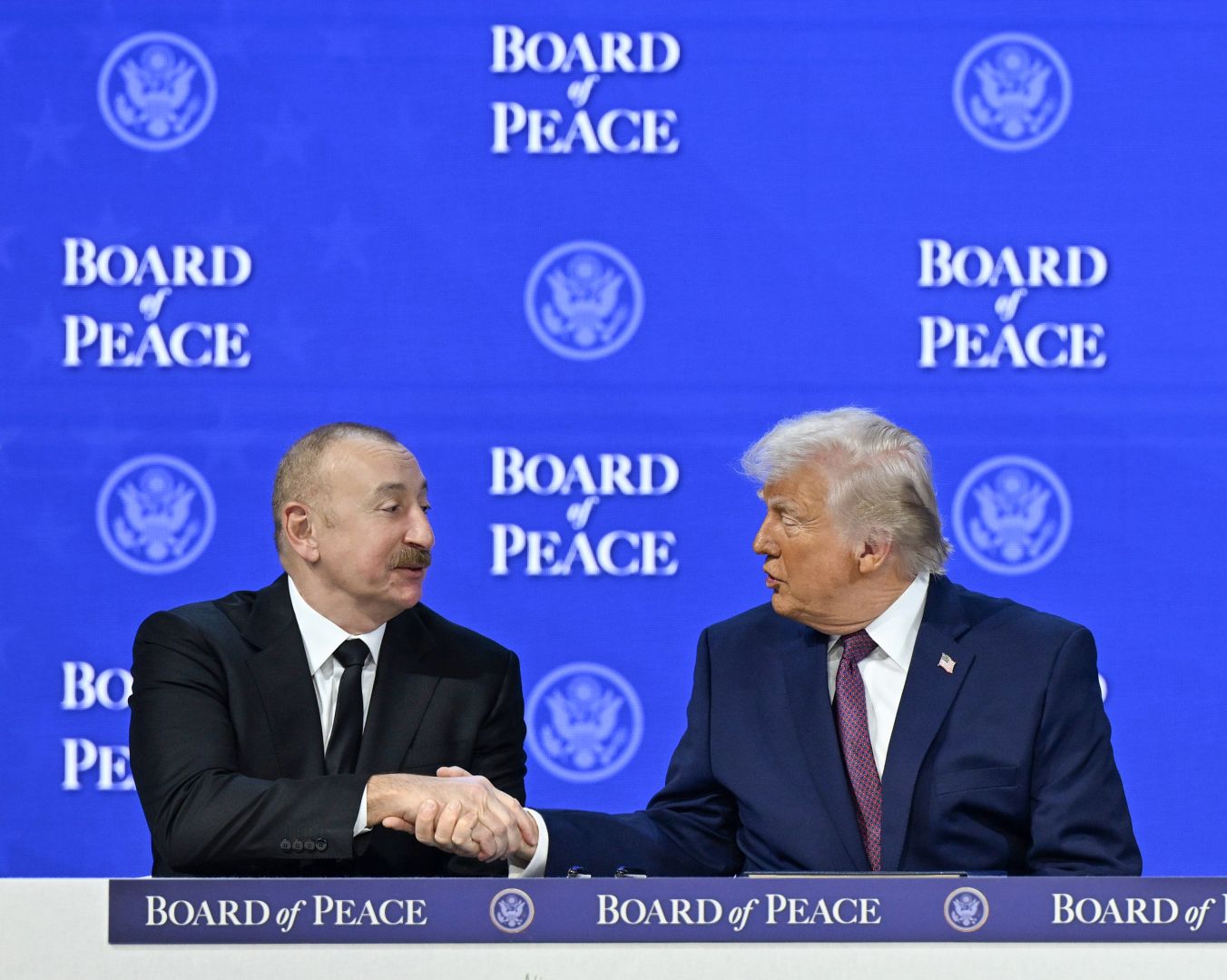
Read moreUS President Donald Trump prepares to host the first formal meeting of his newly created “Board of Peace” in Washington, since its first establishment, back in January, in Davos. The body is expected to unveil the outlines of a Gaza reconstruction plan alongside details of a UN-authorised international stabilisation force. Originally framed as a mechanism to help design post-war governance in Gaza, the Board’s charter goes further, calling for a “more nimble and effective international peace-building body.”
That language has fueled speculation that Washington may be testing alternatives to the United Nations, long criticized by Trump as inefficient and politicized.
According to officials briefed on the initiative, the Board of Peace is envisioned as a small, US-led grouping of “willing and capable” states rather than a universal forum. While its full membership has not been formally published, it is understood to include the United States as chair, several close Western allies, and a number of key regional partners from the Middle East. Early discussions reportedly center on pooling reconstruction funds, with the US expected to provide political leadership and seed financing, while Gulf partners would shoulder a significant share of the financial burden. Estimates circulating in diplomatic circles suggest that initial pledges could run into the tens of billions of dollars over several years, reflecting the scale of destruction in Gaza, though no binding commitments have yet been announced.
AzerNEWS asked whether such an ambitious reconstruction plan can work without a clearly defined Palestinian political authority on the ground, what obstacles stand in the way, and whether the initiative is really meant to sideline the UN. The discussion also turned to whether Azerbaijan could play a practical role based on its post-conflict experience.
Former US State Department official Paul Goble was blunt about the political limits of any externally designed plan. “The Palestinians and in support of them many countries around the world will not agree to a plan however well designed for a resolution on Gaza that does not take steps toward the creation of a Palestinian state,” he said. In his view, fears that a Trump-backed framework might tilt too far toward Israel without addressing Palestinian statehood represent the single biggest obstacle to implementation.
On the idea that the Board of Peace could replace or marginalize the UN, Goble was skeptical. “President Trump clearly hopes for that and can starve the UN in budgetary terms,” he noted, “but there is little chance that any of the other permanent members of the UN Security Council will agree, let alone the member states given the chaos the demise of the UN would lead to.”
Moscow-based geopolitical analyst Andrew Korybko focused more on the sequencing of security and governance. He argued that “the lack of legitimate political control over Gaza at present could obstruct Trump’s envisaged reconstruction plans,” but suggested that Washington appears to expect the Palestinian Authority to eventually take over from Hamas, “secured as they’d be by the international stabilization force (ISF) that the US is assembling for deployment there.” While clashes remain possible, he assessed that Hamas’ capabilities have been significantly degraded, making large-scale renewed conflict less likely if Israel, the PA, and the ISF act in concert.
Korybko also downplayed fears that the new body could supplant the UN. “The Peace Board’s charter makes it clear that the chairman, Trump, wields full control, so there’s no realistic way that it’ll replace the UN,” he said. Instead, he described it as “a coalition of the willing of sorts,” potentially more efficient than the UN General Assembly, which he criticized as unwieldy and prone to grandstanding. Given Trump’s personal control and business-style approach, “discussions might be more fruitful,” he added.
The question of Azerbaijan’s possible role adds another layer to the debate. Goble acknowledged that “Azerbaijan certainly has the experience and expertise” to contribute, particularly in de-mining, infrastructure rebuilding, and civilian resettlement after conflict. “Whether it will want to will depend on Baku’s assessment of what any such accord will mean to Azerbaijan and its relations both with Israel and with the Muslim world,” he cautioned.
Korybko echoed that assessment from a technical angle, saying that Azerbaijan’s experience “can help Gaza with demining and overall rehabilitation,” but stressed that any such contribution would need to be carefully coordinated with other partners “in order to be maximally effective.”
Taken together, the experts’ views suggest that Trump’s Board of Peace is less a replacement for the UN than an attempt to bypass its slow machinery with a smaller, more controllable coalition. Whether that model can succeed in Gaza, however, hinges on unresolved political fundamentals: Palestinian legitimacy, security on the ground, and regional buy-in. Without those, even vast sums of pledged reconstruction money and streamlined governance structures may struggle to turn plans on paper into stability on the ground.
Here we are to serve you with news right now. It does not cost much, but worth your attention.
Choose to support open, independent, quality journalism and subscribe on a monthly basis.
By subscribing to our online newspaper, you can have full digital access to all news, analysis, and much more.
You can also follow AzerNEWS on Twitter @AzerNewsAz or Facebook @AzerNewsNewspaper
Thank you!