
From energy to AI: What US-Azerbaijan strategic partnership really means

Elnur Enveroglu
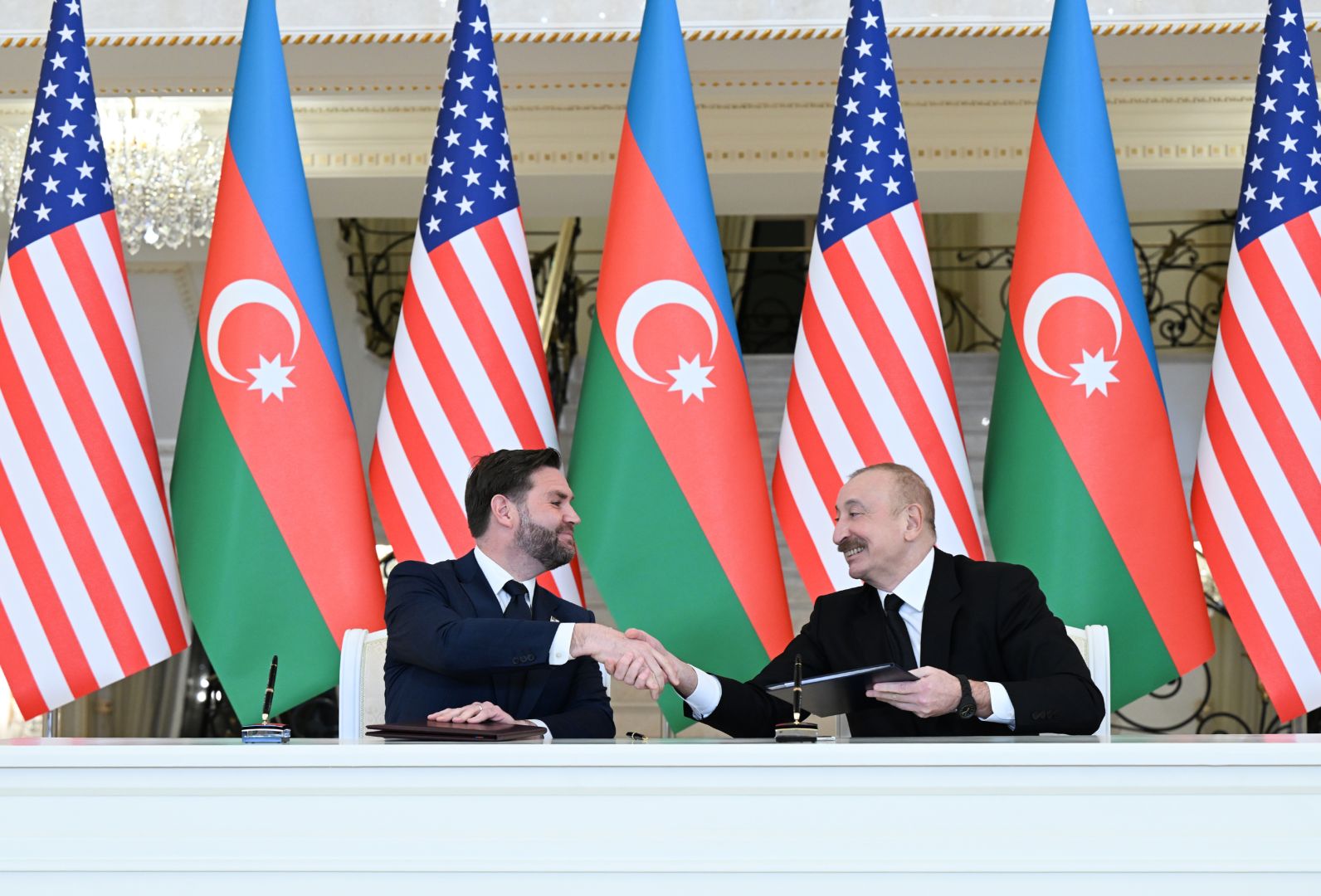
Read moreJ.D. Vance’s visit to Baku and the signing of a US–Azerbaijan Strategic Partnership Charter mark more than a routine diplomatic upgrade. They reflect a renewed American interest in the South Caucasus at a time when global energy insecurity, supply-chain disruption and geopolitical fragmentation are reshaping Washington’s priorities. By formalising cooperation across energy, connectivity, artificial intelligence and security, the United States is messaging that Azerbaijan is no longer viewed solely through the prism of hydrocarbons, but as a strategic hub linking Europe, Central Asia and the Middle East. For Baku, the agreement offers institutional depth and political recognition; for Washington, it represents a pragmatic investment in regional stability and diversification. Together, the move underscores how the South Caucasus is re-emerging as a theatre of strategic relevance rather than a geopolitical afterthought.
Therefore the signing of the Strategic Partnership Charter between Azerbaijan and the United States during JD Vance’s visit to Baku marks a significant recalibration of relations that have long been substantial, but uneven. While energy cooperation has historically anchored the bilateral relationship, the new framework suggests a deliberate shift towards institutionalised, multidimensional engagement, and a recognition in Washington that the South Caucasus can no longer be treated as geopolitically peripheral.
At its core, the charter formalises what has often existed in practice but lacked structure: a convergence of strategic interests. By emphasising mutual respect for sovereignty, territorial integrity and border inviolability, the document carries political weight beyond diplomatic ritual. In a region where unresolved conflicts and competing external influences remain the norm, such language functions as a stabilising signal – both to neighbours and to global stakeholders.
For the United States, the timing is telling. Global energy markets remain volatile, supply chains are under pressure, and technological competition has become inseparable from national security. Against this backdrop, Azerbaijan’s role as an energy producer, transit hub and emerging digital corridor becomes strategically valuable. Washington’s renewed engagement is less about rediscovering Baku and more about recalculating its regional priorities in a fragmented international system.
Energy remains central, but it is no longer sufficient. The charter explicitly acknowledges Azerbaijan’s contribution to energy security, particularly in relation to Europe. Yet it also moves beyond hydrocarbons, linking energy with data connectivity, transport infrastructure and digital networks. This reflects a broader understanding: energy security today is inseparable from logistics, data flows and technological resilience. The emphasis on the Trans-Caspian transport corridor and the proposed TRIPP route underlines Azerbaijan’s ambition to position itself as a linchpin of Eurasian connectivity – an ambition Washington now appears willing to endorse.
Perhaps the most forward-looking element of the charter is its focus on artificial intelligence, digital infrastructure and space cooperation. These are not decorative additions. By supporting AI data centres, cybersecurity collaboration and joint research and development mechanisms, the agreement signals a shared interest in shaping technological ecosystems rather than merely participating in them. For Azerbaijan, this offers a pathway towards economic diversification and human capital development. For the US, it represents an opportunity to empower emerging digital standards in a strategically located partner state.
Security cooperation, meanwhile, remains a crucial pillar. The charter’s language on defence collaboration, counter-terrorism and infrastructure protection reflects continuity rather than rupture, but its institutional framing matters. Azerbaijan’s contributions to international peacekeeping missions are explicitly recognised, reinforcing its image as a security provider rather than a passive consumer. Equally important is the inclusion of humanitarian demining, an issue often sidelined in strategic discussions but central to post-conflict recovery and regional normalisation.
What distinguishes this agreement from previous declarations is not its ambition, but its architecture. The creation of working groups, roadmaps and regular dialogue mechanisms within a three-month timeframe suggests an intent to operationalise commitments rather than leave them suspended in diplomatic language. The explicit inclusion of the private sector on both sides further indicates that this partnership is designed to outlast political cycles and move beyond state-to-state formalities.
Critics may argue that strategic charters are often long on vision and short on delivery. That risk is real. Yet dismissing this agreement as symbolic would overlook the broader context in which it emerges. The United States is reassessing how it engages with regions that sit at the crossroads of energy routes, transport corridors and geopolitical competition. Azerbaijan, by virtue of geography and policy choice, fits squarely into that reassessment.
For Baku, the charter represents international validation of a long-standing strategy: balancing relations with global powers while asserting regional agency. For Washington, it is a pragmatic acknowledgement that stability, connectivity and technological cooperation in the South Caucasus serve American interests as much as they serve local ones.
In that sense, the Strategic Partnership Charter is not merely about bilateral relations. It is a statement about how power, influence and cooperation are being redefined in a world where geography matters again – and where the South Caucasus is no longer on the margins of strategic thinking.
Here we are to serve you with news right now. It does not cost much, but worth your attention.
Choose to support open, independent, quality journalism and subscribe on a monthly basis.
By subscribing to our online newspaper, you can have full digital access to all news, analysis, and much more.
You can also follow AzerNEWS on Twitter @AzerNewsAz or Facebook @AzerNewsNewspaper
Thank you!