
Why Brussels is scrutinising every cubic metre of Azerbaijani gas?

Akbar Novruz
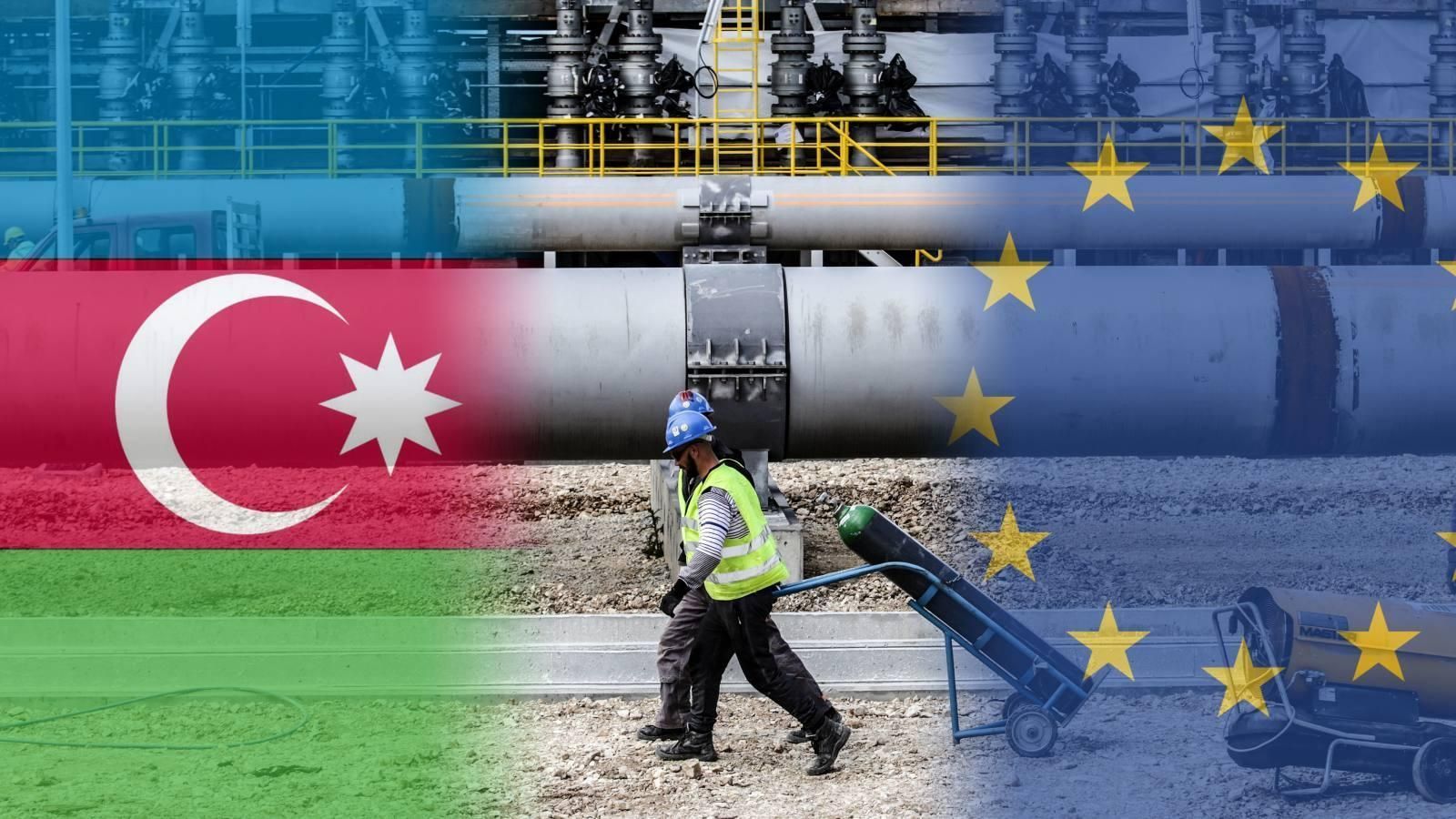
Read moreEurope’s attempt to rid itself of Russian gas has entered a more forensic phase. Having spent the past three years scrambling for alternative supplies, the European Commission is now turning its attention to what it buys, how it is labelled, and whether molecules arriving at the EU’s borders are really what exporters claim them to be. The latest target of this scrutiny is not Moscow directly, but the infrastructure through which gas reaches Europe from Türkiye, including volumes supplied by Azerbaijan.
The European Union has legally adopted a step-by-step prohibition on imports of Russian pipeline gas and liquefied natural gas, as part of its REPowerEU roadmap to end reliance on Moscow’s energy exports. A full ban on LNG imports will come into force from early 2027, and on pipeline gas by late 2027 at the latest. Before authorising entry into the EU, member states must now “verify the country where gas was produced.” This requirement underpins the mechanism forcing exporters to prove non-Russian origin for supplies
The immediate trigger was political. In November, a French MEP, Jean-Paul Garron, accused the EU of quietly circumventing its own sanctions by importing Russian gas disguised as Azerbaijani. Brussels dismissed the charge at the time, stressing that the Southern Gas Corridor, the pipeline system bringing Caspian gas via Georgia, Türkiye and Greece, has no technical link to Russia’s network. That remains true. Yet since then, the Commission has moved to impose additional verification requirements, forcing both EU member states and foreign suppliers to prove that gas entering the bloc is not of Russian origin.
The Commission’s June 2025 proposal to phase out Russian gas and oil imports entirely by the end of 2027 follows a decade-long effort to reduce reliance on Moscow’s energy leverage. Before the full-scale invasion of Ukraine in 2022, Russia supplied as much as 40–45% of EU gas imports; by 2025, that share had fallen to around 13%, thanks to diversification efforts. The current push to ban Russian gas and require origin verification is a natural extension of that strategy.
The new checks apply most visibly at Strandja-1–Malkochlar, the interconnection point on the Bulgarian-Turkish border. According to ENTSOG, around 1.9 billion cubic metres of gas passed through this point into Bulgaria in 2025. The location is sensitive not because of Azerbaijani gas, but because of what sits nearby. Just a few kilometres away is Strandzha-2/Malkočlar, the onshore continuation of TurkStream, the pipeline carrying Russian gas across the Black Sea to Türkiye and onwards into south-eastern Europe.
Until now, geography and shared infrastructure have allowed uncomfortable ambiguities. Even after Bulgaria declared in 2022 that it would stop buying Russian gas, it emerged a year later that Gazprom molecules were still entering the country through the Trans-Balkan system. Brussels has learnt from that episode. Under the new regime, any compressor station that connects EU pipelines to routes carrying substantial Russian volumes will face similar scrutiny. The aim is simple: to ensure that Russian gas does not slip into the EU through legal grey zones.
This has consequences far beyond Bulgaria. Since 2023, Azerbaijan has been using the Trans-Balkan pipeline in reverse mode to supplement deliveries to Europe. The reason is capacity. The Trans-Adriatic Pipeline (TAP), the European leg of the Southern Gas Corridor, was expanded this year to around 11.2bn cubic metres annually. That is still less than Azerbaijan’s actual exports: in 2025, Baku shipped roughly 12.9bn cubic metres to European buyers. Unless further expansions are completed, part of that volume must continue to flow via the Trans-Balkan route, and therefore through infrastructure now subject to enhanced checks.
For Azerbaijan, this is an inconvenience rather than a threat. Its gas is produced under production-sharing agreements with international oil companies and marketed under strict transparency rules. Certifying origin is unlikely to pose a serious problem. Indeed, Brussels’s insistence on verification implicitly acknowledges Baku’s growing role as a strategic supplier whose volumes must be accommodated, even as Europe tightens sanctions.
The European Union checks the quality and origin of Azerbaijani gas in two main ways: through physical-chemical characteristics and origin documentation. Each shipment is accompanied by a certificate of origin, confirming that the gas comes from Azerbaijan and has not been mixed with supplies from other countries. Physical inspections are conducted at border stations, such as Strandja-1/Malkoçlar, where the gas is analysed for methane content, other components (ethane, propane, nitrogen, CO₂), harmful substances (H₂S, water vapour, dust), and calorific value/Wobbe index. Laboratory results are certified in protocols and submitted to EU regulators. Under new rules, the EU also verifies that the gas is not of Russian origin, using transit data, documentation, and real-time monitoring systems.
Since gas production in Azerbaijan is carried out with international company participation and high transparency standards, the origin of every cubic meter can be easily confirmed, ensuring no issues for deliveries to Europe. As a result, Azerbaijani gas fully meets EU standards for both quality and origin, while the EU’s verification mechanisms are designed to ensure safety, energy efficiency, and prevent Russian gas from entering the market.
The real casualty is Türkiye. Ankara has spent the past decade positioning itself as a regional gas hub, investing heavily in LNG terminals, expanding underground storage and leveraging its geography to sit astride Russian, Caspian and Middle Eastern flows. That strategy relied, at least in part, on Russian gas remaining commercially usable for Europe. The EU’s new controls draw a firm line through that assumption. Russian gas may enter Türkiye, but it will not enter the EU through Türkiye.
The numbers are stark. Last year, roughly 17bn cubic metres of Russian gas reached Hungary, Slovakia and Serbia via TurkStream. Since the start of this year, daily flows have been running close to capacity. Once the EU’s ban takes full effect, only Serbia, outside the EU, will remain a destination, taking around 2.2bn cubic metres annually. The Balkan transmission system, built for more than 15bn cubic metres, will be drastically underused. Transit revenues for Türkiye could fall by billions of dollars.
There is a partial consolation. With Europe closed off, Russia will struggle to redirect tens of billions of cubic metres elsewhere in the short term. Türkiye, which still imports about 21bn cubic metres of Russian gas a year out of total consumption of roughly 60bn, may be able to negotiate steeper discounts. Domestic production from the Sakarya field in the Black Sea, around 9m cubic metres a day, enough for some four million households, helps, but imports will remain essential.
Seen from Brussels, this is collateral damage worth accepting. The EU’s overriding objective is strategic clarity: no Russian gas, no ambiguity, no creative relabelling. By enforcing origin checks at critical nodes, the bloc is signalling that its energy divorce from Moscow is entering a more disciplined, rule-based phase.
Europe still needs Caspian gas, and in volumes that exceed existing pipeline capacity. Today, Azerbaijan supplies natural gas to 16 countries, 10 of which are EU member states, giving it the widest geographical coverage of pipeline gas exports globally. Verification may slow flows at the margins, but it also underlines Baku’s value as a supplier whose gas can be traced, audited and politically defended. In an energy market shaped as much by geopolitics as by geology, that distinction matters.
Here we are to serve you with news right now. It does not cost much, but worth your attention.
Choose to support open, independent, quality journalism and subscribe on a monthly basis.
By subscribing to our online newspaper, you can have full digital access to all news, analysis, and much more.
You can also follow AzerNEWS on Twitter @AzerNewsAz or Facebook @AzerNewsNewspaper
Thank you!