
When desert wealth fuels solar ambition in South Caucasus
Akbar Novruz
Read moreAzerbaijan is quietly becoming a testing ground for Gulf capital looking to move beyond oil, as investors from the Persian Gulf funnel hundreds of millions of dollars into the South Caucasus state, drawn by its renewable energy ambitions, strategic geography and political stability. While Central Asia still absorbs the lion’s share of Arab investment across Eurasia, new projects in Azerbaijan suggest a recalibration is underway, one that places Baku at the intersection of energy transition, regional connectivity and the Gulf’s search for long-term influence beyond hydrocarbons.
By mid-2025, Gulf sovereign funds and firms had invested $606 million in Azerbaijan, part of a broader surge in capital flows from Persian Gulf countries into the wider Eurasian region. According to the Eurasian Development Bank’s latest investment report, total Gulf investments across Eurasia reached $23.9 billion in the first half of 2025, more than triple the level of 2016 and up 60 percent on 2023, underscoring the growing strategic significance Gulf investors place on the region’s energy and infrastructure sectors.
For Azerbaijan, the share is modest compared with Central Asian magnets like Uzbekistan and Kazakhstan, which together absorb the lion’s share of funding. But the character of these investments reveals a deeper narrative: wealthy Gulf states are no longer merely investing in hydrocarbon extraction abroad; they are partnering in renewable energy and power-generation projects that align with Azerbaijan’s own diversification goals and broader global shifts toward cleaner energy.
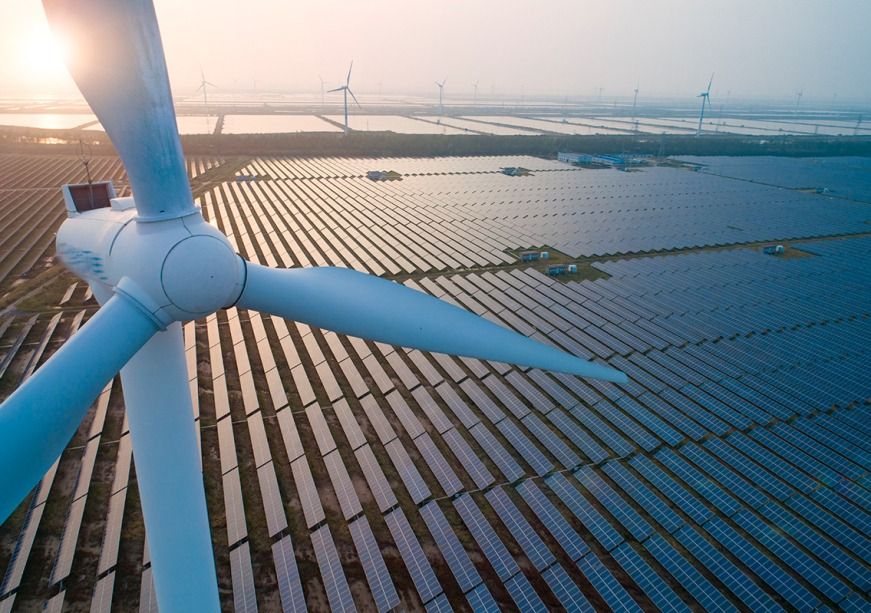
Much of the $606 million invested in Azerbaijan by Gulf capital has gone into solar power, with UAE-based Masdar standing out as the most prominent partner. Masdar is building two large solar photovoltaic plants: a 315 MW facility in Neftchala and a 445 MW project in Bilasuvar. Once fully operational, these will generate more than 1.7 billion kWh of electricity annually and are expected to be commissioned by 2027.
These projects are not merely one-off investments. Masdar has signed a broader suite of agreements with Azerbaijani authorities that envisage up to 1 GW of new capacity and cooperation across renewables, including solar and wind, tying into larger strategic goals to develop a green energy corridor and even explore green hydrogen. Masdar’s total planned outlays in Azerbaijan could exceed $1.2 billion over time, reflecting a long-term commercial and strategic commitment.
The Gulf interest dovetails with Azerbaijan’s own energy transition targets. Baku has articulated a plan to generate 6 GW of solar and wind energy by 2030, which would mark a significant shift for a country historically dominated by oil and gas exports. Partnerships with Masdar and others provide both capital and technology transfer, reinforcing Azerbaijan’s ambitions to reduce gas consumption domestically while freeing up hydrocarbons for export.
The growing role of Gulf capital in Azerbaijan reflects broader structural shifts within Gulf economies themselves. Faced with the long-term imperative to diversify from hydrocarbon dependency, Gulf states, especially the UAE and Saudi Arabia, are channeling funds into overseas energy projects that emphasize low-carbon and renewable infrastructure as well as conventional energy. Research shows that Gulf countries have sharply increased foreign investment into Eurasia over the last decade, with much of the recent growth driven by energy projects outside fossil fuels.
The UAE alone accounts for about 68 percent of Gulf investment into the Eurasian region, followed by Saudi Arabia, Qatar and Oman. While Central Asia remains the main destination, especially for oil and power generation, Azerbaijan, Georgia and Armenia are starting to benefit from a widening investor focus.
Azerbaijan’s role is further enhanced by bilateral ties with the UAE that go beyond project financing. In the energy sector, Abu Dhabi’s ADNOC holds a stake in the Azerbaijani Absheron gas-condensate field, and joint ventures between SOCAR and UAE firms span upstream and downstream cooperation. These linkages create a more integrated energy partnership that encompasses fossil fuels, renewables and, potentially, electricity exports to regional grids.
For Baku, Gulf investment serves multiple purposes. The inflows support Azerbaijan’s stated aim of economic diversification, anchored by renewable energy and infrastructure that can sustain growth irrespective of global oil and gas cycles. They deepen geopolitical ties with Gulf capitals and potentially offer a cushion against volatility in Western capital markets. This is important as Azerbaijan seeks to balance relationships with European, Asian and Middle Eastern partners.
Moreover, the presence of international financial institutions, such as the European Bank for Reconstruction and Development (EBRD), the Asian Development Bank (ADB) and the Asian Infrastructure Investment Bank (AIIB), co-financing Gulf-backed projects adds credibility and lowers risk for future investors. The combination of sovereign, multilateral and private capital is a powerful driver of project viability in a region where energy demand is rising and policy frameworks increasingly favor sustainability.
The broader narrative is one of transition without rupture: Azerbaijan remains a significant oil and gas exporter while building a parallel green energy portfolio, and Gulf investors, once focused on hydrocarbons alone, are now ready to finance the cleaner side of that transition.
Here we are to serve you with news right now. It does not cost much, but worth your attention.
Choose to support open, independent, quality journalism and subscribe on a monthly basis.
By subscribing to our online newspaper, you can have full digital access to all news, analysis, and much more.
You can also follow AzerNEWS on Twitter @AzerNewsAz or Facebook @AzerNewsNewspaper
Thank you!