
Armenia’s pre-election debate slips back into Karabakh illusions [OPINION]
![Armenia’s pre-election debate slips back into Karabakh illusions [OPINION]](https://www.azernews.az/media/2026/01/29/62457624572457_1.jpg)
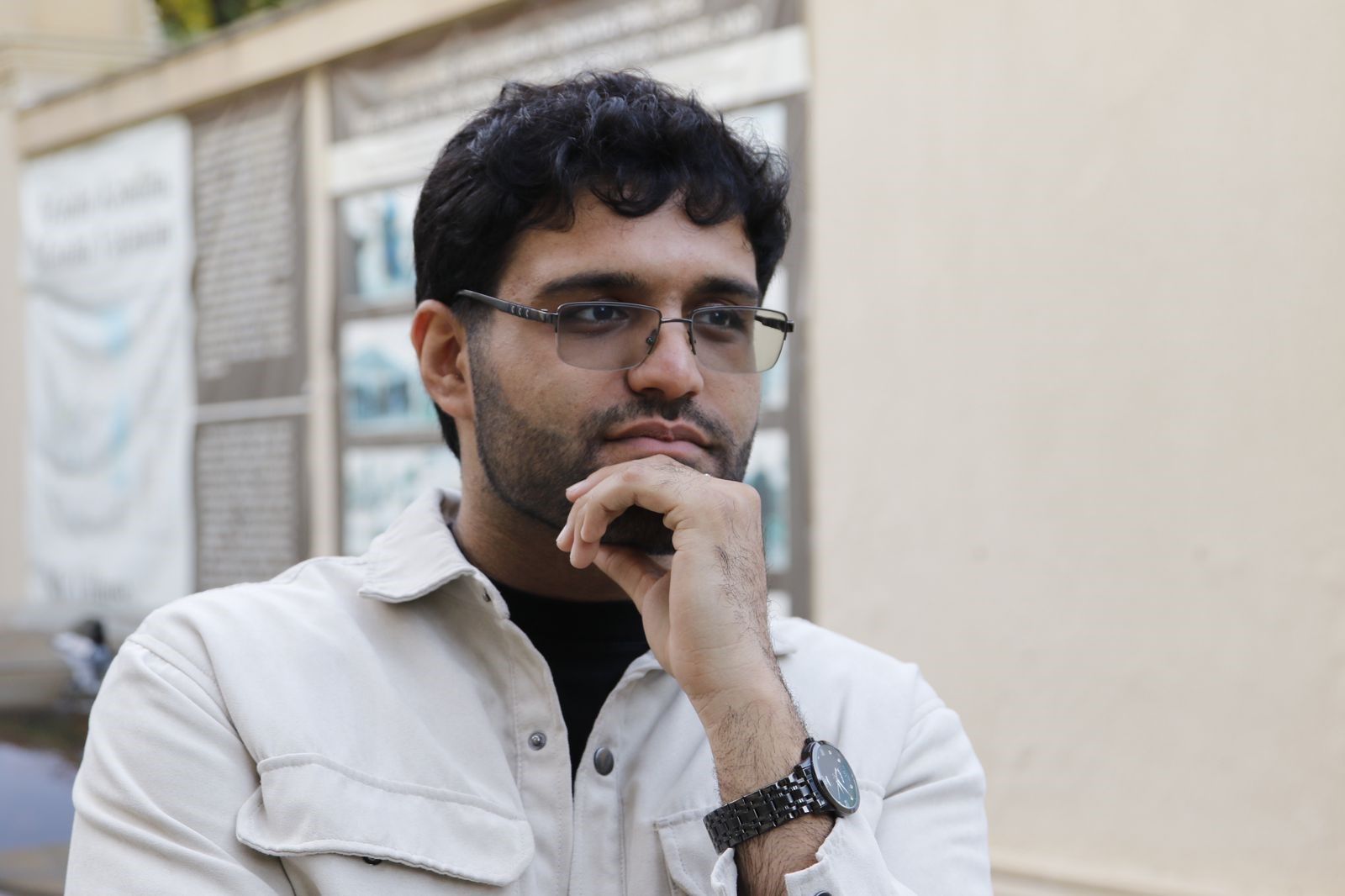
Akbar Novruz
Read moreAs Armenia approaches its parliamentary elections scheduled for June, opposition forces appear increasingly eager to revive long-discredited narratives in an attempt to mobilize a shrinking and disoriented electorate. The closer election day comes, the more desperate the rhetoric sounds. Among the most active voices in this campaign of political nostalgia is Armenia’s former president and former leader of the so-called “Nagorno-Karabakh Republic,” Robert Kocharyan.
Although Kocharyan has remained formally outside frontline politics for years, he has never fully disappeared from Armenia’s political landscape. Possessing long-standing networks within state institutions and society, he has retained a controversial but recognizable presence, particularly since the 2018 Velvet Revolution. Today, however, his attempted political comeback appears to be unfolding through a familiar proxy: his son, Levon Kocharyan.
At a recent meeting with residents of Abovyan, Levon Kocharyan openly declared that Yerevan “has the opportunity” to raise the issue of the return of separatist elements to Azerbaijan’s Karabakh region. According to him, such a demand is “natural and logical,” supposedly understandable, even acceptable, to the world’s major powers. He went further, accusing the current Armenian authorities of betraying national interests by refusing to place this issue on Armenia’s foreign policy agenda.
“We believe such a possibility exists,” Levon Kocharyan said. “How realistic it is can be discussed later, but registering this demand and including it in our foreign policy agenda is necessary.”
This rhetoric, however, collapses under even minimal legal and political scrutiny. From the standpoint of international law, there is no ambiguity: Karabakh is an integral part of Azerbaijan within its internationally recognized borders, as confirmed by UN resolutions and the official positions of all major international actors. Following Azerbaijan’s restoration of full sovereignty over the region, any matters related to residence, movement, or citizenship fall exclusively under Azerbaijan’s domestic jurisdiction.
International law provides no mechanism for the collective “return” of groups based on political identity, nor does it grant third states the right to place such demands on another sovereign state. At most, individual applications by specific persons may be considered solely within the framework of Azerbaijani legislation and without external political pressure. In this sense, even “registering” such a demand in Armenia’s foreign policy agenda is not merely unrealistic; it is legally meaningless.
Robert Kocharyan himself has actively reinforced this narrative. In a message marking Armenia’s Army Day, he lamented what he described as the systematic weakening of Armenia’s armed forces over recent years, accusing the current leadership of undermining the army’s morale and capabilities. He expressed hope that Armenia could “restore the strength and spirit of the army” to ensure “stable peace,” while simultaneously invoking demographic decline, emigration, and alleged mismanagement by post-Soviet elites.
Yet these statements reveal a deeper contradiction. Kocharyan’s own political camp, the so-called “Karabakh clan” was instrumental in creating the very structural, economic, and institutional failures he now decries. For decades, their governance model relied on corruption, militarization, and isolation, culminating in economic stagnation and mass emigration. The past they seek to revive is not one of stability, but of closed borders, international isolation, and permanent confrontation.
For nearly thirty years, the territories of Karabakh remained under the control of the same political group that now seeks to re-enter Armenia’s political mainstream. Yet the demographic and economic outcomes of this period sharply contradict today’s revisionist rhetoric. During the late Soviet period, the Armenian population in Karabakh was estimated at around 200,000–300,000. During the years of occupation and conflict, that figure fell dramatically, at various stages declining to 30,000–40,000, before being artificially raised to roughly 100,000–120,000 through ad hoc resettlement efforts, including Armenians brought from abroad, notably from Lebanon. These figures reflect not stability or development, but prolonged demographic erosion and economic stagnation under the so-called Karabakh clan.
The same pattern was evident across Armenia as a whole. At the time of the Soviet Union’s collapse, Armenia’s population stood at approximately 3.5 million. By the time Nikol Pashinyan came to power, it had fallen to around 2.8 million, with emigration becoming systemic: roughly one in six Armenians left the country. This sustained outflow was driven by chronic economic mismanagement, weak logistics, and a political system dominated by elite enrichment rather than national development.
Beyond economic failure, the period was also marked by grave abuses. Reports and testimonies point to the exploitation of prisoners as forced labor, the total destruction of Azerbaijani towns such as Aghdam, and the stripping and illicit sale of property from occupied territories, including through cross-border markets. The liberation of these territories later exposed the true scale of lost opportunity. In place of decades of neglect, assessments revealed the potential for up to 10 gigawatts of renewable energy generation in Karabakh, alongside export capacity valued at $4–5 billion- a stark contrast to the stagnation inherited from the previous era.
More importantly, the Kocharyan camp appears to fundamentally misread Armenian society. War fatigue is real. The overwhelming majority of Armenians are no longer interested in revanchist fantasies or symbolic foreign policy gestures with no practical outcome. Instead, they seek stability, economic opportunity, and an improvement in living standards, objectives that are achievable only through regional normalization and peace initiatives.
Against this backdrop, the Kocharyan’s statements sound less like a political program and more like an electoral performance aimed at a narrow audience unwilling to accept the new regional reality. Azerbaijan is not a state that can be pressured into revisiting settled questions of sovereignty, and no amount of rhetorical escalation will change that fact.
In reality, the Kocharyan bloc is fighting a wall and mistaking the resulting shock for political momentum. Their promises are not designed to be fulfilled; they are designed to be heard. As election day approaches, this dissonance grows louder. What remains is not a credible alternative vision for Armenia’s future, but a campaign built on denial, nostalgia, and the politics of false hope.
Here we are to serve you with news right now. It does not cost much, but worth your attention.
Choose to support open, independent, quality journalism and subscribe on a monthly basis.
By subscribing to our online newspaper, you can have full digital access to all news, analysis, and much more.
You can also follow AzerNEWS on Twitter @AzerNewsAz or Facebook @AzerNewsNewspaper
Thank you!