
Federal Reserve set to hold rates as markets await Powell’s first decision of 2026

Qabil Ashirov
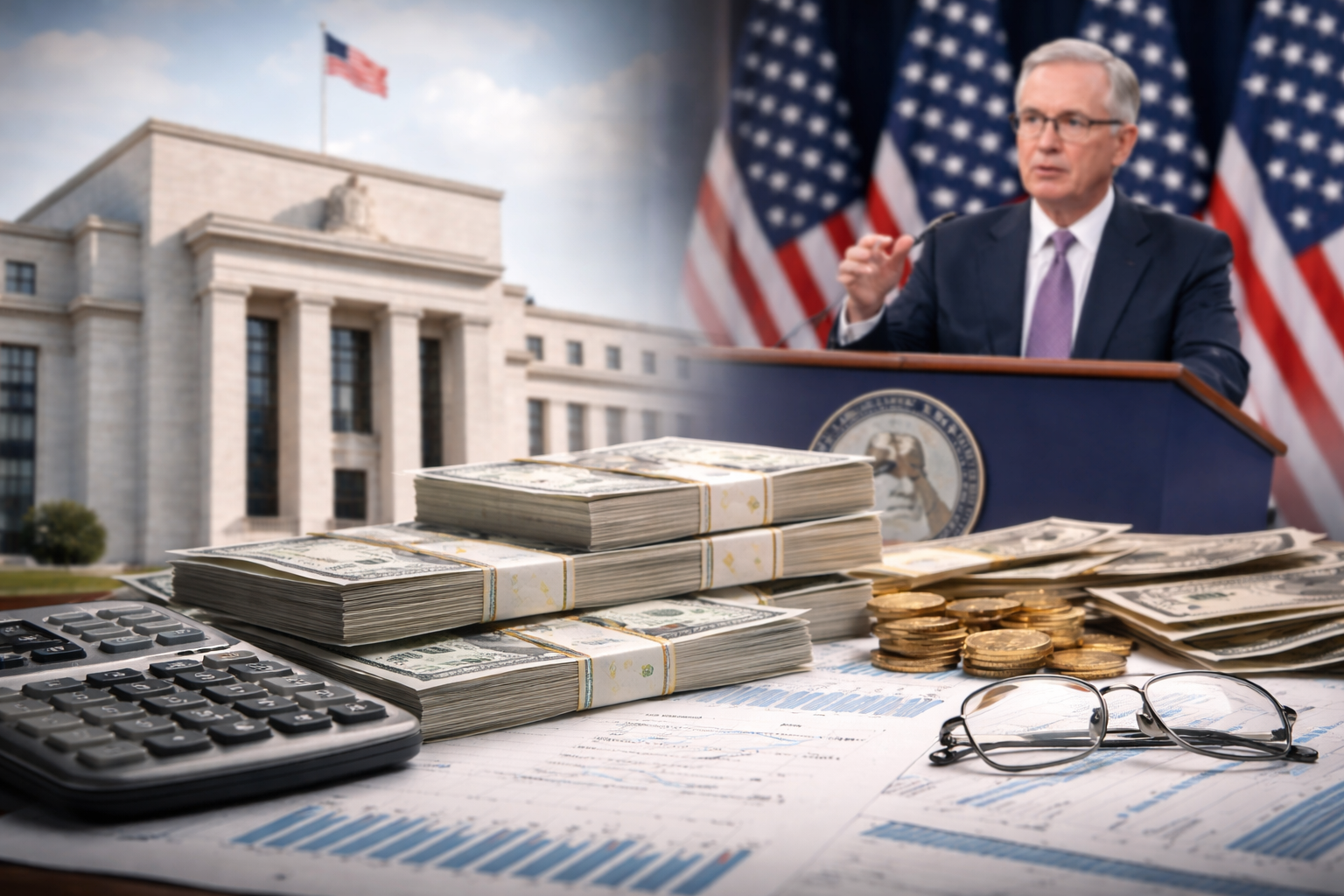
Read moreTonight, the U.S. Federal Reserve (Fed) will announce its first interest rate decision of 2026. The decision will be released at 11:00 p.m. Baku time, followed by a press conference at 11:30 p.m., where Chairman Jerome Powell will answer questions from journalists. Economists and market participants widely expect the Fed to keep rates unchanged in the 3.5%–3.75% range. While this may sound routine, the implications are anything but: the Fed’s rate policy sends powerful signals to the U.S. economy, global financial markets, and the dollar itself. Interest rates shape investment flows, currency valuations, and bond markets worldwide.
The current rate level reflects years of delicate balancing since the pandemic recovery began in 2020. Inflation has stabilized somewhat in recent months, but the Fed remains cautious, monitoring growth and market volatility closely. Analysts argue that holding rates steady could provide a mild stimulus, signaling stability to investors. Yet such decisions also invite speculation: traders immediately begin recalibrating expectations for the dollar and U.S. bonds, often triggering short-term volatility.
President Donald Trump, however, has repeatedly demanded that the Fed cut rates more aggressively. In his view, the central bank has been too slow to ease policy, thereby delaying the stimulative effects lower rates could bring. Trump’s public criticism has already rattled markets. His pressure on Powell has raised concerns about the Fed’s independence, a cornerstone of its credibility. Investors, wary of political interference, have responded with caution: U.S. bonds and the dollar have seen bouts of selling as traders anticipate greater uncertainty ahead.
Powell’s term as chairman expires in May, and Trump has signaled his intention to nominate a successor aligned with his economic agenda. Analysts believe such an appointment could tilt the Fed toward a more dovish stance, lowering rates to spur growth. While this might please markets in the short run, it raises troubling questions about the central bank’s autonomy and the predictability of its policies. Investors and financial institutions are watching closely, aware that any abrupt shift in leadership could reverberate across global markets.
The dollar’s value is directly tied to the Fed's decisions and political pressures. Lower rates typically weaken the dollar against other currencies, reshaping import and export prices and altering global trade balances. Bond markets are equally sensitive: higher rates make U.S. Treasuries attractive, while lower rates can trigger sell-offs. This is why investors worldwide scrutinize every Fed announcement—not just for its domestic impact, but for its global consequences.
Trump’s interventions highlight a deeper issue: the independence of the Federal Reserve. A central bank must remain insulated from political pressure to ensure long-term stability. Yet Trump’s active role, combined with the likelihood of a new chairman sympathetic to his strategy, suggests that Fed policy may increasingly reflect political considerations. This prospect unsettles analysts, who warn investors to prepare for heightened volatility.
The stakes are enormous. Tonight’s decision, even if rates remain unchanged, carries symbolic weight. It signals continuity at a time when markets crave reassurance. But the months ahead may prove more turbulent. Trump’s looming appointment and his insistence on faster rate cuts could reshape expectations, fueling swings in currencies, bonds, and equities. Investors must weigh not only economic indicators like inflation and employment but also the political dynamics surrounding the Fed.
The intertwining of economic policy and political influence is now impossible to ignore. A rate cut could indeed stimulate growth, but it would also weaken the dollar and destabilize bond markets, creating risks for global investors. Conversely, holding rates steady may preserve stability but frustrate political demands for faster growth. This tension underscores the fragile balance between economic prudence and political ambition.
The Fed’s rate decision tonight is more than a technical adjustment. It is a test of institutional independence in the face of political pressure. The current policy offers stability, but the future hinges on Trump’s next move. If he appoints a chairman committed to aggressive easing, markets may enjoy short-term growth but at the cost of credibility and predictability. If independence prevails, the Fed may continue its cautious path, frustrating political leaders but reassuring global investors.
Here we are to serve you with news right now. It does not cost much, but worth your attention.
Choose to support open, independent, quality journalism and subscribe on a monthly basis.
By subscribing to our online newspaper, you can have full digital access to all news, analysis, and much more.
You can also follow AzerNEWS on Twitter @AzerNewsAz or Facebook @AzerNewsNewspaper
Thank you!