
Big claims in Davos: how realistic is Azerbaijan’s vision of connectivity power?
Akbar Novruz
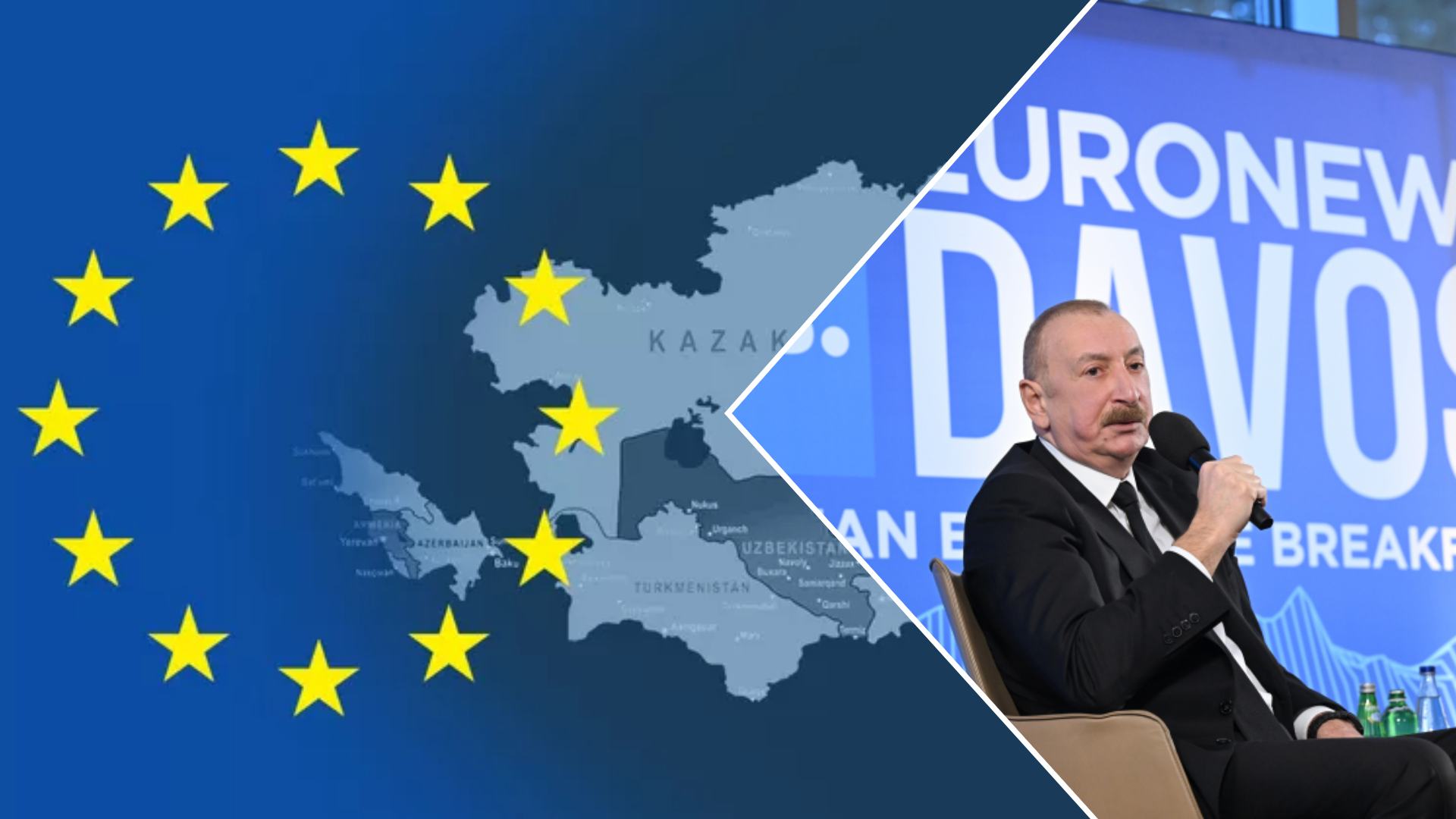
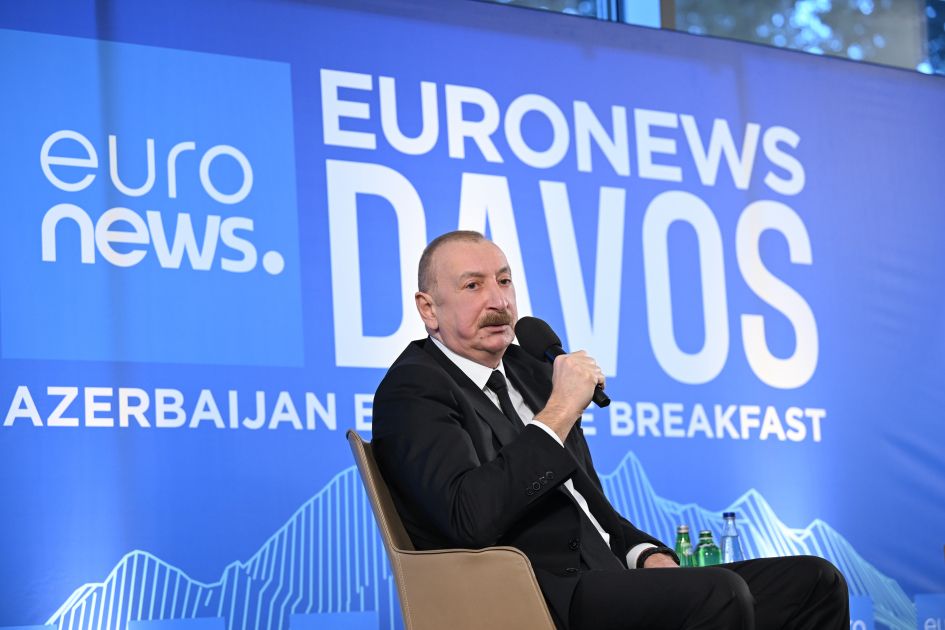
Read moreAt this year’s World Economic Forum in Davos, Azerbaijan’s president Ilham Aliyev made a striking claim: "Azerbaijan is the only reliable, safe, and friendly destination country for Europe to have a connection with Central Asia." It was a bold line for a nation that has long played at the crossroads of continents, but one that reflects deepening confidence in Baku’s role as a geoeconomic bridge between East and West.
Where does this boldness originate, and what are its underlying fundamentals?
That confidence is rooted in more than rhetoric. Against a backdrop of supply-chain disruption, geopolitical diversion, and the search for alternatives to routes vulnerable to political instability, Azerbaijan’s transport and logistics architecture has matured at speed. Its location at the nexus of the Caspian Sea, the South Caucasus, and the Middle Corridor, a multimodal freight artery linking China and Central Asia to European markets via the Trans-Caspian International Transport Route, has increasingly attracted attention from shippers and policymakers alike.
At the Azerbaijan Executive Breakfast in Davos, Aliyev stressed Azerbaijan’s active role in the European Union’s "Global Gateway" initiative, a €300 billion investment plan aimed at enhancing sustainable connectivity worldwide. "Almost everything is already ready," he said of his country’s infrastructure. That includes seaports, railways, highways and customs facilities that have been progressively upgraded, a claim supported by years of transit growth along the Middle Corridor.
Indeed, recent data underscore this momentum. Freight along the Middle Corridor has surged: container traffic on the Trans-Caspian route grew by an estimated 35–40 per cent annually in the past two years, rising from roughly 1.5 million tonnes in 2022 to about 3.2 million tonnes by 2024. Some analysts predict these volumes could double by as early as 2030 as global supply chains continue to diversify away from northern and southern alternatives.
This traffic boom has translated into concrete ambitions. Baku has announced plans to expand the capacity of its Trade Sea Port, while also integrating the Trump Route for International Peace and Prosperity (TRIPP) project, a U.S.-backed initiative designed to knit Armenia’s roads into a broader Central Asian transport network. Aliyev pointed out that this integration would not just facilitate connectivity but also deliver tariff revenues and international cooperation benefits to Yerevan.
Aliyev’s remarks in Davos were not just about geography, but about political will and peace dividends. In a panel on Eurasia’s economic identity, he noted that Azerbaijan had lifted all restrictions on transit of goods from Armenia through its territory, accepting requests to facilitate trade from Yerevan to Russia and beyond. "We have de facto, unilaterally opened the corridors," he said, suggesting that direct transit through Azerbaijan could one day become a reality.
Armenia’s president, Vahagn Khachaturyan, echoed this tone of cautious optimism, thanking Aliyev for "political will and efforts aimed at achieving peace." He acknowledged that while shipments now travel via Georgia, direct routes through Azerbaijani territory may be realized in the future, a remarkable shift from entrenched regional isolation.
The implications extend beyond the South Caucasus. For Europe, diversifying transit channels to Central Asia resonates with broader strategic objectives. The Global Gateway framework prioritises resilient routes that bypass politically sensitive chokepoints, and the Middle Corridor, shorter than traditional sea routes via Suez, fits that bill. It offers 12-18-day transit times, compared with 30–45 days by other major routes, making it economically attractive for high-value, time-sensitive goods.
Furthermore, Azerbaijan’s role in energy connectivity reinforces its broader appeal. In January 2026, SOCAR, the state energy company, began supplying natural gas to Germany and Austria via the Southern Gas Corridor, helping Europe diversify away from traditional suppliers. Azerbaijani gas now flows to 16 European countries, weaving energy and transport strategies into a coherent geoeconomic fabric.
Critics might call such claims exuberant, especially in a region long plagued by political fragmentation and competing interests. But Aliyev’s pitch in Davos was not mere boosterism. It was a calculated positioning of Azerbaijan not just as a transit country, but as a strategic linchpin in Eurasia’s evolving economic map: where infrastructure, commerce, and diplomacy converge. In a world hungry for alternatives to old supply chains, that is a bold, and perhaps prescient, claim.
Here we are to serve you with news right now. It does not cost much, but worth your attention.
Choose to support open, independent, quality journalism and subscribe on a monthly basis.
By subscribing to our online newspaper, you can have full digital access to all news, analysis, and much more.
You can also follow AzerNEWS on Twitter @AzerNewsAz or Facebook @AzerNewsNewspaper
Thank you!