
Why Davos matters more than ever for Azerbaijan in fragmenting global economy
Akbar Novruz
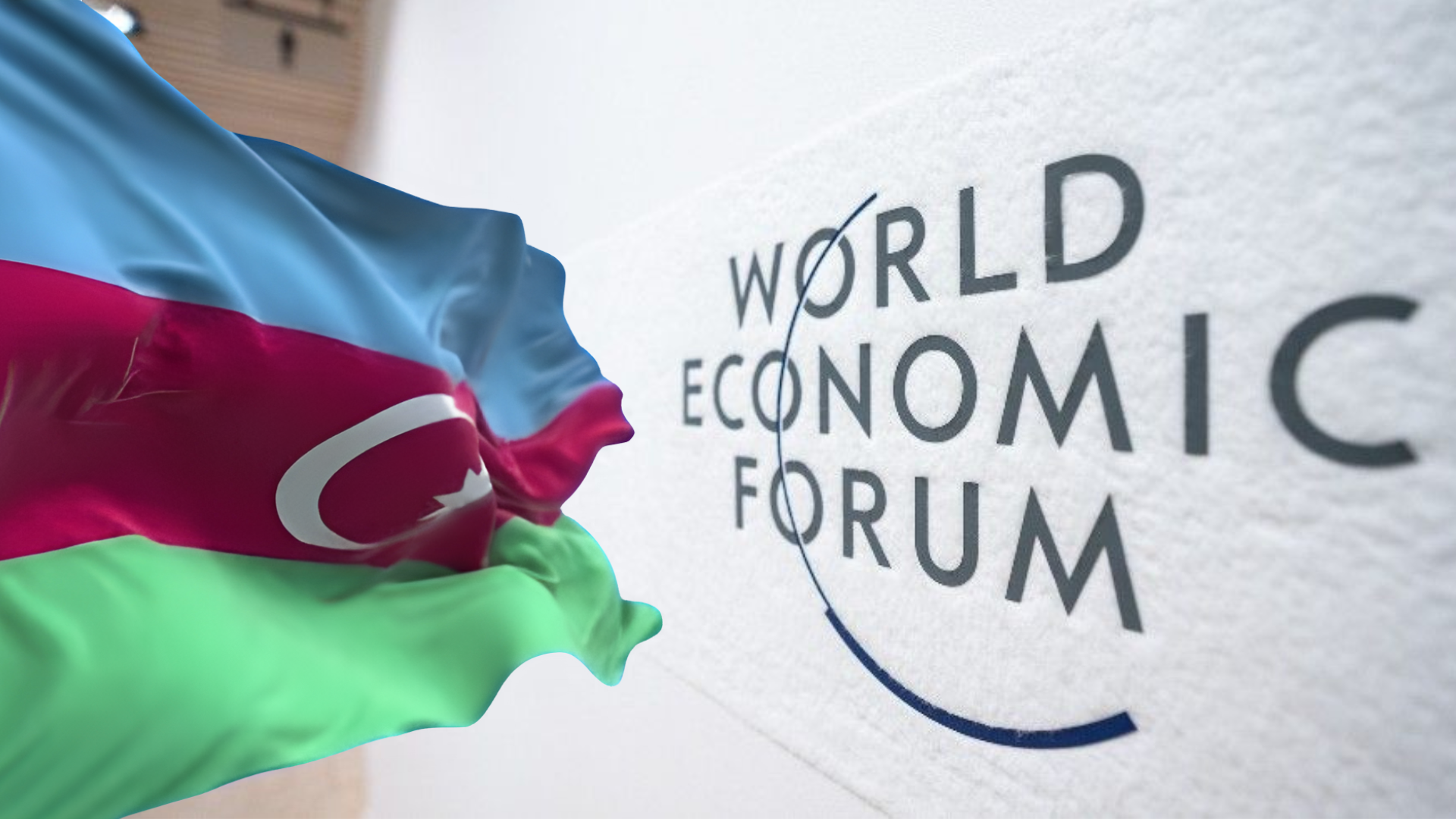
Read moreIn the glittering heights of Davos-Klosters, where billionaires rub shoulders with heads of state and policy wonks compete with tech gurus for airtime, this year’s World Economic Forum opened against an unusually jagged global backdrop. The 56th Annual Meeting, convened under the theme “A Spirit of Dialogue,” arrives at a moment when cooperation is both at a premium and in peril. A record turnout, nearly 400 political leaders, more than 850 chief executives and luminaries from almost 130 nations, underscores the urgency of the moment.
Amid sharply diverging economic blocs, simmering conflicts, and accelerating technological disruption, President Ilham Aliyev landed in Switzerland on January 19 to press Baku’s case in the world’s premier stage for geopolitical and economic discourse. Welcomed at Zurich airport alongside the First Lady, Mehriban Aliyeva, the president’s presence in Davos is both familiar and strategic: an exercise in global positioning that extends far beyond ceremonial diplomacy.
For more than half a century, Davos has been where big ideas are nurtured, and agendas are sketched, sometimes ambitiously, sometimes in unravelling fashion. Traditional emphases on macroeconomics and trade have ceded ground to a mosaic of sustainable development, technological governance, climate mitigation and social inequality. In recent years, the Forum’s agenda has shifted more towards questions of resilience in an age of fragmentation, testing its own claim to be a mouthpiece of globalisation.
This year’s Global Risks Report, released on the eve of the Forum, illustrates why. For 2026, the most acute threat facing the world is not environmental catastrophe or armed invasion, but geoeconomic confrontation: the use of tariffs, sanctions, investment restrictions and supply-chain controls as tools of strategic competition. Such economic rivalry has leapfrogged traditional military conflict as the chief concern of global leaders, highlighting how markets themselves have become a theatre of strategic rivalry.
For Azerbaijan, these assessments are more than academic. The WEF identifies several country-specific vulnerabilities, cybersecurity threats, environmental pollution, disinformation, inflation, and infrastructure-related natural disasters, that resonate with Baku’s own developmental ambitions and its geopolitical calculus. Meanwhile, the spectre of fragmentation articulated in the report mirrors real-world pressures on supply chains, energy corridors and emerging trade routes that traverse the South Caucasus.
President Aliyev’s Davos appearances are rarely pro forma. Over the years, he has used the platform to elevate Azerbaijan from a regional energy exporter to a broker of connectivity and cooperation. In speeches and bilateral meetings, he has underscored the country’s contribution to global energy security, framed Azerbaijan as a reliable supplier, and pitched Baku’s own investment climate to potential partners. This is not merely about prestige: it is about anchoring foreign capital and expertise at a moment when global flows are under strain.
Last year’s Forum was already illustrative. In 2025, Aliyev’s delegation walked away with substantive discussions on energy, sustainable development and security partnerships, with meetings often initiated by foreign counterparts. an indicator of Baku’s rising profile amid shifting geopolitics.
In 2026, those dynamics have sharpened. With supply-chain resilience a mantra in boardrooms and geopolitics reconfigured around economic leverage, Azerbaijan’s strategic location between Europe and Asia has acquired renewed salience. Energy corridors, transit routes and digital links are now as politically charged as they are commercially promising.
On the sidelines of this year’s Forum, Aliyev has already engaged with senior figures such as the Director-General of the World Health Organization, reflecting Baku’s intent to be seen not only as a regional actor but as a constructive partner in global governance.
Yet for all its optimism, Davos remains a forum of contradictions. As participants call for deeper cooperation, global markets are bracing for protectionist shocks, and geopolitical rivalries are increasingly shape economic policy. European stock markets dipped sharply this week on the back of renewed tariff threats from Washington, a reminder that consensus on free tradean, d by extension on the open investment environment that Azerbaijan seeks, cannot be taken for granted.
For Baku, the calculus is clear: to navigate an increasingly fragmented global order, Azerbaijan must cultivate multiple vectors of engagement. Davos offers a rare convergence of political heft and commercial clout, a chance to signal reliability to investors and partners alike. But it also exposes the limits of dialogue when underlying structural rivalries, whether economic, technological or strategic, are intensifying.
In this fraught environment, Azerbaijan’s growing visibility in Davos is neither incidental nor symbolic. It reflects a broader shift in how middle powers are forced to operate, too significant to ignore, too nimble to be boxed in by old geopolitical categories. For Aliyev and his colleagues, the challenge extends beyond merely being present among the world’s powerful; they need to convert that presence into tangible economic and strategic gains. In an era where cooperation is as contested as competition, the current geopolitical landscape makes it imperative that the key discussions at the meeting could significantly influence global politics and economics moving forward.
Here we are to serve you with news right now. It does not cost much, but worth your attention.
Choose to support open, independent, quality journalism and subscribe on a monthly basis.
By subscribing to our online newspaper, you can have full digital access to all news, analysis, and much more.
You can also follow AzerNEWS on Twitter @AzerNewsAz or Facebook @AzerNewsNewspaper
Thank you!