
Zangezur Corridor and Charaña parallel: Lessons from past transit disputes

Akbar Novruz
Read moreThe world is making a serious, historically significant effort to open the Zangezur route, now referred to by its modern title, TRIPP. All negotiations are moving forward with sharp momentum aimed at realising a major project whose success is grounded not in the interests of a single state, but in the convergence of the interests of multiple countries. However, as in many such processes, there are actors who are either unwilling to move forward or seek to obstruct those who are.
Such developments are by no means new. History is replete with examples of strategic connectivity initiatives encountering resistance, but with different results. Roughly fifty years ago, a case closely resembling today’s debate over the Zangazur Corridor emerged in Latin America in the form of the Charaña Accord, which sparked a prolonged dispute among Bolivia, Chile and Peru. It is worth examining this episode more closely.
In 1975, Bolivia and Chile entered into negotiations aimed at opening a transit route through Chilean territory that would grant Bolivia access to the Pacific Ocean. The talks were intended to resolve Bolivia’s long-standing landlocked status following the loss of its coastal territories in the nineteenth century, an experience that bears a striking resemblance to the historical sensitivities surrounding the Zangazur Corridor (TRIPP) in the South Caucasus, but not just result-wise. Yet a third state intervened, opposing the initiative not on objective grounds, but because it perceived the outcome as running counter to its own interests. That state was Peru.
Let us now return to the present region. It is noteworthy that Iran, which shares borders with both Azerbaijan and Armenia, repeatedly emerges as a third-party actor in the Zangazur debate, responding with sharply critical reactions whenever progress is made. Much like Peru during the Charaña process, Tehran positions itself outside the core negotiations, yet consistently seeks to influence the outcome, reflecting a familiar historical pattern in which external actors resist connectivity projects that threaten to alter regional balances and diminish their strategic leverage, especially, while the world’s attention has been drawn to domestic unrest in Iran, its ambassador to Yerevan, Khalil Shirgholami, has been busy fretting over the Zangazur corridor as if nothing else matters. The concern, one suspects, is less about Armenian interests than about maintaining a tradition of obstruction. Shirgholami’s complaints echo those of his predecessor, Mehdi Sobhani, suggesting that Tehran’s regional diplomacy remains caught between posturing and genuine engagement.
Developments in Armenia became intertwined with the situation surrounding Iran. Speaking at a press conference on Wednesday, Iran’s ambassador to Yerevan, Khalil Shirgholami, warned that Tehran is beginning to perceive Armenia as a potential hub for forces hostile to Iran. He pointed to repeated incidents near the Iranian embassy, claiming that certain individuals had been allowed to approach the diplomatic mission and make disrespectful or offensive statements.
“For six consecutive days, from 6:00 p.m. to 9:00 p.m., individuals have been making disrespectful and offensive statements in front of the Iranian embassy in Armenia. Despite our complaints, this activity continues. We have submitted our complaints to the relevant Armenian authorities numerous times. During the most difficult moments, we stood alongside the Armenian government on many occasions. Today, we find ourselves in a difficult situation, and what is happening at the Iranian embassy in Armenia will remain in the historical memory of the Iranian people,” the diplomat said.
In response, Prime Minister Nikol Pashinyan sought to reassure Tehran, stating: “We are very attentive to statements coming from Iran and have done, and will continue to do, everything possible to address the concerns of a brotherly and friendly country.” However, the episode also revealed internal contradictions in Yerevan’s messaging. A day earlier, the Iranian ambassador was publicly rebuked by a media outlet closely aligned with Armenia’s current authorities, which advised Shirgholami to consult with his predecessor, an unusually dismissive response that further complicated the diplomatic optics.
What this episode ultimately underscores is the widening gap between political posturing and policy execution. Such exchanges may generate headlines, but they do little to alter the deeper structural shifts underway in the South Caucasus.
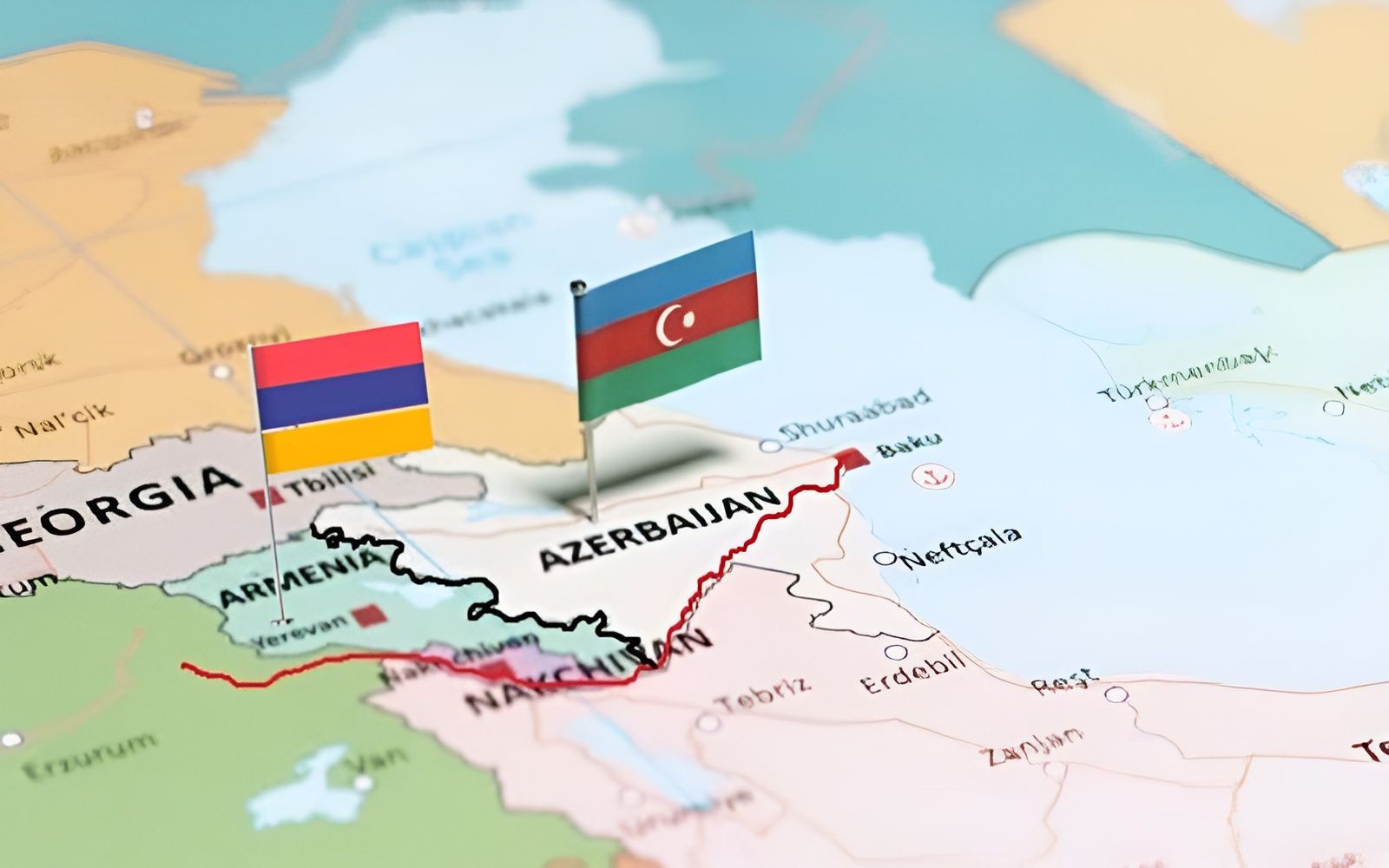
Yet the corridor, the spine of the Trump Route for International Peace and Prosperity (TRIPP), has moved beyond the point of political debate. In interviews earlier this year, Azerbaijan reiterated that the project is irreversible and added that while the name might vary, the purpose remains clear: to link the Azerbaijani mainland to Nakhchivan and establish a fully functional international transport corridor. The underlying logic is simple: sovereign connectivity cannot be vetoed by Tehran.
The August 8, 2025, Washington summit set the framework. Agreements signed there, and subsequent confirmations by U.S. officials, have enshrined the corridor as a practical, multilateral initiative. Baku views unhindered passage to Nakhchivan as non-negotiable, equating its importance with territorial integrity and sovereignty. Washington has made its stake in the process equally visible. Meetings between the U.S. Trade and Development Agency and Azerbaijani officials underscore that TRIPP is not a paper exercise: it is intended to catalyse trade, transit, and energy flows across the South Caucasus.
Armenia, too, has moved pragmatically. Foreign Minister Ararat Mirzoyan confirmed that the U.S.-backed framework satisfies both Yerevan and Washington. Prime Minister Nikol Pashinyan highlighted expected investments in the corridor, signalling that the Armenian leadership is committed to turning a concept into concrete infrastructure. That has apparently unsettled Tehran. Iranian officials, including Ayatollah Khamenei, have called the corridor a “red line” for Iran, portraying its development as detrimental to Armenian interests a position increasingly at odds with the evidence and the parties involved.
Reports of Iranian warnings to Armenian officials, framed as protection of bilateral relations, reveal the underlying concern: the corridor represents regional integration and economic opportunity that Iran cannot easily control. Shirgholami’s insistence that Armenia owes gratitude for past support may resonate rhetorically in Tehran, but it does little to alter the realities on the ground. The corridor is backed by international commitments, U.S. technical support, and mutual economic incentives for Armenia and Azerbaijan alike.
Put simply, Iran’s objections are now largely ceremonial. The corridor’s path has been mapped, its governance structures outlined, and the flow of investment anticipated. Attempts to cast TRIPP as a threat to Armenia are increasingly implausible: Yerevan’s officials stress that the project is mutually beneficial, preserves sovereignty, and enhances regional prosperity. Meanwhile, Baku continues to assert its priorities with confidence, and Washington’s involvement ensures that the project proceeds under international oversight. In short, Tehran’s hand-wringing may provide headlines, but it does little to slow the Zangazur corridor’s advance. The project’s momentum reflects a broader lesson for the region: economic integration and strategic infrastructure will often outpace the political anxieties of neighbors.
The corridor is not just a route for goods; it is a test of regional pragmatism, and in that test, Iran’s apprehensions appear increasingly out of step with reality.
Here we are to serve you with news right now. It does not cost much, but worth your attention.
Choose to support open, independent, quality journalism and subscribe on a monthly basis.
By subscribing to our online newspaper, you can have full digital access to all news, analysis, and much more.
You can also follow AzerNEWS on Twitter @AzerNewsAz or Facebook @AzerNewsNewspaper
Thank you!