
Middle Corridor shows why process matters more than maps

AzerNEWS Staff
Read moreThe Middle Corridor has gained growing strategic importance as global trade routes are being reshaped by geopolitical tensions, supply chain disruptions, and the search for faster and more reliable connections between Asia and Europe. As an alternative to traditional maritime routes, the Trans-Caspian International Transport Route is increasingly viewed as a practical and resilient overland option.
At the same time, the effectiveness of the Middle Corridor is improving as partner countries strengthen coordination, invest in infrastructure, and align transport and customs procedures. This shift toward deeper operational cooperation has made efficiency at border crossings and the application of international transit systems key determinants of the corridor’s competitiveness, placing facilitation mechanisms such as the TIR system at the center of its future development.
" As global supply chains undergo structural transformation amid geopolitical uncertainty, the competitiveness of overland trade routes between Asia and Europe is increasingly defined not by distance, but by efficiency, predictability, and border performance. In this context, the TIR international freight transport system is emerging as one of the most powerful tools capable of turning the Middle Corridor into a reliable and competitive Eurasian trade artery."
This assessment was underscored by Umberto de Pretto, Secretary General of the International Road Transport Union (IRU), during his remarks at the Turkic Week event held in Vienna. According to him, the success of the Middle Corridor will ultimately depend not on infrastructure alone, but on the ability to move goods seamlessly across borders.
The Trans-Caspian International Transport Route connects China with Europe via Kazakhstan, the Caspian Sea, Azerbaijan, Georgia, and Turkiye. It has gained strategic importance as an alternative to traditional maritime routes, particularly since 2022, when disruptions to global logistics prompted shippers to reassess risk concentration.
While the corridor is broader regarded as one of the safest and most efficient land routes between China and Europe, its competitiveness remains constrained by operational bottlenecks - primarily at border crossings. Long waiting times, repeated inspections, fragmented customs procedures, and limited coordination between authorities continue to undermine its full potential.
Against this backdrop, the TIR system offers a structural
solution rather than a piecemeal fix. Built on mutual recognition
of customs controls, an international guarantee mechanism, and the
use of sealed and secure vehicles, TIR minimizes physical
inspections and significantly reduces uncertainty for logistics
operators.
“Reducing time loss at borders, eliminating repeated checks, and
switching to digital procedures will lower transit costs and
improve reliability exactly where the corridor faces its greatest
constraints today,” de Pretto noted.
Currently, the TIR system connects China with more than 30 countries across Eurasia, cutting transit times by up to 80% and reducing transport costs by about 50%. For a corridor competing not only on speed but also on predictability, these gains are strategically decisive.
One of the most critical insights highlighted during discussions is that investments in roads, ports, and logistics hubs lose much of their value if trucks remain stranded at borders. In practice, a single day of delay can cost more than hundreds of kilometers of road construction.
In this sense, border crossings are the weakest - and most decisive - link along the Middle Corridor. Persistent challenges include limited throughput during peak periods, inadequate Ro-Ro capacity across the Caspian Sea, insufficient parking and rest facilities for drivers, and weak mutual recognition of inspection results.
TIR directly addresses these issues by enabling risk-based controls, fostering trust between customs administrations, and applying internationally harmonized procedures, factors that are essential for increasing corridor-wide connectivity.
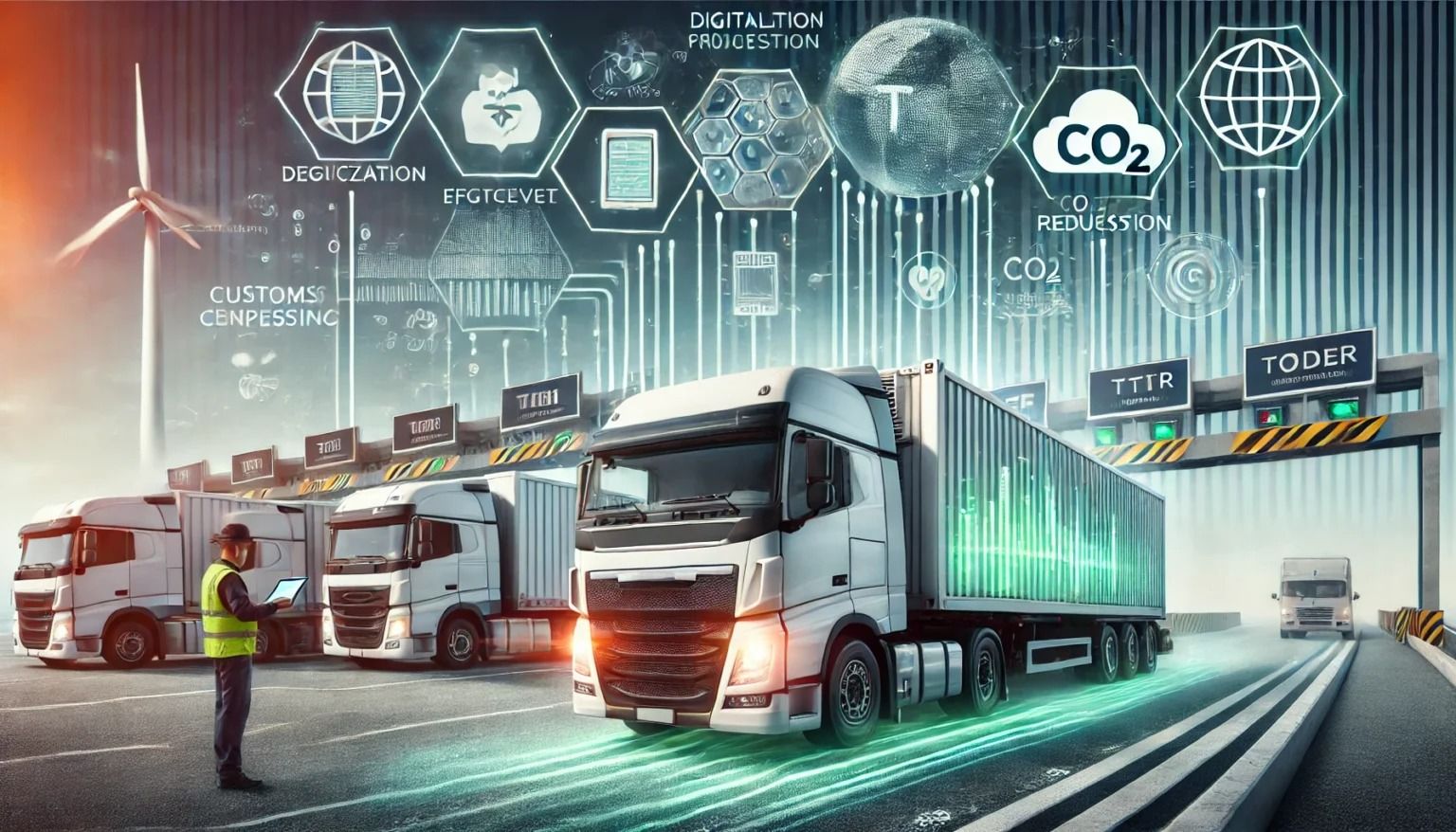
A notable innovation within the TIR framework is the development of so-called “green corridors” at border crossings. These corridors provide priority passage, accelerated controls, and predictable delivery times for compliant operators.
“Green corridors are not a privilege, but an incentive to comply with rules and increase transparency,” de Pretto emphasized.
Today, priority lanes or special processing windows for TIR transport are operational across Central Asia, as well as in Romania, Moldova, China, Mongolia, and Saudi Arabia - demonstrating that facilitation measures can be scaled across regions with political commitment.
Digitalization is another cornerstone of the TIR system’s expansion. The introduction of eTIR eliminates paper documentation, enhances interoperability between national customs systems, and strengthens transparency and security in transit operations. Launched in 2003, the eTIR project created a Customs-to-Customs data exchange platform that enables seamless information sharing among all stakeholders. With Iran’s accession to the eTIR international system in 2024, digital transit along the Europe-Caucasus-Asia corridor has reached an unprecedented level of integration, now involving six countries.
The new legal framework for full eTIR implementation entered into force on 25 May 2021, and today 77 countries across five continents are parties to the system. This marks a fundamental shift toward fully paperless, guarantee-backed cross-border transit.
The growing relevance of the Middle Corridor is also reflected in changing trade patterns. While earlier flows were dominated by raw materials such as oil and minerals, containerized cargo is now expanding rapidly. Over the past 12 months alone, container volumes along the corridor have more than tripled, with over 60% consisting of Chinese exports bound for Europe.
According to IRU forecasts, freight volumes along the Middle Corridor could triple by 2030. However, without decisive modernization of border procedures, actual traffic could fall up to 35% short of its potential - highlighting once again that institutional efficiency is as important as physical infrastructure.
“The success of the Middle Corridor will not be measured by maps, but by minutes saved at borders,” de Pretto concluded. In his view, the technical solutions already exist, and the full deployment of TIR requires primarily political will.
If implemented comprehensively, the TIR system can transform the Middle Corridor into a predictable, competitive, and sustainable trade route - one capable of generating new jobs, stimulating economic growth, and enhancing long-term regional stability.
In the current environment, where the resilience of logistics networks is receiving increased attention, the TIR system functions as a practical facilitation mechanism that contributes to improving cross-border transit and connectivity across Eurasia.
Here we are to serve you with news right now. It does not cost much, but worth your attention.
Choose to support open, independent, quality journalism and subscribe on a monthly basis.
By subscribing to our online newspaper, you can have full digital access to all news, analysis, and much more.
You can also follow AzerNEWS on Twitter @AzerNewsAz or Facebook @AzerNewsNewspaper
Thank you!