
President Aliyev’s post-war calculus and remaking of South Caucasus

Qabil Ashirov
Read more2025 can be considered a new chapter in the history of Azerbaijan, a year alive with profits and achievements. The dividends of the profound and decisive policies pursued by the Azerbaijani government extend beyond the country, shaping the entire South Caucasus.
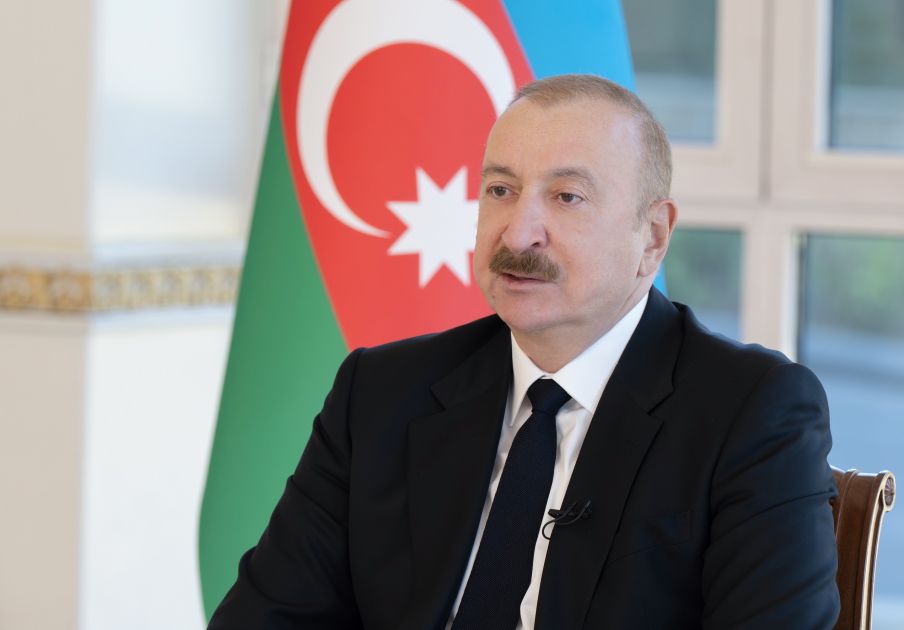
More precisely, the roars of weapons that had echoed since the first days of independence over 30 years ago finally fell silent in 2025. Neither the Azerbaijani nor the Armenian side suffered any losses throughout the year. For a country that has lived in a state of war since independence, and even before, that reality is unprecedented. This marks a new stage in the history of both countries. As President Ilham Aliyev noted in an interview with local media: “…. the Armenia-Azerbaijan war ended from a political point of view, and we have been living in peace for several months now.”
Surely, this is the most important achievement, as war had disrupted all regional development. Both sides spent billions of dollars on arms that could have been allocated to social projects, infrastructure, and more. The Garabagh conflict, which intermittently lasted for more than 30 years, claimed thousands of lives. Despite all difficulties, Azerbaijan pursued a decisive policy regarding its territorial integrity and ultimately achieved its goals through victory in the 44-day war and the subsequent anti-terrorist operation in 2023. Today, Azerbaijan is among the rare countries in the world that have successfully restored its territorial integrity.
However, victory on the battlefield cannot be considered complete unless political objectives are secured. Azerbaijan sealed its political goals following its military victories, and, more importantly, they were affirmed in the White House. As President Aliyev stated, “There were different stages of the war. You remember that well. The active stage of the war, the stage of the ceasefire, the Second Karabagh War, the anti-terrorist operation, the period that followed it – all these events ended in August of last year. In other words, Azerbaijan has put a political seal on the brilliant Victory it achieved on the battlefield and, as I mentioned, we did it in the world's number one office.”
These achievements have created new realities in the region. For example, Azerbaijan and Armenia have begun limited trade, a trust-building step between the two nations. Last month, Armenia purchased fuel from Azerbaijan, an unprecedented development. Azerbaijan had never exported any product to Armenia before, let alone fuel, which is considered the lifeblood of today’s economy.
The fuel trade sparked heated debate among Armenians, especially on social media. Some criticised the Pashinyan government, which is understandable, as no one expected decades of hostility to vanish overnight. Yet others, with healthier mindsets, discussed what products Armenia could export to Azerbaijan.
Economic activity is not limited to only Azerbaijan’s fuel exports. Last year, Baku paid Yerevan for opening its airspace to Azerbaijani planes. Previously, Azerbaijani aircraft had to detour through Iran or Georgia. Now, flights pass over Armenia, shortening travel time and reducing costs.
Assessing the achievements in 2025, one can suggest that the scope of economic activities will be enhanced, paving the way for trust-building between the two nations. Because not only the Armenian governments but also Armenian society realised that they cannot compete with Azerbaijan in terms of military. Azerbaijan is much bigger and mightier than Armenia. Additionally, no power in the world can force Azerbaijan to make concessions over its territories. Today, Azerbaijan boasts the strongest military power and dynamic economy in the region.
Furthermore, the dividends of Azerbaijan’s achievements in 2025, emerging from a 30-year decisive policy, are already tangible, and citizens are benefiting. As President Aliyev noted: “Although we have been living in these conditions for only five months, we are already seeing the fruition of this – both on the political and economic planes.”
The conclusion is clear: the only path the South Caucasus urgently needs, and the only one capable of leading the region toward a brighter future, is peace. Only in an environment where peace prevails can development take root, confidence in the future grow, and long-term goals be meaningfully pursued. As the renowned American civil rights leader Martin Luther King Jr. once observed, “Peace is not merely a distant goal that we seek, but a means by which we arrive at that goal.”
For decades, the absence of peace transformed the South Caucasus into an arena for competing external interests. These interests, driven by narrow and often self-serving agendas, contributed to the artificial and ultimately futile prolongation of the conflict. This drawn-out confrontation brought no tangible benefit to either side - neither to Azerbaijan nor to Armenia. On the contrary, it deprived both societies of economic opportunities, regional integration, and the chance for sustainable development.
Today, however, the situation has changed. The new realities that have emerged in the region as a result of Azerbaijan’s actions and diplomatic efforts have created an opening, particularly for Armenia, to break free from the political and economic stagnation that has long held it back. This moment presents a rare opportunity to move away from confrontation and toward constructive engagement. It may well be a decisive one. Failure to seize it risks consigning the region to yet another cycle of missed chances and unfulfilled potential.
Here we are to serve you with news right now. It does not cost much, but worth your attention.
Choose to support open, independent, quality journalism and subscribe on a monthly basis.
By subscribing to our online newspaper, you can have full digital access to all news, analysis, and much more.
You can also follow AzerNEWS on Twitter @AzerNewsAz or Facebook @AzerNewsNewspaper
Thank you!