
Azerbaijan’s banks face Basel III shift as capital rules tighten

Qabil Ashirov
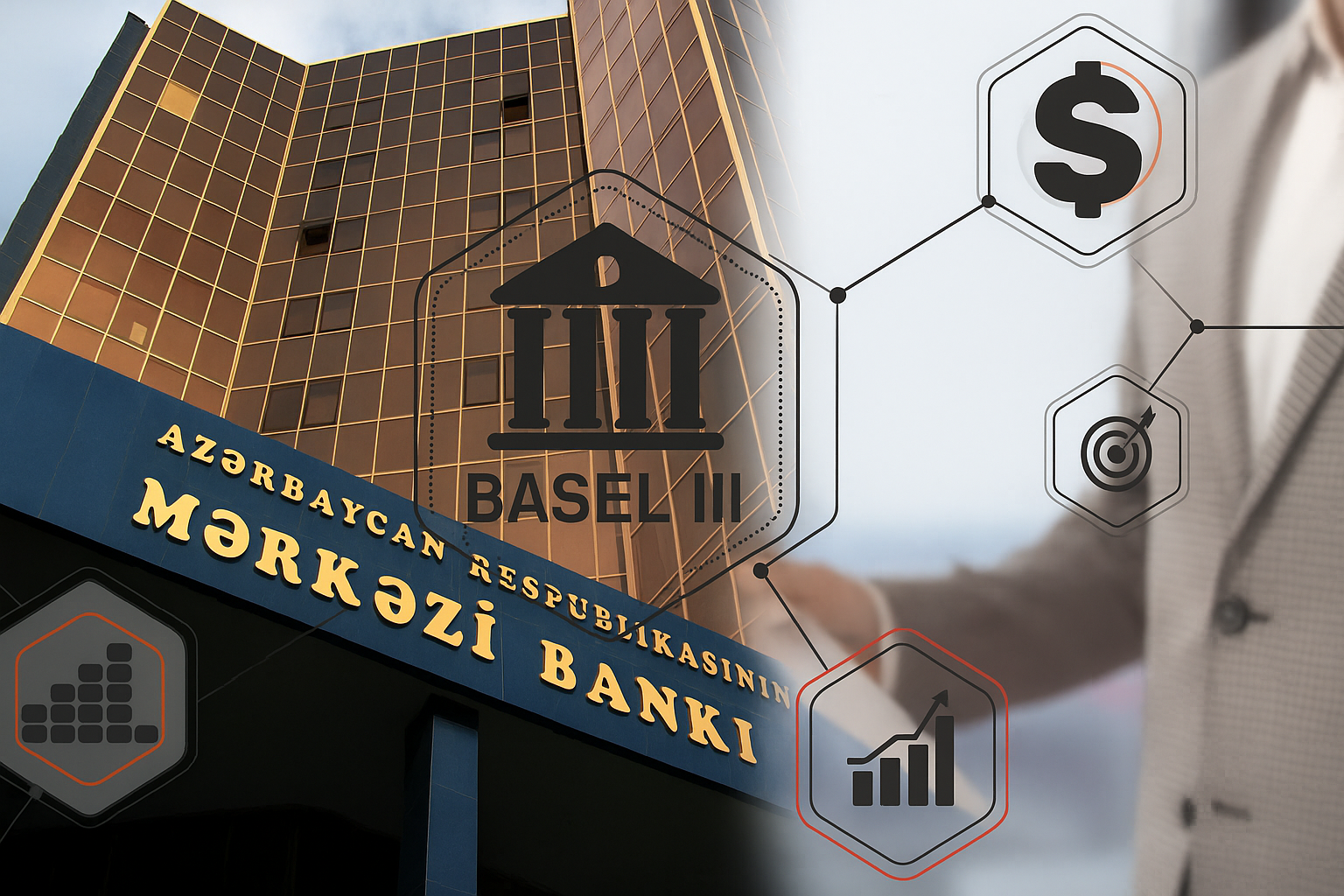
Read moreA new phase is taking shape in Azerbaijan’s banking sector. The Central Bank’s decision to grant local banks a transition period to align their capital with Basel III standards signals a shift toward a more disciplined and structured regulatory environment. This is not merely a technical adjustment. It is an institutional change that directly affects how banks take risks, allocate capital, and finance the broader economy.
Basel III is an international framework for bank regulation built on a straightforward principle: banks that take risks must hold sufficient capital to absorb potential losses. The global financial crisis of 2008 exposed a critical weakness in banking systems worldwide. Many institutions appeared well capitalised on paper, yet proved incapable of withstanding real financial shocks. Governments were forced to intervene, transferring private-sector losses onto public balance sheets. Basel III was designed to prevent a repeat of that outcome by strengthening capital quality, tightening risk measurement, and introducing precautionary buffers.
For Azerbaijan’s banking system, the transition to Basel III begins with a redefinition of what capital means. The new rules place greater emphasis on high-quality capital—primarily common equity and retained earnings that can genuinely absorb losses. This shifts banks away from relying on weaker or hybrid instruments and encourages a more conservative balance-sheet structure. In practice, it also affects dividend policies, as banks are incentivised to retain profits to strengthen their capital base rather than distribute earnings aggressively.
One of the most important elements of Basel III is the introduction of capital buffers. These buffers are designed to be built up during periods of economic growth and drawn down during downturns. Their purpose is to prevent banks from sharply cutting lending at the first sign of stress. For an economy like Azerbaijan’s, where bank credit remains a key channel for financing businesses and households, this mechanism plays a stabilising role. By smoothing the credit cycle, capital buffers help reduce the risk that financial stress spills rapidly into the real economy.
The new framework also changes how banks evaluate risk. Under Basel III, holding riskier assets requires holding more capital. High-yield lending is no longer simply a matter of higher returns; it carries a tangible cost in the form of increased capital requirements. This pushes banks toward more careful credit assessments, stronger risk management, and greater attention to borrowers’ long-term repayment capacity. Over time, the emphasis shifts from rapid balance-sheet expansion to sustainable and better-quality growth.
In the short term, the adjustment process may prove challenging for some banks. Smaller institutions, in particular, may need to raise additional capital, restructure their shareholder base, or reduce exposure to higher-risk assets. These steps can affect profitability and may influence lending conditions, including pricing and credit availability. However, such pressures should be viewed as part of a necessary transition rather than a structural weakness. A banking system that cannot meet higher capital standards is, by definition, more vulnerable to shocks.
From a systemic perspective, Basel III strengthens prudential supervision and enhances transparency. Regulators gain clearer insight into banks’ true financial positions, while markets receive more reliable signals about institutional strength. This alignment with internationally recognised standards is especially important for Azerbaijan as it seeks deeper integration into global financial markets. For foreign investors and international financial institutions, regulatory familiarity and credibility play a decisive role in long-term engagement decisions.
The broader economic implications are also significant. A better-capitalised banking sector is more resilient during periods of volatility, whether driven by global financial cycles, commodity price fluctuations, or geopolitical uncertainty. While stricter capital rules may temper aggressive lending during boom periods, they also reduce the likelihood of abrupt contractions during downturns. Over time, this contributes to more stable economic growth and a healthier financial ecosystem.
Ultimately, the adoption of Basel III standards represents more than a regulatory update. It reflects a shift in philosophy, from prioritising speed and scale toward emphasising resilience and discipline. For Azerbaijan’s banking sector, this transition marks a move away from expansion driven primarily by risk-taking and toward a model based on capital strength, prudent management, and long-term sustainability. The short-term costs of adjustment are real, but the long-term payoff is a banking system better equipped to support the economy through both calm and turbulent periods.
Here we are to serve you with news right now. It does not cost much, but worth your attention.
Choose to support open, independent, quality journalism and subscribe on a monthly basis.
By subscribing to our online newspaper, you can have full digital access to all news, analysis, and much more.
You can also follow AzerNEWS on Twitter @AzerNewsAz or Facebook @AzerNewsNewspaper
Thank you!