
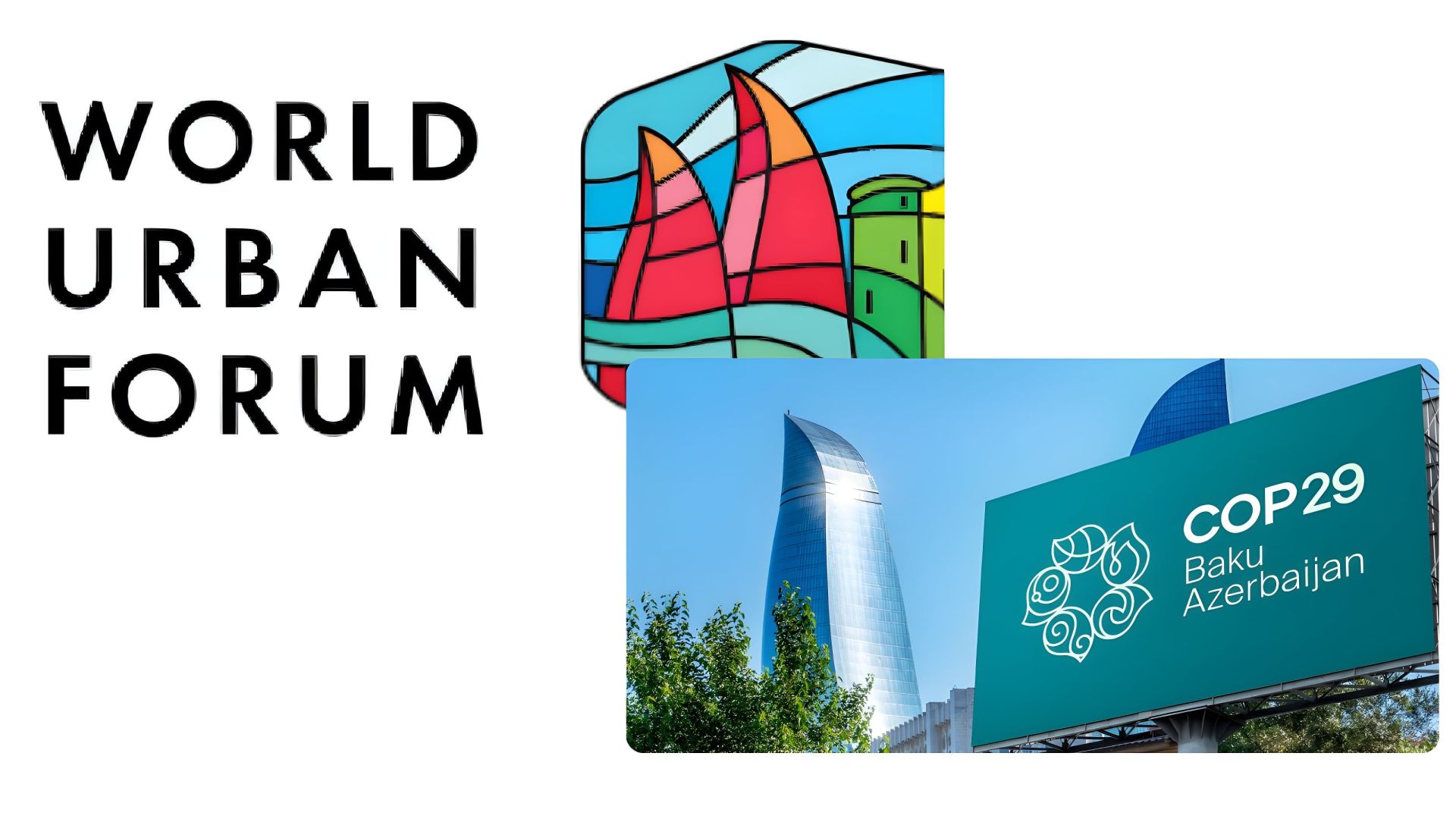
Baku extends COP29 legacy with 2026 World Urban Forum hosting
AzerNEWS Staff
Read moreAzerbaijan’s growing role as a trusted host of major international forums is not accidental. It reflects a combination of political stability, institutional capacity, and an increasingly visible development model that resonates with global agendas. Just as Azerbaijan successfully hosted COP29 in December 2024, facilitating meaningful dialogue and landmark climate decisions, it is well-positioned to ensure the success of the 13th World Urban Forum (WUF13), which the country will host on May 17–22, 2026, under the theme “Housing for All: Safe and Sustainable Cities and Settlements.” The decision to hold the Forum in Azerbaijan, including the first-ever Summit of Heads of State and Government within WUF, signals growing international confidence in the country’s leadership on sustainable development and urban transformation. Ahead of WUF13, President Ilham Aliyev has signed a decree declaring 2026 the “Year of Urban Planning and Architecture” in Azerbaijan, highlighting the country’s commitment to sustainable urban development. The order aims to preserve Azerbaijan’s historic architectural and urban planning traditions while promoting modern approaches to address emerging challenges in the sector.
Urbanization in Azerbaijan has developed under a combination of economic, political, and social factors. While in many countries urban growth has been driven largely by industrialization, Azerbaijan’s urban landscape has also been influenced by periods of conflict, forced displacement, and subsequent post-war recovery, alongside broader modernization processes. This background provides relevant context as the country prepares to host WUF13, where issues such as inclusive urban development, housing policy, resilience, and sustainability will be discussed. In Azerbaijan’s case, these topics relate to ongoing policy implementation, particularly in the formerly conflict-affected territories.
The most compelling example of this approach can be seen in Garabagh and Eastern Zangezur, where Azerbaijan has launched one of the world’s most ambitious post-conflict reconstruction and urban development programs following the 2020 Patriotic War. The strategy goes beyond physical rebuilding and reflects a long-term vision of sustainable settlement. Large-scale mine clearance remains the critical first step, followed by the rapid construction of transport networks, utilities, industrial zones, and social infrastructure. At the same time, economic revitalization and job creation are being prioritized to ensure that returning residents can rebuild their lives with dignity and stability. New transport corridors, including the strategically important Zangezur Corridor, are integrating these regions into national and regional economic systems, reinforcing their long-term viability.
What distinguishes Azerbaijan’s reconstruction model is its strong environmental dimension. Garabagh and Eastern Zangezur have been declared a “Green Energy Zone,” turning post-conflict recovery into an opportunity for climate-conscious urban planning. New cities, towns, and villages are being built using energy-efficient designs, renewable energy sources, environmentally friendly materials, and climate-resilient infrastructure. This approach transforms reconstruction into the creation of a new generation of sustainable settlements and aligns directly with the UN’s New Urban Agenda and the core priorities of WUF13.
Azerbaijan’s readiness to host WUF13 is further reinforced by the institutional and diplomatic experience gained during COP29, an event that remains notable for both the clarity of its outcomes and the strong foundations it laid for future global processes. One of COP29’s most significant achievements was the adoption of the Baku Finance Goal, which established a historic commitment to mobilize $1.3 trillion annually for developing countries and set clear expectations for developed nations to contribute at least $300 billion per year by 2035. The conference also delivered a long-awaited breakthrough by fully operationalizing Article 6 of the Paris Agreement, unlocking transparent and regulated international carbon markets, while the Loss and Damage Fund was fully institutionalized with contributions exceeding $730 million, offering tangible support to climate-vulnerable states, particularly Small Island Developing States.
Beyond finance and mitigation, COP29 ensured that adaptation would remain a central pillar of global climate policy through the adoption of the Baku Adaptation Roadmap and the Global Adaptation Target, reinforcing Azerbaijan’s role as a facilitator of balanced and inclusive outcomes. These achievements demonstrated the country’s ability not only to host complex international forums but also to guide negotiations toward concrete and forward-looking results.
In this context, WUF13 represents a natural continuation of Azerbaijan’s expanding role in global governance. The Forum will provide a platform to showcase the country’s urban achievements while contributing substantively to international discussions on housing, sustainable cities, and post-conflict reconstruction. As COP29 showed, Azerbaijan is capable of translating dialogue into action. With WUF13, the country aims to do the same in the urban development sphere - presenting itself not merely as a venue for global debate, but as a practical model for building resilient, inclusive, and sustainable cities in a rapidly changing world.
Here we are to serve you with news right now. It does not cost much, but worth your attention.
Choose to support open, independent, quality journalism and subscribe on a monthly basis.
By subscribing to our online newspaper, you can have full digital access to all news, analysis, and much more.
You can also follow AzerNEWS on Twitter @AzerNewsAz or Facebook @AzerNewsNewspaper
Thank you!