
France's Velvet unveils its first high-speed train
by Alimat Aliyeva
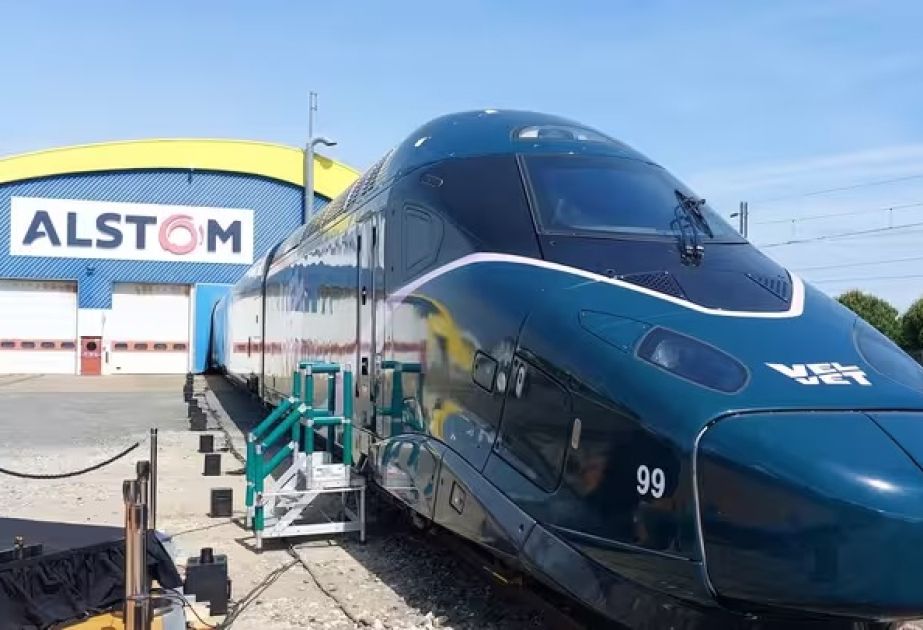
The French private railway company Velvet has unveiled its future high-speed train, marking its entry into France’s competitive rail market. The company aims to rival the national railway operator SNCF and plans to begin passenger services to several major cities in 2028, AzerNEWS reports.
The dark green train, produced at Alstom’s manufacturing facility, is Velvet’s first high-speed train (TGV). The company has ordered a total of 12 trains as part of its expansion strategy. Tim Jackson, co-founder of Velvet, said that around 15% of passengers currently wish to travel on high-speed routes but are unable to do so due to limited capacity.
“SNCF is doing a very good job, we have no complaints, but the number of trains and available seats is not sufficient,” Jackson noted, highlighting the growing demand for rail travel in France.
Velvet’s planned services will operate on key routes such as Paris–Rennes, Paris–Nantes, and Paris–Bordeaux. Industry observers say that increased competition on these lines could significantly improve service frequency and passenger choice, particularly on heavily congested routes like Paris–Bordeaux.
However, not all stakeholders are fully optimistic. Some transport analysts warn that new entrants may initially face challenges related to track access, scheduling coordination, and infrastructure constraints, which in France remain tightly managed by SNCF Réseau.
Velvet is not the first foreign or private operator to challenge SNCF’s dominance. Italy’s Trenitalia already runs services on the Paris–Lyon route and to southern cities such as Marseille, while Spain’s Renfe operates cross-border connections between France and Spain.
Experts note that this gradual liberalization of France’s rail market could have a long-term impact on ticket pricing and service quality. According to the French transport regulator, average fares on the Paris–Lyon route dropped by around 10% following the introduction of Trenitalia’s high-speed services.
Some analysts also point out that competition could push operators toward greener and more energy-efficient rail technologies, as companies seek to differentiate themselves not only on price and speed, but also on sustainability and onboard passenger experience.
Here we are to serve you with news right now. It does not cost much, but worth your attention.
Choose to support open, independent, quality journalism and subscribe on a monthly basis.
By subscribing to our online newspaper, you can have full digital access to all news, analysis, and much more.
You can also follow AzerNEWS on Twitter @AzerNewsAz or Facebook @AzerNewsNewspaper
Thank you!