
Sea level rise may put more people at risk
By Alimat Aliyeva
European geographers have discovered that current forecasts of sea level rise significantly underestimate its impact—by as much as 20–30 centimeters. This discrepancy means that roughly 68 percent more people could be affected than previously thought, AzerNEWS reports.
"Almost all forecasts rely on mathematical models rather than actual measurements of sea levels in different regions of the world," said Katharina Seeger, a geographer at Wageningen University. "As a result, they consistently underestimate both the area of vulnerable land and the number of people at risk. Our calculations show that these territories cover 37 percent more area than expected, and approximately 132 million people could be impacted."
Seeger and her colleagues warn that a rapid increase in global temperatures will accelerate sea level rise due to the melting of glaciers in Greenland and the Arctic, as well as the most vulnerable ice sheets of West Antarctica.
According to UN projections, if greenhouse gas emissions continue unchecked, global sea levels are expected to rise by 30–50 centimeters by the end of this century. However, European researchers point out that 99 percent of these projections are based not on direct measurements along coastlines, but on satellite imagery and model calculations that assume water distributes evenly across the planet under the influence of gravity and rotation. In reality, sea levels are influenced by local currents, winds, salinity, and water temperature, making these forecasts less precise.
To address this, the researchers combined extensive regional measurements of sea level from oceans worldwide and compared them with the inputs used in existing models. On average, they found that sea level forecasts are underestimated by 20–30 centimeters—and in certain regions of the Global South, such as the Mekong Delta and other major river deltas, the underestimation can reach nearly a meter.
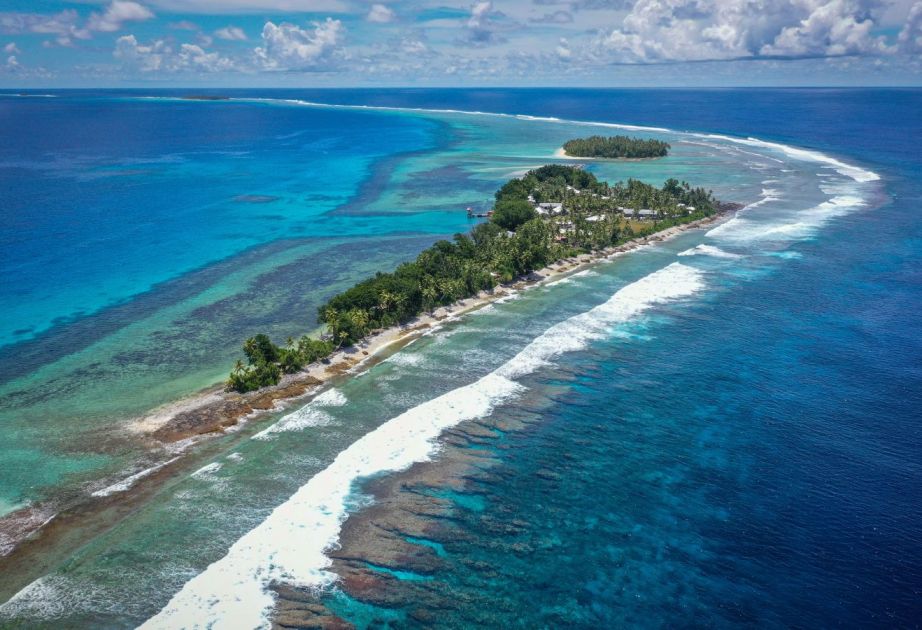
Accounting for these discrepancies, the team concluded that rising seas could affect 37 percent more coastal land and 132 million people—68 percent more than previously estimated. Countries in Southeast Asia, Australia, and the Pacific region are expected to be particularly vulnerable.
Seeger added that these findings have serious implications for urban planning, agriculture, and disaster preparedness. "Coastal cities, small island nations, and river deltas are on the frontline. Without updated projections, millions may face forced relocation, loss of livelihoods, and devastating economic consequences," she said.
Interestingly, the researchers also noted that integrating real-world measurements into models could improve early-warning systems and infrastructure planning, potentially saving lives and billions in damages in the coming decades.
Here we are to serve you with news right now. It does not cost much, but worth your attention.
Choose to support open, independent, quality journalism and subscribe on a monthly basis.
By subscribing to our online newspaper, you can have full digital access to all news, analysis, and much more.
You can also follow AzerNEWS on Twitter @AzerNewsAz or Facebook @AzerNewsNewspaper
Thank you!