
Endangered honeyeater’s song revived in Australia
By Alimat Aliyeva
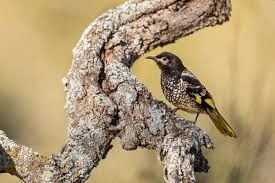
Scientists in Australia have successfully restored the lost traditional song of the critically endangered regent honeyeater, offering new hope for the survival of one of the country’s rarest birds, AzerNEWS reports, citing foreign media.
Researchers from the Australian National University (ANU) and the Taronga Conservation Society Australia revealed that targeted “song tutoring” at Taronga Zoo in Sydney and Taronga Western Plains Zoo in Dubbo, New South Wales, has revived a disappearing cultural trait essential to the species’ survival, according to an ANU statement on Tuesday.
Birdsong plays a vital role in attracting mates, defending territories, and maintaining social bonds. Many species learn their songs from experienced “tutors,” and without proper instruction, young birds often develop incorrect or simplified songs, dramatically reducing breeding success.
With fewer than 250 individuals left in the wild, the regent honeyeater has faced not only a steep population decline but also the erosion of its cultural traditions, the study published in Nature Scientific Reports noted.
“Everything we know about the function of birdsong suggests that having a cohesive dialect will be critical to the success of the reintroduction program and the survival of the species,” said lead author Daniel Appleby from ANU’s College of Systems and Society.
By using recordings and direct exposure to just two wild-born male tutors, scientists taught young zoo-bred males the traditional wild song that had disappeared from wild populations and was becoming increasingly simplified as numbers dwindled.
Today, more than half of the zoo population sings the restored traditional song. Researchers hope this will help stabilize and even rebuild song culture in wild populations, boosting breeding success after release.
The study underscores that conservation efforts must go beyond protecting genes, highlighting the importance of preserving learned traditions in the fight against extinction.
Interestingly, experts suggest this approach could serve as a model for other endangered species facing cultural erosion, showing that saving a species sometimes requires restoring the “memories” and behaviors that make them truly wild.
Here we are to serve you with news right now. It does not cost much, but worth your attention.
Choose to support open, independent, quality journalism and subscribe on a monthly basis.
By subscribing to our online newspaper, you can have full digital access to all news, analysis, and much more.
You can also follow AzerNEWS on Twitter @AzerNewsAz or Facebook @AzerNewsNewspaper
Thank you!