
NASA delays Artemis rocket launch for urgent repairs
By Alimat Aliyeva
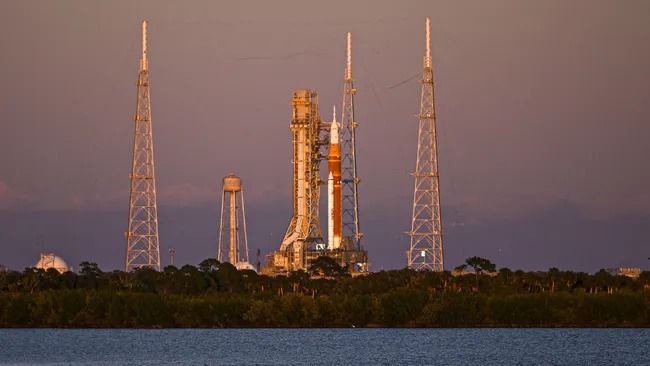
NASA has once again postponed its historic Artemis II lunar mission after engineers detected a helium flow issue overnight on Feb. 20–21 in the agency’s powerful Space Launch System (SLS) rocket, AzerNEWS reports, citing foreign media.
Artemis II had been scheduled to send four astronauts on a flyby around the Moon as early as next week. The launch is now targeted for no earlier than April, pending further technical assessments.
Engineers identified a problem with helium flow to the rocket’s upper stage, known as the Interim Cryogenic Propulsion Stage. Helium plays a critical role in purging the engine and pressurizing propellant tanks, ensuring stable fuel delivery. Without proper helium flow, safe launch operations cannot proceed.
To investigate the issue, NASA will roll the SLS rocket and its Orion capsule off the launchpad at Kennedy Space Center and return them to the Vehicle Assembly Building (VAB). According to the agency, this step is necessary to diagnose the root cause and carry out repairs.
The delay comes just days after what appeared to be a major milestone. During a successful wet dress rehearsal, teams loaded more than 700,000 gallons (2.6 million liters) of supercold liquid hydrogen and liquid oxygen and completed a simulated countdown. The smooth test prompted optimism from NASA officials.
Lori Glaze, NASA’s Moon to Mars program manager, described the growing anticipation, saying excitement for Artemis II was “really starting to build.”
However, NASA Administrator Jared Isaacman later confirmed that the helium system issue prevented proper flow through the vehicle, forcing a delay.
NASA is now examining several potential causes, including ground-to-rocket interfaces, filters, and valves. Engineers are also reviewing data from Artemis I, which experienced a helium-related pressurization issue before its successful launch in November 2022.
Despite repeated setbacks — including previous hydrogen leaks and fueling challenges — Artemis II remains a landmark mission. It will mark the first time in more than 50 years that NASA sends astronauts toward the Moon since the Apollo program era. It will also be the first lunar mission to include a woman and a Black astronaut as part of the crew.
The 10-day flight will test life-support systems, navigation, and deep-space operations in preparation for Artemis III, which aims to land astronauts on the lunar surface later this decade. NASA ultimately intends to establish a sustained human presence on the Moon and use it as a stepping stone for future crewed missions to Mars.
Current launch windows include April 1, April 3–6, and April 30, with April 30 serving as the latest possible date in this cycle. While NASA hopes the rollback will preserve the April opportunity, spaceflight remains inherently complex, and further adjustments cannot be ruled out.
Some space policy experts note that while delays can be costly and politically sensitive, they also underscore NASA’s safety-first culture — a lesson reinforced throughout the agency’s history. If Artemis II ultimately launches successfully, the recent setbacks may be remembered not as failures, but as necessary steps on the road back to the Moon.
Here we are to serve you with news right now. It does not cost much, but worth your attention.
Choose to support open, independent, quality journalism and subscribe on a monthly basis.
By subscribing to our online newspaper, you can have full digital access to all news, analysis, and much more.
You can also follow AzerNEWS on Twitter @AzerNewsAz or Facebook @AzerNewsNewspaper
Thank you!