
Engineers create balloon telescope to study exoplanet atmospheres
By Alimat Aliyeva
Engineers and astronomers have unveiled a groundbreaking telescope design for studying exoplanet atmospheres, offering near-space observations at a fraction of the cost of orbital missions, AzerNEWS reports.
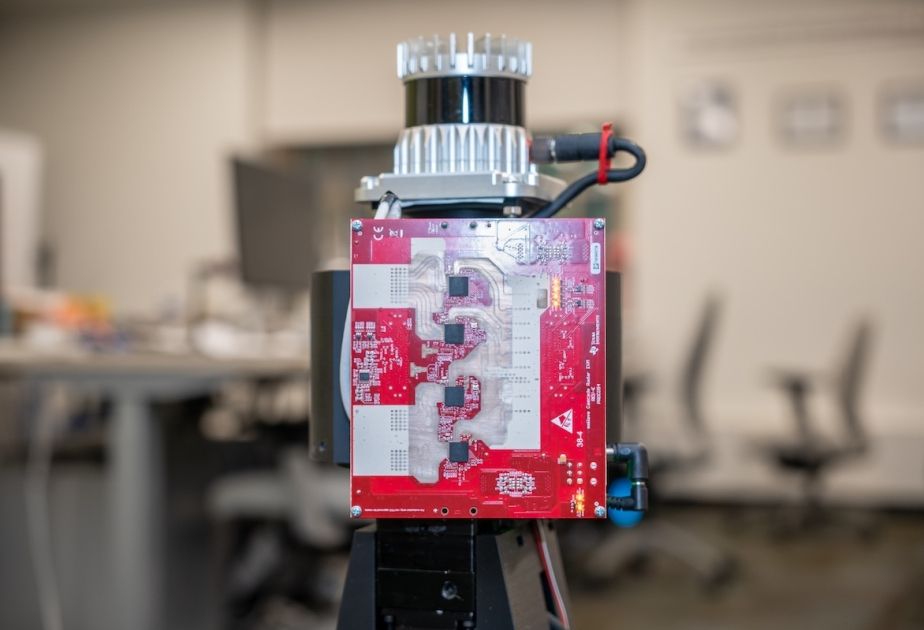
A team of researchers has developed the Exoplanet Climate Infrared Telescope (EXCITE), a telescope mounted on a high-altitude balloon rather than placed in orbit. The results of the project have been published on the arXiv preprint server.
The telescope system is attached to a balloon that ascends to about 40 kilometers above the Earth — above 99.5% of the atmosphere. At this altitude, atmospheric interference for infrared observations is minimal, while launch costs are dramatically lower than for traditional space telescopes. EXCITE is designed to operate continuously for several days, particularly during Antarctic expeditions, where stable environmental conditions allow long-duration flights.
The primary goal of the EXCITE project is to capture phase curves of giant exoplanet atmospheres, particularly hot Jupiters that orbit close to their stars and are gravitationally synchronized. Continuous multi-day observations will enable scientists to reconstruct three-dimensional maps of temperature distribution and chemical composition in these atmospheres, effectively creating the first climatic atlases for distant worlds.
Equipped with advanced spectroscopic instruments, EXCITE can analyze multiple infrared wavelengths and assess atmospheric pressure and structure at different altitudes. This level of detail is difficult to achieve with existing orbital telescopes. For instance, the James Webb Space Telescope’s PRISM mode is sensitive to bright stars, while the Hubble Space Telescope suffers from temperature fluctuations when passing into Earth’s shadow, resulting in observational gaps that hinder the generation of continuous phase curves.
In August 2024, EXCITE conducted a successful test flight over Fort Sumner, New Mexico, remaining aloft for approximately 10 hours. During the flight, the stabilization system maintained precise positioning down to fractions of an arcsecond, and the cryogenic cooling system for the infrared detectors performed reliably. Some technical issues, including GPS malfunctions and minor mechanical deformations, were reported and are being addressed in ongoing modifications to the platform.
The first long-duration Antarctic flight is scheduled for 2026–2027. If successful, EXCITE could dramatically increase the number of phase curves obtained for exoplanets, vastly improving our understanding of climate dynamics, atmospheric chemistry, and weather patterns on worlds beyond our solar system.
Interestingly, this balloon-based approach may herald a new era of cost-effective near-space astronomy, providing a versatile platform for a variety of astrophysical studies — from planet formation to stellar activity — without the immense expense and logistical challenges of orbiting observatories.
Here we are to serve you with news right now. It does not cost much, but worth your attention.
Choose to support open, independent, quality journalism and subscribe on a monthly basis.
By subscribing to our online newspaper, you can have full digital access to all news, analysis, and much more.
You can also follow AzerNEWS on Twitter @AzerNewsAz or Facebook @AzerNewsNewspaper
Thank you!