
Vice President Yılmaz unveils expanded family and birth support measures
By News Centre
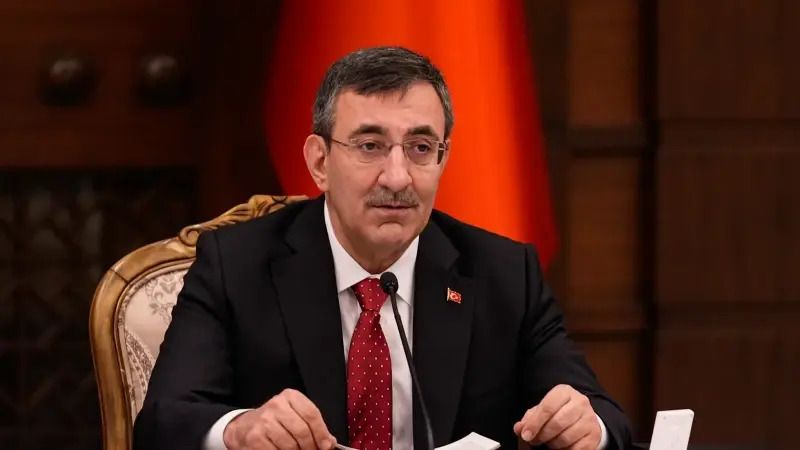
Vice President Cevdet Yılmaz opened the “Population Policies Council” meeting at the Presidential Complex, emphasizing that the session aims to create a shared framework for guiding action plans through evaluations spanning current data on families and population structure to demographic transformation.
Yılmaz said, “In these meetings, we have had the opportunity to comprehensively examine the current state of population policies and assess steps that can be taken in the short, medium, and long term. Within the Council, we have established dedicated working groups focused on legislation, labor, health, economic incentives, education, communication, and awareness-raising, and have assigned coordinating institutions for each group. Alongside the Ministry of Family and Social Services, which serves as the Council’s secretariat, detailed work has been carried out by the Ministry of Justice, the Ministry of Labor and Social Security, the Ministry of Health, the Presidency of Strategy and Budget, and the Directorate of Communications, with participation from all relevant public institutions. Activities to implement the Action Plan within the working groups continue meticulously.”
Highlighting progress over the past year, Yılmaz noted that cooperation and dedicated efforts by Council member ministries and related institutions have led to numerous concrete steps to protect Türkiye’s population structure. He said, “Within this framework, we have expanded the ‘Support for Young Couples’ project nationwide and increased the amount of support. As of January 2026, young people aged 18-25 will receive 250,000 Turkish lira, and those aged 26-29 will receive 200,000 lira. In the recently launched Century Housing Project, which includes 500,000 housing units, we have created special opportunities for young people and families with three or more children to become homeowners. For this project, 20 percent of units are reserved for young people aged 18-30, and 10 percent for families with three or more children. In 2025, we raised the one-time birth allowance to 5,000 lira and implemented monthly support of 1,500 lira for second children and 5,000 lira for third and subsequent children.”
Yılmaz also stressed measures aimed at helping parents balance work and family life. He recalled that the Regulation on the Right of Civil Servants to Part-Time Work was issued last year and said, “New working models that allow women to simultaneously pursue professional and family life remain a priority. At the same time, we continue comprehensive efforts to expand daycare centers nationwide, starting with public institutions. In this context, an official communication from the Presidential General Secretariat to public institutions has prioritized increasing capacity and establishing new daycare centers. Ensuring safe and high-quality childcare remains one of our top objectives.”
Reflecting on the past year since the Council’s establishment, Yılmaz emphasized the importance of addressing population issues as a primary responsibility shared by all institutions and sectors. “We are living in a period where demographic changes deeply affect all countries, becoming a global issue. We can more clearly see the importance of our determined approach centered on strong families and a robust population. Changes in family and demographic structures directly impact social security systems, caregiving services, and many other areas,” he said.
On safeguarding children, youth, the family unit, and population against digital and global risks, Yılmaz stressed a holistic, multi-dimensional policy approach. “From this perspective, it is crucial to act with long-term and comprehensive strategies in our population policies. The designation of 2026-2035 as the ‘Decade of Family and Population’ by our President clearly reflects this approach. Over the next ten years, decisive steps will be taken to strengthen the family institution, the foundation of society, and to preserve our dynamic, young population. By implementing legal and institutional arrangements that more effectively protect the family and population, we are laying solid foundations for the future of our country. Our primary goal is to safeguard and develop the family institution and our young and dynamic population in an integrated manner. From young people’s decisions to start families to parents’ processes of raising children, we are supporting families at every stage. Under the leadership of our Ministry of Family and Social Services, we are also promoting these policies strongly on the international stage.”
Yılmaz pointed out that despite Türkiye’s population exceeding 86 million—making it the largest in Europe—the country is at a demographic crossroads. “In 2017, our fertility rate was 2.08; by 2024, it fell to 1.48, well below the global average of 2.25. With this decline, we are among the five countries worldwide with the steepest drop in fertility over the last decade. This underscores how vital and strategically foresighted the President’s call for ‘at least three children’ twenty years ago truly was. Meanwhile, as of 2024, our elderly population ratio reached a historical high of 10.6 percent, exceeding 20 percent in some provinces. The number of provinces with a total fertility rate of three or more children has declined from 10 in 2017 to just one—Şanlıurfa—in 2024. In 2017, 57 provinces had fertility rates below the replacement level of 2.1; by 2024, this number increased to 71.”
Yılmaz drew attention to particularly high aging rates in rural regions due to the loss of young populations. “If current trends continue, projections indicate that a significant portion of our population will soon be aged 65 and older. The decrease in youth proportion and increase in elderly ratio will directly impact social security and caregiving systems, among many other sectors.”
Highlighting the significance for national development, he said, “This issue is central to our country’s goal of ‘getting richer without aging.’ The concept of a ‘demographic window of opportunity,’ when the dependent population is less than half of the working-age population, is extremely important in this context. If current trends persist, the sharp decline in fertility could close this window well before the anticipated year of 2035. Supporting fertility and family formation while maintaining population dynamism is vital for achieving our economic leap. This also demonstrates the need for stronger policies in elderly care and active aging. Accordingly, we continue to view population policies as an existential issue, as stated by our President. We are committed to implementing this process with full mobilization, employing a holistic, family-centered approach and the joint efforts of all institutions.”
Here we are to serve you with news right now. It does not cost much, but worth your attention.
Choose to support open, independent, quality journalism and subscribe on a monthly basis.
By subscribing to our online newspaper, you can have full digital access to all news, analysis, and much more.
You can also follow AzerNEWS on Twitter @AzerNewsAz or Facebook @AzerNewsNewspaper
Thank you!