
Astronomers map dark matter in universe
by Alimat Aliyeva
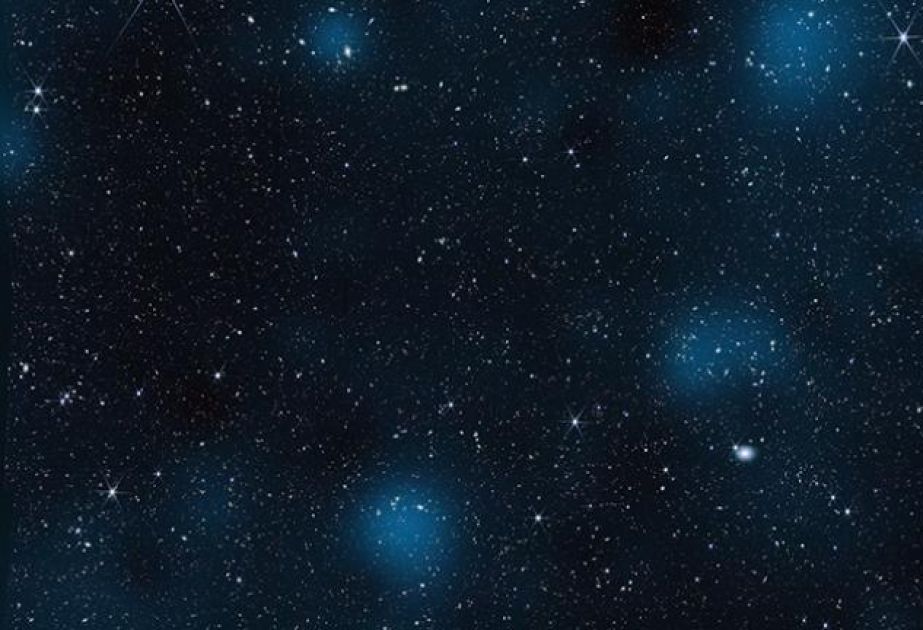
Using data from the James Webb Space Telescope (JWST), scientists have created one of the most detailed high-resolution maps of dark matter ever produced, revealing how this invisible, ghostly material overlaps and intertwines with the ordinary matter that forms stars, galaxies, and everything else we can see, Azernews reports.
The new map builds on previous research and provides fresh insights into how dark matter shapes the universe on the largest scales—from massive clusters of galaxies millions of light-years across to the eventual formation of galaxies, stars, and planets like Earth. The results were published in the journal Nature Astronomy.
"This is the largest dark matter map ever created using space telescope data, and it is twice as accurate as any map compiled by other observatories," said Diana Scognamillo, lead author of the study from NASA’s Jet Propulsion Laboratory in Southern California. "We’ve seen blurry images of dark matter before, but now, thanks to the James Webb Space Telescope, we can observe the invisible side of the universe in astonishing detail."
Unlike ordinary matter, dark matter does not emit, reflect, or absorb light, nor does it interact directly with atoms—it is, in a sense, a cosmic ghost. Yet it interacts with the universe through gravity, and the map demonstrates this interaction with unprecedented clarity. Researchers point to the degree of overlap between dark and ordinary matter as evidence that the alignment is not accidental, but the result of dark matter’s gravitational pull over billions of years.
The new map focuses on a region in the constellation Sextans, covering an area roughly 2.5 times larger than the visible surface of the Moon. A global team of scientists, including researchers from the University of Cambridge, is observing this region with 15 ground-based telescopes and one space telescope as part of the COSMOS (Cosmic Evolution Survey) project. Their goal is to accurately locate ordinary matter and compare it with the position of dark matter. The first dark matter map of this region was created in 2007 using data from NASA’s Hubble Space Telescope.
JWST observed the Sextans region for about 255 hours, cataloging nearly 800,000 galaxies, including many previously unknown. Scientists analyzed how the mass of dark matter distorts space itself, bending the light traveling from distant galaxies to Earth—a phenomenon known as gravitational lensing.
This research highlights the crucial role of dark matter in determining the large-scale structure of the universe. By accelerating the formation of galaxies and stars, dark matter indirectly set the stage for planet formation, providing the conditions necessary for complex elements to form. The first generations of stars transformed the primordial hydrogen and helium of the early universe into a rich array of elements, eventually giving rise to planets like Earth. In essence, dark matter gave the universe more time and structure for complex worlds to emerge.
Looking ahead, Scognamillo and her team plan to use NASA’s upcoming Nancy Grace Roman Space Telescope to map dark matter over an area 4,400 times larger than the COSMOS region. Their objectives include studying the fundamental properties of dark matter and how they have evolved throughout cosmic history. However, the Roman Telescope will not surpass JWST in resolution, and truly detailed studies of dark matter will likely require the next-generation flagship space telescope, NASA’s ambitious concept for the future of astrophysics.
This new map not only illuminates dark matter itself but also provides a cosmic roadmap showing how invisible forces sculpt the visible universe—essentially revealing the hidden scaffolding of galaxies and the blueprint of cosmic evolution.
Here we are to serve you with news right now. It does not cost much, but worth your attention.
Choose to support open, independent, quality journalism and subscribe on a monthly basis.
By subscribing to our online newspaper, you can have full digital access to all news, analysis, and much more.
You can also follow AzerNEWS on Twitter @AzerNewsAz or Facebook @AzerNewsNewspaper
Thank you!