
Earthquake strikes Gansu province as China’s seismic risk remains high

Qabil Ashirov
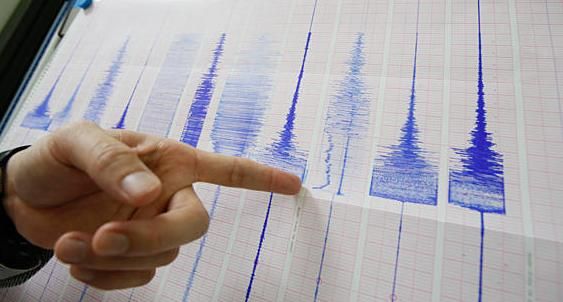
Read moreA mild earthquake shook northwest China on Sunday, according to the country’s Seismological Center. The quake, measuring 5.5 on the Richter scale, struck Gansu Province, a region known for its rugged terrain and sparse population. Its epicenter was located in Tebu County, with the seismic activity originating roughly 10 kilometers beneath the surface.
Officials have so far reported no casualties or significant damage, though local authorities are continuing to assess the situation. Residents in nearby towns described feeling buildings sway and household items rattle, prompting many to evacuate temporarily as a precaution.
Gansu Province lies in a seismically active zone, and minor to moderate earthquakes are not uncommon. Authorities are urging residents to remain vigilant, particularly in rural areas where infrastructure may be more vulnerable. Emergency services are on standby to respond should aftershocks occur or further impacts be reported.
China is one of the world’s most earthquake-prone countries due to its location at the complex collision zone between the Indian Plate and the Eurasian Plate. This tectonic pressure has produced some of the deadliest earthquakes in recorded history, particularly across western and central regions.
The 1556 Shaanxi earthquake remains the deadliest earthquake ever recorded. Estimated at magnitude 8.0, it killed around 830,000 people, largely because many residents lived in loess cave dwellings that collapsed instantly. The disaster reshaped imperial disaster governance and remains a benchmark for seismic catastrophe.
In the 20th century, the 1976 Tangshan earthquake marked another grim milestone. Measuring magnitude 7.5, it struck an industrial city northeast of Beijing, killing at least 242,000 people officially, though some estimates place the toll much higher. The quake occurred without warning and exposed severe weaknesses in urban planning and emergency response during the Cultural Revolution era.
More recently, the 2008 Wenchuan (Sichuan) earthquake highlighted modern China’s vulnerability despite economic progress. The magnitude 7.9 quake killed nearly 90,000 people, including thousands of schoolchildren, and caused massive infrastructure damage. It prompted nationwide reforms in building codes, disaster response, and seismic monitoring.
Other major events include the 1920 Haiyuan earthquake (magnitude 8.5), which killed over 200,000 people, and the 2010 Yushu earthquake, which struck a high-altitude Tibetan region, killing nearly 3,000.
Collectively, these earthquakes underscore how geology, population density, construction standards, and preparedness shape disaster outcomes. Despite major improvements in early warning systems and emergency response, seismic risk remains a persistent challenge across much of China.
Here we are to serve you with news right now. It does not cost much, but worth your attention.
Choose to support open, independent, quality journalism and subscribe on a monthly basis.
By subscribing to our online newspaper, you can have full digital access to all news, analysis, and much more.
You can also follow AzerNEWS on Twitter @AzerNewsAz or Facebook @AzerNewsNewspaper
Thank you!