
Dyson targets Korean market with tailored appliances
by Alimat Aliyeva
Dyson on Thursday unveiled three new home appliances in South Korea, including its first AI-powered robot vacuum cleaner, as the British company seeks to strengthen its presence in a market largely dominated by Chinese brands, Azernews reports, citing Korean media.
The products were introduced at a media event held at The Hyundai Seoul shopping complex in western Seoul. The new lineup includes the Spot+Scrub AI robot vacuum, the Clean+Wash Hygiene wet vacuum, and the Hushjet Purifier Compact air purifier.
The launch comes as Dyson looks to gain ground in Korea’s highly competitive home appliance market, where Chinese manufacturers are estimated to account for around 70% of total sales, driven by aggressive pricing and rapid product cycles.
The Spot+Scrub AI was the centerpiece of the event. Although Dyson entered Korea’s robot vacuum market in 2024, this is the company’s first model to incorporate in-house AI technology under the Dyson brand.
According to Nathan Lawson McLean, senior design manager at Dyson, the advanced AI system enables the robot to distinguish between different types of liquid spills—such as pet waste or coffee—and automatically repeat the cleaning process up to 15 times until the area is fully cleaned.
The robot performs vacuuming and mopping simultaneously. It applies clean water at 12 contact points to continuously rinse the cleaning roller, preventing dirty water from being redistributed across the floor. During operation, the roller is washed with 60°C (140°F) hot water and then dried with 45°C hot air after cleaning to help suppress bacterial growth and odors.
The Clean+Wash Hygiene wet vacuum reflects cleaning habits specific to Korean consumers. Dyson cited a wet-cleaning study conducted last year involving 23,311 participants across 28 countries, which found that Koreans spend an average of one hour per day cleaning, with more than 20 minutes dedicated to wet cleaning alone.
Unlike conventional models, the Clean+Wash Hygiene features a filter-free design, eliminating a common source of odors. It can absorb dust, debris, and wet hair, and operates even when fully reclined, allowing it to reach spaces as narrow as 11.3 centimeters (4.4 inches).
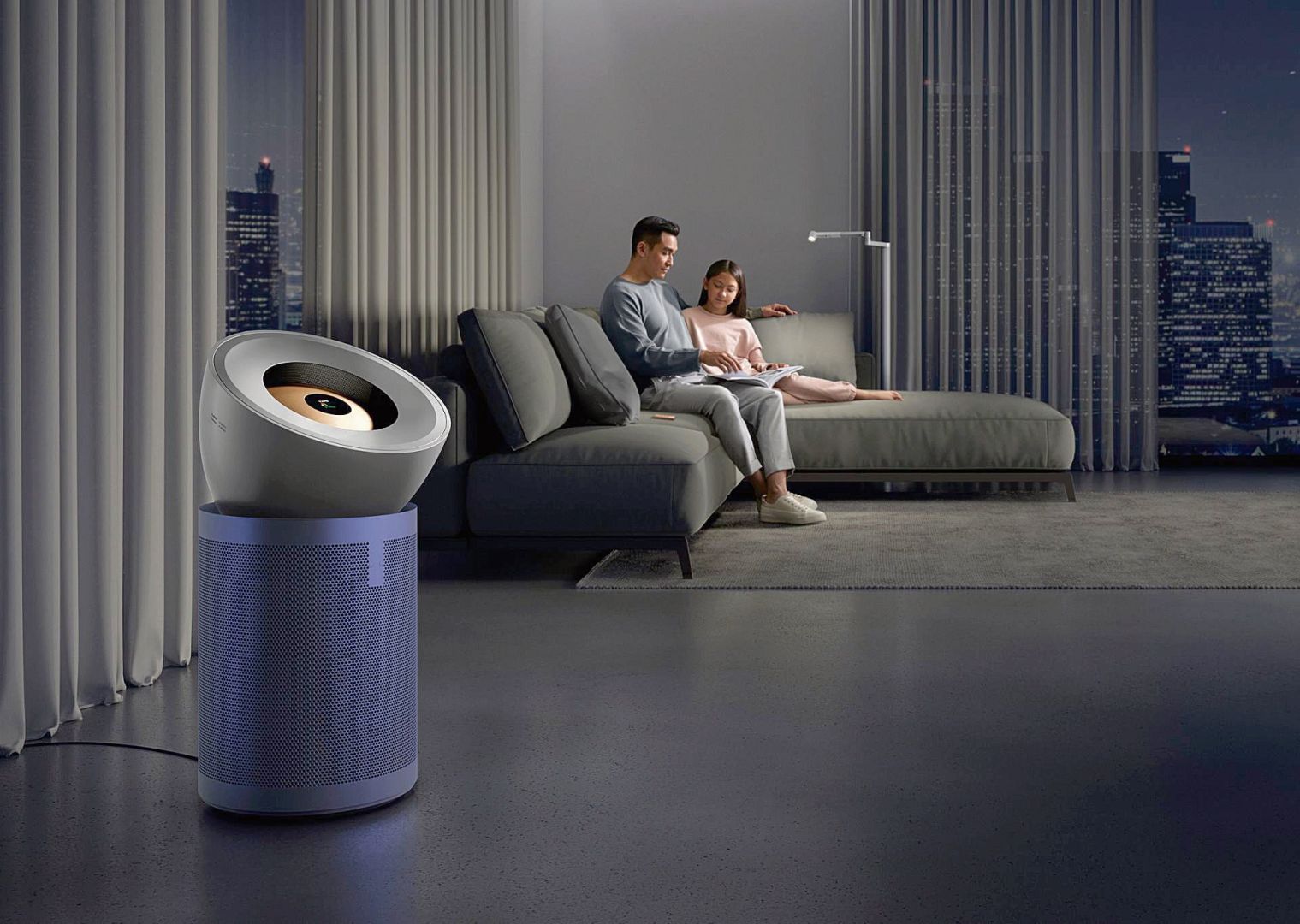
The Hushjet Purifier Compact, meanwhile, focuses on minimizing noise. Inspired by the Hush Kit technology used in aircraft jet engines, the purifier operates at noise levels as low as 19 decibels, well below the average conversation level of about 60 decibels, making it suitable for bedrooms and home offices.
Pricing for the new products starts at 1.79 million won ($1,220) for the Spot+Scrub AI, 699,000 won for the Clean+Wash Hygiene wet vacuum, and 499,000 won for the Hushjet Purifier Compact.
Dyson also emphasized its philosophy of prioritizing cleaning performance over gimmicks. Addressing robotic arms adopted by some competing robot vacuum brands, McLean said such features offer limited lifting capability.
Instead, he argued that robot vacuums should focus on accurately identifying obstacles and guiding users on what needs to be cleared, rather than attempting to move objects themselves—a strategy he said leads to faster and more efficient cleaning.
Industry observers note that Dyson’s AI-driven approach signals a shift toward premium, intelligence-based differentiation as competition in Korea’s home appliance market continues to intensify.
Here we are to serve you with news right now. It does not cost much, but worth your attention.
Choose to support open, independent, quality journalism and subscribe on a monthly basis.
By subscribing to our online newspaper, you can have full digital access to all news, analysis, and much more.
You can also follow AzerNEWS on Twitter @AzerNewsAz or Facebook @AzerNewsNewspaper
Thank you!