
Urgent call to list Iran's ancient Hyrcanian Forests as World Heritage in danger amid post-wildfire crisis
By Rza Syed I London Post
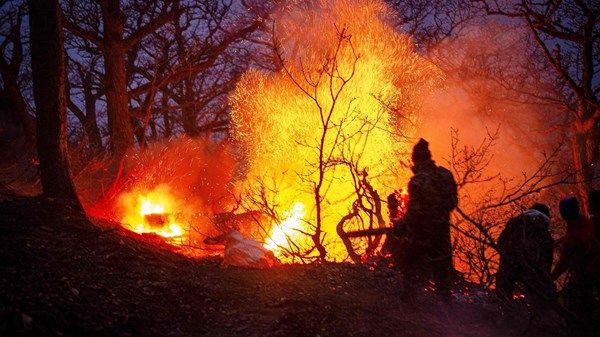
Hyrcanian Forests, spanning from Azerbaijan into Iran, a UNESCO World Heritage site and one of the planet's oldest surviving temperate broadleaf ecosystems dating back 25–50 million years, face imminent irreversible collapse on the Iranian side more than three weeks after raging wildfires were contained, scientists and conservationists warned today.
International firefighting crews stabilised the blazes last week, but experts emphasise that the real ecological catastrophe is just unfolding. Widespread soil erosion on steep slopes, disrupted water cycles, obliterated seed banks, and increased susceptibility to invasive species and recurrent fires have driven the forests to a perilous tipping point.
In response, a coalition of scientists, conservation groups, and local communities—operating as "Save Hyrcanian Now"—has initiated a global campaign urging UNESCO to immediately add the site to its List of World Heritage in Danger.
"The fires are out, but the emergency is escalating," said Professor Shabnam Delfani, an Iranian climate expert and founder of Save Hyrcanian Now. "A Danger Listing is critical to secure the political leverage, funding, and international coordination needed; without it, swathes of this priceless ancient forest could vanish within a decade."
The Hyrcanian Forests host unique evolutionary lineages and hundreds of endemic species. Inscribed by UNESCO in 2019 for its Outstanding Universal Value, the site now satisfies several criteria for danger listing under the organisation's guidelines, advocates say.
Initial post-fire surveys show destabilised mountain soils, failed natural hydration systems, and lost regenerative potential—factors that risk cascading extinctions and permanent landscape alteration.
The crisis extends beyond biodiversity: the forests regulate water supplies for millions in northern Iran and adjacent regions, prevent landslides, and sustain economies via timber, farming, and eco-tourism.
"Delayed action by UNESCO would have ripple effects across borders," Prof. Delfani told journalists. "We're facing heightened carbon emissions, intensified water shortages in the Caspian basin, and the erasure of a vital record of Earth's plant evolution."
The coalition's proposed recovery plan includes urgent burn mapping, soil stabilisation, seed bank safeguards, off-site preservation of endangered species, and long-term investments in watershed restoration and fire prevention.
Today, the group launched an online petition alongside a comprehensive scientific report submitted to the UNESCO World Heritage Centre, the International Union for Conservation of Nature (IUCN), the UN Environment Programme (UNEP), and potential donor nations.
Advocates argue that a swift committee decision for danger status would activate expert missions, emergency funds, and enforceable oversight—deemed indispensable for viable restoration.
The petition has rapidly amassed thousands of signatures from
global scientists, activists, and citizens.
A UNESCO spokesperson confirmed receipt of the materials, stating
the issue will undergo expedited review per protocol. No timeline
for a ruling has been announced.
Here we are to serve you with news right now. It does not cost much, but worth your attention.
Choose to support open, independent, quality journalism and subscribe on a monthly basis.
By subscribing to our online newspaper, you can have full digital access to all news, analysis, and much more.
You can also follow AzerNEWS on Twitter @AzerNewsAz or Facebook @AzerNewsNewspaper
Thank you!