
As peace talks advance, old war narratives resurface in Yerevan

Qabil Ashirov
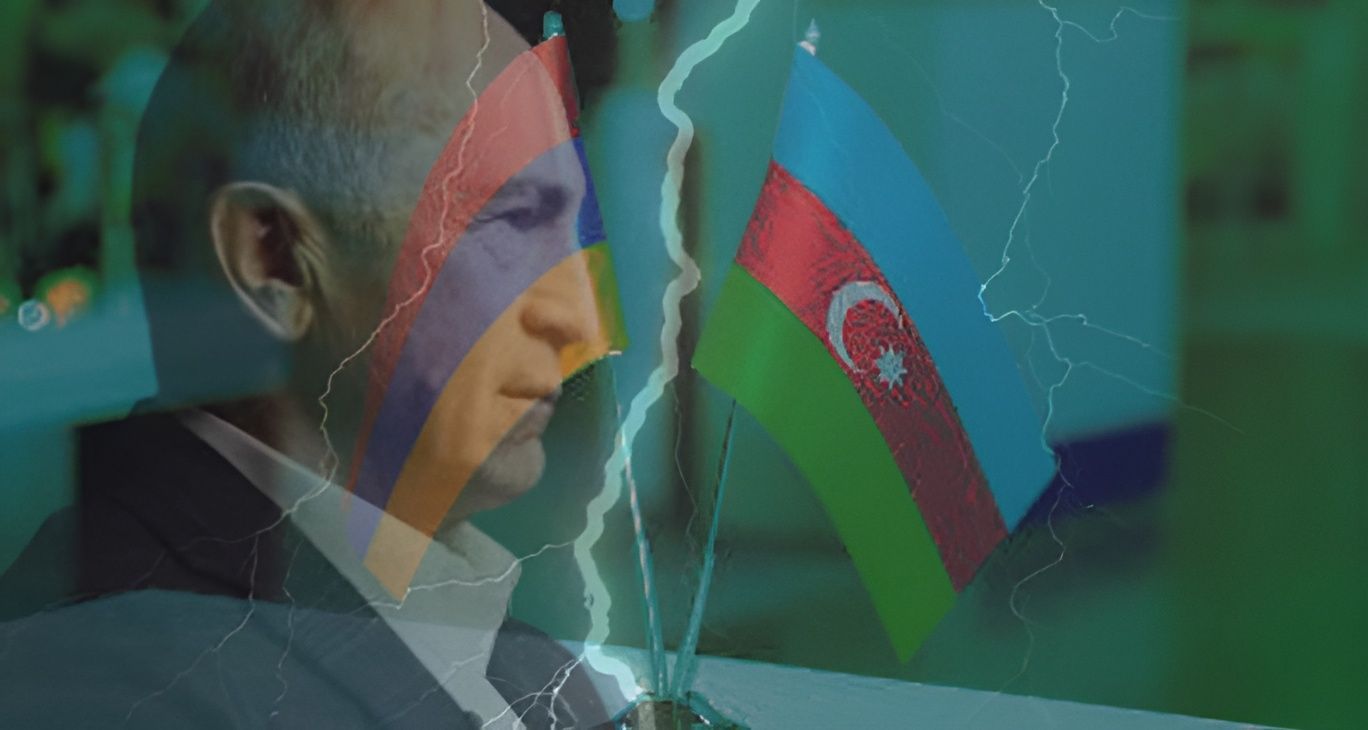
Read moreRobert Kocharyan’s latest speech, widely circulated in Armenian media, exposes how easily political rhetoric can distort reality and manipulate history for personal or partisan purposes. Most striking is his claim that “during my time, Azerbaijan did not dare to wage war against Armenia”—a statement that misrepresents the facts and provokes deep indignation.
For ordinary people unfamiliar with the region’s history, his carefully manipulated statements may sound convincing. Yet for anyone with knowledge of politics and the South Caucasus, it is clear that Kocharyan was not only an obstacle to Armenia’s development but also one of the figures who inflicted the greatest damage on the entire region.
In detail, all available historical records show that the Russian Empire exploited the South Caucasus harshly, and this exploitation reached its peak under the Soviet Union. Under the banner of “internationalism” and “social equality,” the Kremlin not only drained natural resources but also distorted demographic development. For instance, before the Soviet Union, the South Caucasus population was around 6–8 million, while Iran’s was about 8–10 million and Turkiye’s 10–12 million. By the time the USSR collapsed, Iran and Turkey had grown to around 55–60 million, while the South Caucasus had only reached 15–16 million. In other words, while neighboring populations increased five- to six-fold, the Caucasus barely doubled.
When the Soviet Union collapsed, the republics in the South Caucasus inherited empty central banks and ruined economies. This was not unique to the Caucasus; all republics of the former USSR were left in similar crisis.
Thirty years of independence have made the contrasts even clearer. During Soviet times, Russia had the highest economic indicators, but today its GDP per capita ranks fifth after three Baltic republics, and Kazakhstan. GDP per capita in the Baltic republics is several times higher than that of Russia. The South Caucasus, with rich resources and strategic location, could have followed a similar path. However, we failed. Why?
The reason lies in politicians like Kocharyan, who used the collapse of the USSR not as an opportunity for the development of the entire region, but for their opportunistic ambition. Under the slogan of Miatsum (unification), they pursued irredentist policies against their neighbor that led to bloodshed, the displacement of more than a million people, the destruction of cities, and economic disruption. Guess who benefited from it? Of course, Moscow and its associates in the region, such as Kocharyan and his clique.
His claim that “Azerbaijan did not dare” is pure manipulation. Unfortunately, political outcomes are shaped by decades of prior policies. Armenia’s success in the First Karabakh War was rooted in structural imbalances inherited from Russian imperial and Soviet policies. Under Tsarist rule, Azerbaijanis were largely excluded from military service, while Armenians often rose to officer ranks. This imbalance persisted in the Soviet era: Azerbaijanis were often assigned to construction battalions, while Armenians served in elite units. Economically, Armenia—though dependent on subsidies—was favored by Moscow, while Azerbaijan’s resources were exploited without equivalent investment. Most importantly, Russia provided Armenia with massive military support during the First Garabagh War.
History proves that a state led by those who place personal ambition above true independence cannot thrive, and Armenia under Kocharyan was no exception. The country became an isolated outpost. His policies led to mass emigration—one in six citizens left the country. By the time the Karabakh Clique was ousted in 2018, Armenia had become the poorest nation in the region.
In contrast, Azerbaijan pursued independent foreign policy and built a strong economy. Its GDP grew more than 170 times, and per capita income rose dramatically. Baku became the financial and cultural hub of the region, and Azerbaijan’s military budget eventually surpassed Armenia’s entire state budget. Alongside Russia and Kazakhstan, Azerbaijan developed its own space industry, underscoring its technological progress. By the late 2010s, reclaiming Karabakh had become a matter of time.
Kocharyan’s circle, however, managed to fall on their feet, deflecting responsibility for past failures onto successors such as Nikol Pashinyan. The reality, though, is inescapable: decades of opportunism and Moscow-dependent policies left Armenia isolated, impoverished, and weakened.
Today, the South Caucasus stands at a pivotal moment. A lasting settlement between Armenia and Azerbaijan could open the door to economic recovery, regional cooperation, and social development. The lessons of the past are clear—political ambition and dependency on external powers cannot substitute for genuine national strategy and independence. For Armenia, the challenge is to embrace these lessons, prioritize reform, and build institutions that serve the long-term interests of its people.
Only by learning from history and resisting manipulative rhetoric can Armenia avoid remaining an isolated state with a struggling economy, outmigration, and limited prospects. The choices made today will determine whether the South Caucasus finally fulfills its potential as a region of stability, growth, and shared opportunity.
Here we are to serve you with news right now. It does not cost much, but worth your attention.
Choose to support open, independent, quality journalism and subscribe on a monthly basis.
By subscribing to our online newspaper, you can have full digital access to all news, analysis, and much more.
You can also follow AzerNEWS on Twitter @AzerNewsAz or Facebook @AzerNewsNewspaper
Thank you!