
Invisible wars: how “Elite Capture” threatens state sovereignty
The modern international relations system has moved far beyond classical models of power balance. Tanks, economic sanctions, and open political ultimatums alone are no longer sufficient to influence states. In the 21st century, two of the most potent tools are information and the human factor. Foreign intelligence services combine these elements to build “special influence networks” within targeted countries.
Video recordings and audio evidence released by the Azerbaijan’s State Security Service regarding individuals accused of treason and other crimes reveal an undeniable truth: in the post-Soviet space, including Azerbaijan, these mechanisms have been systematically and deliberately constructed over many years.
The strategy is simple but highly effective: target not the state itself, but the individuals holding key positions within it. In international practice, this approach is known as “elite capture.” For foreign power centers, the most efficient way to exert influence is not to destroy state institutions but to co-opt those who actually control them. The result is that formal sovereignty remains intact, yet political decisions are shaped through the lens of foreign interests.
In the Azerbaijani context, the workings of this mechanism are evident in the networks built by Ramiz Mehdiyev, who for years controlled the humanitarian, ideological, and informational spheres. During his tenure, Mehdiyev did not rely solely on administrative resources; he established intellectual dominance. Academic and expert circles were aligned under a unified ideological framework, and dissenting voices were either marginalized or silenced. This was no accident: for special influence networks, monopolizing intellectual and informational spaces is crucial. When society cannot access alternative sources of information, narratives presented by these networks are perceived as objective reality—a perfect environment for shaping public opinion in line with foreign interests.
Such networks operate along multiple parallel lines. First, loyal figures are promoted within the state apparatus. Second, media and academic “experts” are created to propagate foreign agendas. Third, geopolitical manipulation in the information space fosters suspicion, fear, and distrust toward the West, while alternative power centers are presented as fairer or more trustworthy partners. The danger lies in invisibility: to the public, these processes appear as political pluralism, free speech, or ordinary public debate. In reality, they are coordinated and externally directed.
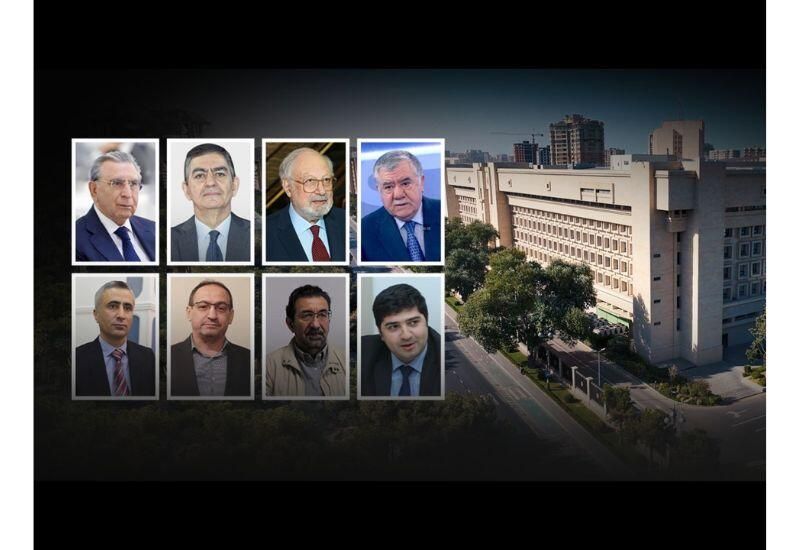
The actions of Ramiz Mehdiyev and his associates—Ali Karimli, Ganimat Zahid, Fuad Gahramanli, and others—must be read through this lens. Over many years, their network not only sought influence over power structures but also created fertile ground for foreign manipulation within the country. The “old guard” phenomenon played a key role: Soviet-era administrative reflexes, historical suspicion of the West, and ideological inertia made certain individuals more susceptible to foreign influence. Their priority was not the state’s strategic interests but the preservation of personal positions and spheres of influence. Foreign intelligence exploited these vulnerabilities, turning them into instruments of their game.
Unlike classic coups, the result of elite capture is subtle. Barricades and military hardware are replaced by memorandums, expert reports, media narratives, and “civil protest” technologies. These processes are presented as democratic change, but the underlying goal is to alter a country’s geopolitical course, placing it within the orbit of another power center.
If such networks are not detected in time, a state’s strategic resilience and sovereign decision-making are seriously endangered. The issue is not only the legal accountability of specific individuals; it is the public understanding of how these mechanisms operate and the institutional immunity needed to prevent them in the future. In the modern world, states must protect not only their borders but also their decision-making centers. If these centers are captured, a country may remain formally independent yet become a de facto political instrument of another power.
In this context, foreign intelligence networks and the structures they cultivated through Ramiz Mehdiyev in Azerbaijan were dismantled. The State Security Service neutralized the attempt to seize control of decision-making processes, safeguarding the country’s sovereignty and demonstrating that elite capture, while subtle, can be countered effectively.
Here we are to serve you with news right now. It does not cost much, but worth your attention.
Choose to support open, independent, quality journalism and subscribe on a monthly basis.
By subscribing to our online newspaper, you can have full digital access to all news, analysis, and much more.
You can also follow AzerNEWS on Twitter @AzerNewsAz or Facebook @AzerNewsNewspaper
Thank you!