
WEF flags geoeconomic conflict as top global risk, outlines key threats for Azerbaijan and South Caucasus
Akbar Novruz
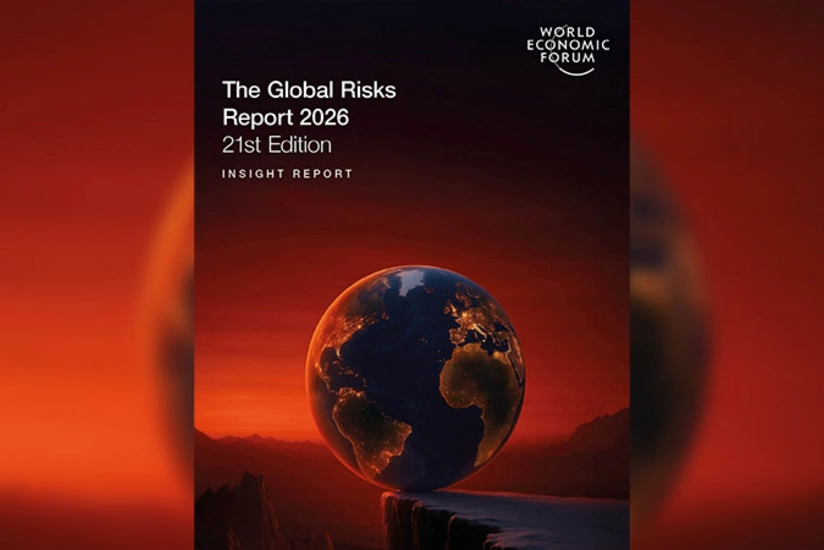
Read moreThe World Economic Forum (WEF) has published its next Global Risks Report (GRPS), assessing the most significant global threats in the short, medium, and long term.
According to Azernews, the report identifies geoeconomic conflict as the most serious global risk in the short term, placing it at the top of the 2026 risk outlook. Economic-related threats also recorded the sharpest rise across all risk categories.
Based on a global survey, the WEF compiled a list of 34 major risks expected to shape the period from 2026 to 2036. In the 2026 outlook, geopolitical and geoeconomic challenges dominate. Around one-third of respondents cited either geoeconomic conflict or armed conflicts between states as the primary global threat. Geoeconomic conflict ranked first, moving up two positions compared to last year, while interstate conflict dropped from first to second place. Extreme weather events ranked third.
Looking ahead to the medium term, the 2028 assessment shows geoeconomic conflict retaining its position as the leading global risk, while also demonstrating one of the steepest increases in perceived severity. For the first time since 2023, disinformation and false information rose to second place, followed by social polarization and extreme weather events. Armed conflicts between states fell to fifth place, reflecting a shift in global instability from military confrontation toward economic and technological pressures.
In the long-term outlook for 2036, the structure of global risks changes fundamentally. Extreme weather events are expected to become the dominant global threat, with environmental risks accounting for half of the top concerns. Biodiversity loss and ecosystem collapse rank second, followed by critical changes in Earth systems.
The report highlights a clear evolution of global risks: geoeconomic and geopolitical dominance in 2026, a more complex and intertwined risk landscape by 2028, and a pronounced shift toward environmental and technological threats by 2036 amid accelerating structural changes in the global system.
The WEF also identified country-specific risks. For Azerbaijan, the main risks in 2026 include cybersecurity threats, environmental pollution, disinformation and false information, inflation, and non-weather-related natural disasters.
For Armenia, the key risks this year include insufficient public services and social protection, armed conflicts involving states, disinformation and false information, lack of economic opportunities or unemployment, and economic decline. These risks were identified based on a survey conducted by the CIVITTA Institutional Research Center and are believed to take into account Armenia’s upcoming parliamentary elections in June.
Georgia’s top risks include cybersecurity threats, lack of economic opportunities or unemployment, biodiversity loss and ecosystem collapse, negative impacts of artificial intelligence technologies, and cyberwarfare.
The report is based on a global survey of more than eleven thousand respondents conducted between March and June 2025.
Here we are to serve you with news right now. It does not cost much, but worth your attention.
Choose to support open, independent, quality journalism and subscribe on a monthly basis.
By subscribing to our online newspaper, you can have full digital access to all news, analysis, and much more.
You can also follow AzerNEWS on Twitter @AzerNewsAz or Facebook @AzerNewsNewspaper
Thank you!