
Why Khojaly still haunts conscience of divided world
by AzerNEWS Staff
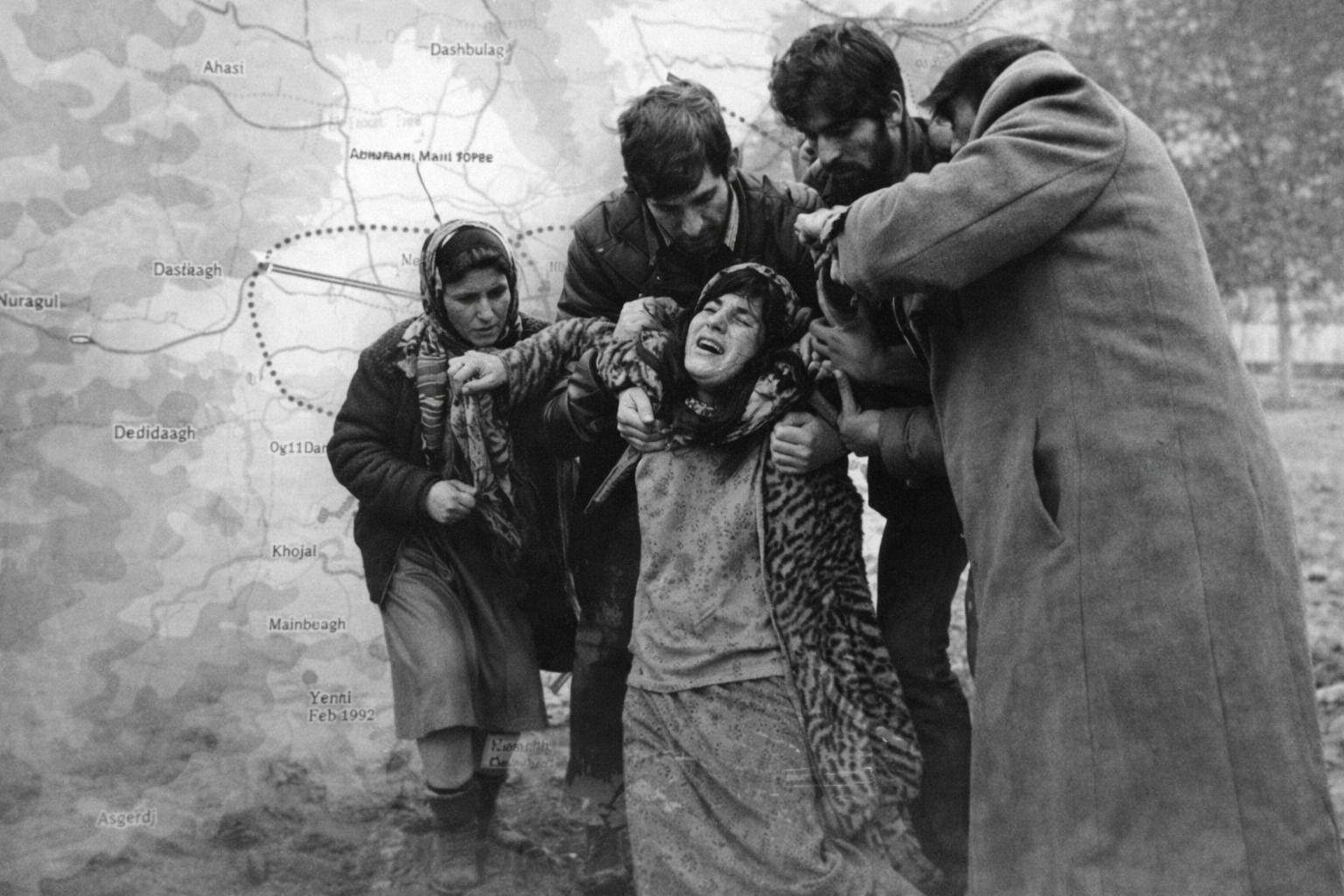
Writing about the Khojaly tragedy means more than remembering a historical event; it is about giving voice to a wound that still lingers in the nation's collective memory.
The massacre of February 1992 was not just the destruction of a town; it was an attempt to break the spirit of an entire people.
Khojaly had been under siege for months, deprived of food, medicine, and electricity. On the night of February 25–26, Armenian armed units, supported by elements of the 366th motor rifle regiment left behind after the collapse of the Soviet Union, stormed the town. The outcome was horrific: hundreds killed, hundreds wounded and taken captive. Among the dead were women, children, and the elderly. This was not a military operation in the conventional sense, it was a deliberate act of terror against civilians, meant to instill fear and erase a community from its homeland.
The trauma of Khojaly runs deep. Survivors lost family members, endured captivity, and suffered torture. Entire families were wiped out. Those who escaped became refugees, forced to live for years in tents and temporary shelters. The tragedy shaped a generation, embedding in the youth of Azerbaijan a sense of injustice and a determination to seek truth and recognition.
Russia’s role cannot be ignored. The 366th regiment did not act as a neutral force; its officers and soldiers provided direct support to Armenian units, supplying heavy weaponry and even participating in the assault. This involvement transformed Khojaly from a local atrocity into a crime with international dimensions. The parallels with the January 1990 massacre in Baku are striking: in both cases, Soviet/Russian forces turned their weapons on Azerbaijani civilians. Russia claimed to be a mediator in the Karabakh conflict, yet its actions revealed a clear bias that facilitated occupation and bloodshed.
Khojaly is recognized under international law as a crime against humanity, even genocide. Yet many states have hesitated to formally acknowledge it as such. Azerbaijan continues to fight for recognition, not only to honor the victims but also to prevent similar crimes from being repeated elsewhere. The campaign for global awareness is part of a broader struggle for justice, one that insists the world must confront uncomfortable truths about complicity and silence.
Khojaly is more than a page in history; it is a symbol of resilience and unity. It reminds us that war is not only about territory but about human lives, families, and futures. The participation of the 366th regiment magnified the scale of the atrocity, making it clear that this was not just an Armenian assault but a joint act of aggression with Russian fingerprints all over it.
To write about Khojaly is to refuse to forget. Memory is resistance, and remembrance is justice. As long as Khojaly is remembered, the demand for accountability will remain alive. Justice may be delayed, but it cannot be erased. Khojaly will not be forgotten, and the struggle for truth will continue until the voices of its victims are heard across the world.
Here we are to serve you with news right now. It does not cost much, but worth your attention.
Choose to support open, independent, quality journalism and subscribe on a monthly basis.
By subscribing to our online newspaper, you can have full digital access to all news, analysis, and much more.
You can also follow AzerNEWS on Twitter @AzerNewsAz or Facebook @AzerNewsNewspaper
Thank you!