
President Aliyev's Hanoi visit puts Azerbaijan's Eurasian ambitions on agenda
Elnur Enveroglu
Read moreThe diversification of Azerbaijan's international economic relations and its growing role as a bridge between East and West offer significant prospects for the country's future ambitions and strategic positioning. Particularly against the backdrop of mounting global instability, geopolitical fragmentation and political tensions, Baku's expanding influence in both Western and Eastern spheres, combined with its independent diplomatic approach and long-term economic vision, presents a highly encouraging picture.
Recent diplomatic engagements and the signing of important agreements across Asia add further substance to this emerging strategic landscape, offering a clearer understanding of Azerbaijan's evolving international role. One particularly notable example is the renewed relationship between Baku and Hanoi, a partnership that, while entering a new phase, is firmly rooted in a long history of friendship.

Indeed, relations between Azerbaijan and Vietnam date back to 1959, when Ho Chi Minh, then President of Vietnam, made his first visit to Baku. That historic visit established a solid foundation for lasting ties between the two countries. Subsequent high-level exchanges further strengthened this relationship, maintaining its momentum and creating the political foundations for cooperation that could elevate shared interests to a much higher level.
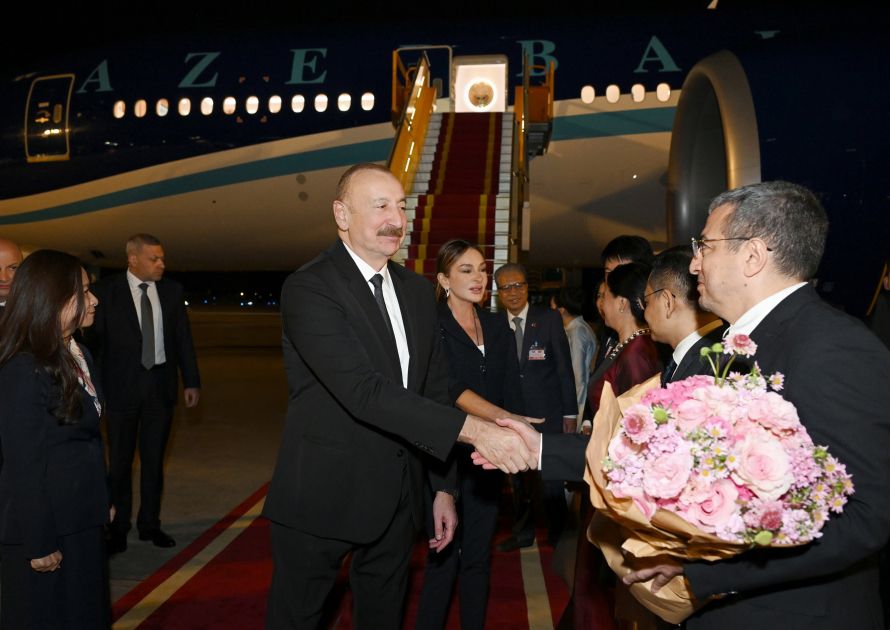
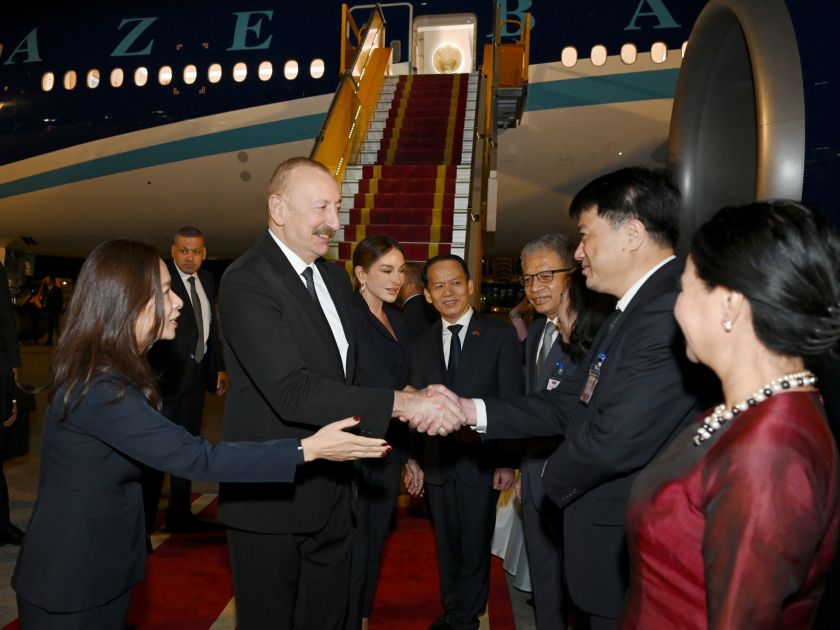
President Ilham Aliyev's official visit to Hanoi comes at a moment when Azerbaijan is seeking to expand its international economic partnerships beyond its traditional markets and establish a stronger presence across Asia. The visit, which began on November 19 and runs until November 21, can be described as than a diplomatic engagement celebrating decades of friendship. It is an attempt to translate a newly established strategic partnership with Vietnam into commercial opportunities, investment flows and stronger connectivity between Southeast Asia and Europe.
The message emerging from President Aliyev's interview with the Vietnam News Agency is straightforward: Baku sees Vietnam as an increasingly important economic partner whose geographical position, industrial development and growing international trade offer considerable opportunities for cooperation.

Therefore the Azerbaijani president's visit and its timing is significant, as the two countries elevated their relationship to a Strategic Partnership during the May 2025 visit to Azerbaijan by Vietnam's Communist Party General Secretary and President, To Lam. Aliyev's arrival in Hanoi represents the next stage of that process, moving bilateral relations from political declarations towards practical implementation. The composition of the Azerbaijani delegation, which includes senior officials responsible for foreign affairs, defence, energy, economy and emergency situations, also demonstrates the breadth of the agenda.
Moreover, the historical foundations of this relationship give it an unusual depth. Ho Chi Minh's visit to Baku in 1959 and National Leader Heydar Aliyev's eight-day visit to Vietnam in 1983 established connections that survived the dissolution of the Soviet Union. Approximately 5,000 Vietnamese citizens subsequently educated in Azerbaijan became part of this enduring human connection. Yet historical goodwill alone cannot sustain a modern strategic partnership. Its long-term value will depend on whether both governments can convert political trust into measurable economic results.
As regards the economic values, the figures indicate considerable room for expansion. For instance, bilateral trade exceeded $150 million in 2025, a respectable foundation but still modest compared with the economic potential of both countries. More revealing is the nearly sixfold increase in transit freight between January and September 2026, when shipments exceeded 8,000 tonnes. Although the current volume remains relatively small, its growth points towards an opportunity that could prove more strategically important than conventional trade figures.
This is where Azerbaijan's geographical position becomes particularly relevant. As a transport and logistics hub connecting the Caspian region with Europe, Baku wants to offer Vietnamese exporters an alternative route into European markets through the Middle Corridor. The North-South Transport Corridor provides another potential dimension, allowing the two countries to explore wider connections with markets across Eurasia.
For Vietnam, whose economy is deeply integrated into international manufacturing and export networks, diversified transport routes can provide additional commercial flexibility. For Azerbaijan, attracting Asian cargo means strengthening the economic rationale of its infrastructure investments and increasing the country's importance in international supply chains. The relationship therefore offers reciprocal benefits rather than merely another bilateral trade arrangement.
Energy remains another central pillar. Cooperation between SOCAR and PetroVietnam, supported by their 2025 memorandum covering exploration, field development, technical services and specialist training, provides an institutional basis for deeper engagement. However, the partnership is no longer confined to hydrocarbons. The interest expressed by Vietnam's ROX Group in Azerbaijani construction, infrastructure and renewable energy projects illustrates the possibility of expanding cooperation into new sectors. Agreements signed during the Second Azerbaijan International Investment Forum in September 2026 provide an initial commercial foundation.
This diversification is important for Azerbaijan's broader economic strategy. Baku is seeking to combine its established energy expertise with investment in renewable power, industrial development and transport infrastructure. Vietnamese participation could bring additional capital, technological expertise and access to Asian business networks.
The partnership also has a dimension that cannot be measured through trade statistics. The Heydar Aliyev Foundation's educational and humanitarian initiatives, including the construction of a primary school in Ha Giang Province and support for educational institutions, have helped maintain direct connections between the societies. University partnerships, cultural festivals and the historical contributions of Azerbaijani composer Gara Garayev and filmmaker Ajdar Ibragimov to Vietnam's cultural development provide further substance. Azerbaijan's assistance following Typhoon Yagi and the devastating floods of 2025 has also reinforced this relationship through practical solidarity.
Ultimately, President Ilham Aliyev's Hanoi visit reflects a wider ambition in Azerbaijani foreign policy: to turn established political relationships into economic partnerships capable of opening new markets and strengthening the country's international position. Vietnam offers access to Southeast Asia, while Azerbaijan offers connectivity to the Caspian region, the South Caucasus and Europe.
The challenge now is implementation. Trade must grow beyond its current level, transit volumes must become commercially sustainable, and investment memorandums must produce operating projects. If Baku and Hanoi can deliver on these priorities, their nearly seven-decade friendship could evolve into a genuinely consequential partnership linking two increasingly important economic gateways across Eurasia.
Here we are to serve you with news right now. It does not cost much, but worth your attention.
Choose to support open, independent, quality journalism and subscribe on a monthly basis.
By subscribing to our online newspaper, you can have full digital access to all news, analysis, and much more.
You can also follow AzerNEWS on Twitter @AzerNewsAz or Facebook @AzerNewsNewspaper
Thank you!