
Two countries, two wars and one emerging strategic partnership

Akbar Novruz
Read moreAzerbaijan and Ukraine may be entering a new chapter in their bilateral relationship, one in which the exchange of military technologies, wartime experience and post-conflict reconstruction expertise could become increasingly important alongside traditional economic and diplomatic cooperation.
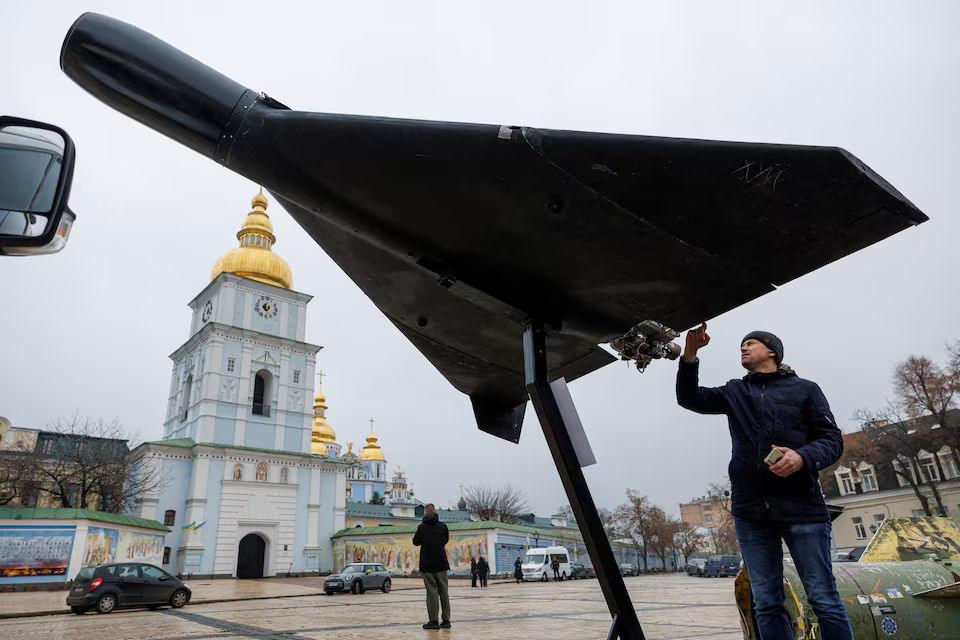
The latest indication emerged during the ninth European Political Community Summit in Dublin on November 12, when Ukrainian President Volodymyr Zelenskyy met his Azerbaijani counterpart, Ilham Aliyev. According to the Ukrainian presidency, the leaders discussed cooperation under what Kyiv calls the “Drone Deal”, confirming that contracts had already been signed and that discussions were underway to expand orders.
The two presidents also examined opportunities for broader economic cooperation, the continued operation of Azerbaijani businesses in Ukraine and assistance for the country's critical infrastructure and logistics ahead of winter.
There was, however, a notable difference in the two governments' public accounts. While Kyiv explicitly highlighted the drone arrangement, Azerbaijan's official statement concentrated on expanding trade, private-sector cooperation and humanitarian assistance, including the provision of electrical equipment. Baku's account did not mention the reported drone contracts, although it acknowledged Ukraine's interest in Azerbaijan's reconstruction experience in Karabakh and East Zangezur.
This difference in emphasis adds an interesting dimension to Azerbaijan's regional balancing act. Baku has maintained diplomatic and economic engagement with Ukraine while carefully managing its wider regional relationships. Any expansion of military-technical cooperation would therefore carry implications extending beyond the immediate commercial value of the reported contracts.
Both Azerbaijan and Ukraine have experienced conflicts in which drones, precision weapons and technological adaptation have become central to military operations. Both also regard territorial integrity as a fundamental national security priority. However, their different geopolitical circumstances raise an important question: can these shared experiences develop into a lasting strategic partnership without compromising Azerbaijan's broader diplomatic flexibility?
Speaking to AzerNEWS, Vitaliy Yarmolenko, chief consultant at Ukraine's National Institute for Strategic Studies, examined the relationship through the prism of geopolitical competition and the national interests guiding both countries.
He argued that Azerbaijan and Ukraine have adopted pragmatic foreign policies shaped by their respective security concerns and the wider distribution of power across Eurasia.
"Both states evidently demonstrate a classical realist approach to their bilateral relations. Azerbaijan pursues its national interests by diversifying its strategic engagements, maintaining ties with the Russia–China–Iran axis while simultaneously deepening cooperation with key Western actors, including the United States under the Trump Administration, Germany, the United Kingdom, and the countries of Central and Eastern Europe."
Turning to Ukraine's strategic calculations, Yarmolenko suggested that Azerbaijan's increasingly assertive international position is relevant to Kyiv's broader objective of limiting Russian influence across the post-Soviet region.
"Ukraine, in turn, has a vested interest in strengthening the agency of post-Soviet states as a factor in curbing Russian influence. Azerbaijan pursues an assertive foreign policy aimed at securing recognition of its national interests by major international actors. This is reshaping the balance of power in the South Caucasus and the Caspian region, raising the costs for Russia of any attempt to re-establish its dominance and, consequently, calling into question its broader ambitions to shape the European security order."
Against this background, the analyst identified opportunities for deeper coordination between Baku and Kyiv, particularly where their respective national interests converge.
"Against this backdrop, there is considerable potential for strategic coordination between Kyiv and Baku, based on converging interests and serving as a counterweight to Moscow's long-term ambitions to restore its imperial influence in regions it regards as falling within its sphere of influence or constituting its so-called 'historical territory'."
Beyond these geopolitical considerations, the reported drone arrangement introduces a more practical dimension to bilateral cooperation.
Ukrainian military expert Vadim Tryukhan, also speaking to AzerNEWS, argued that the relationship should not be understood merely as a conventional transaction between a supplier and a customer.
In his assessment, cooperation in unmanned technologies could potentially develop into a broader military-industrial partnership involving technological exchange and joint production.
"In my view, it would be inaccurate to regard Azerbaijan solely as a buyer of Ukrainian unmanned aerial vehicles (UAVs). Rather, the focus is on establishing a long-term military-technical partnership, which encompasses the exchange of combat experience and technologies, joint development efforts, and the potential localization of production."
Highlighting the different capabilities that each country could contribute, Tryukhan pointed to Ukraine's experience in adapting unmanned systems during prolonged military operations and Azerbaijan's established expertise in integrating such technologies into its armed forces.
"Ukraine possesses unique experience in the large-scale deployment and continuous modernization of UAVs within the context of modern warfare. Azerbaijan, for its part, brings its own military-technical expertise, an established production base, and experience in integrating unmanned systems into combat operations.
Consequently, joint production—and, in the future, potential entry into third-party markets—represent logical avenues for cooperation. That said, it is premature to claim that such agreements have already been finalized; the specific terms of the contracts signed have not been publicly disclosed."
The military-technical dimension, however, is only part of the developing relationship. Azerbaijan's post-conflict reconstruction programme has also attracted attention in Ukraine, where the restoration of damaged infrastructure, demining and the eventual return of displaced populations remain major national priorities.
Tryukhan emphasised that both countries share a commitment to sovereignty and territorial integrity, while Azerbaijan's experience in rebuilding territories restored to its control could offer practical lessons for Ukraine.
"Ukraine and Azerbaijan are united, first and foremost, by a principled stance regarding state sovereignty and territorial integrity, as well as a shared understanding of the role modern technology plays in ensuring national security.
Azerbaijan’s experience in the reconstruction of Karabakh—including demining, infrastructure restoration, the return of the population, and the attraction of investment—is of particular significance. For Ukraine, which faces the prospect of large-scale post-war reconstruction, this experience is of practical interest."
The expert nevertheless acknowledged that any expansion of bilateral cooperation would remain subject to Azerbaijan's independent regional interests.
"In my opinion, it is precisely this combination of military-technical cooperation, economic interests, and mutual respect for territorial integrity that forms the foundation for a sustainable strategic partnership between Kyiv and Baku.
At the same time, it is clear that Azerbaijan will continue to take into account its own regional interests and its relations with other centers of power. This does not rule out deepening cooperation with Ukraine; rather, it makes such cooperation pragmatic and focused on concrete results."
Here we are to serve you with news right now. It does not cost much, but worth your attention.
Choose to support open, independent, quality journalism and subscribe on a monthly basis.
By subscribing to our online newspaper, you can have full digital access to all news, analysis, and much more.
You can also follow AzerNEWS on Twitter @AzerNewsAz or Facebook @AzerNewsNewspaper
Thank you!