
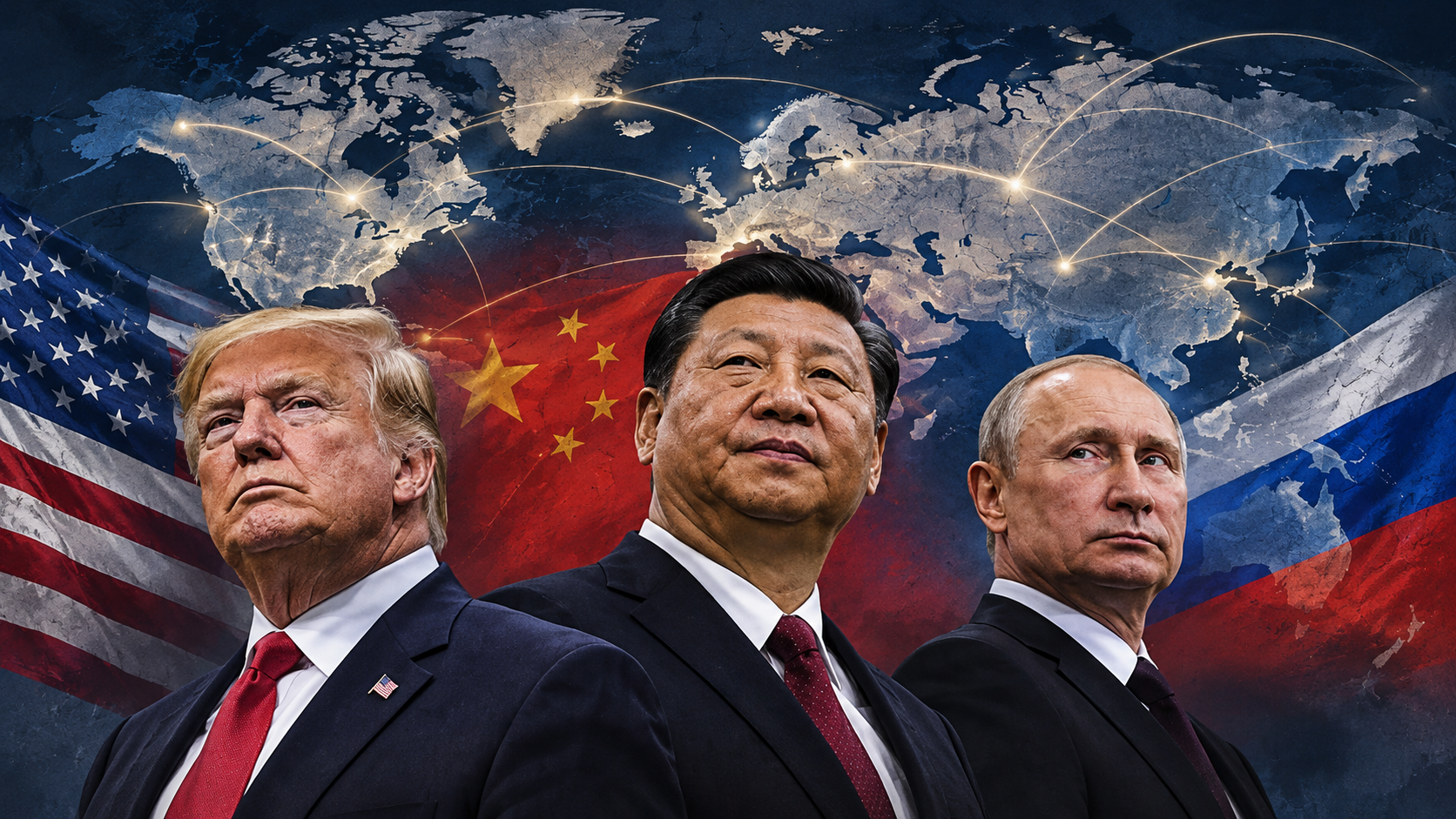
Trump, Xi and Putin face test of power as Shenzhen Summit puts world order in focus
Elnur Enveroglu
Read moreThe meeting scheduled for November 19 in Shenzhen between US President Donald Trump, Chinese President Xi Jinping and Russian President Vladimir Putin carries significance well beyond the diplomatic symbolism of bringing three of the world's most powerful leaders around the same table. And, of course, this coincides with a time when the international system is being reshaped by war, economic competition, technological rivalry and weakening confidence in established security arrangements. In the meantime, the summit offers a rare opportunity to test whether Washington, Beijing and Moscow can reconcile their interests, even temporarily.
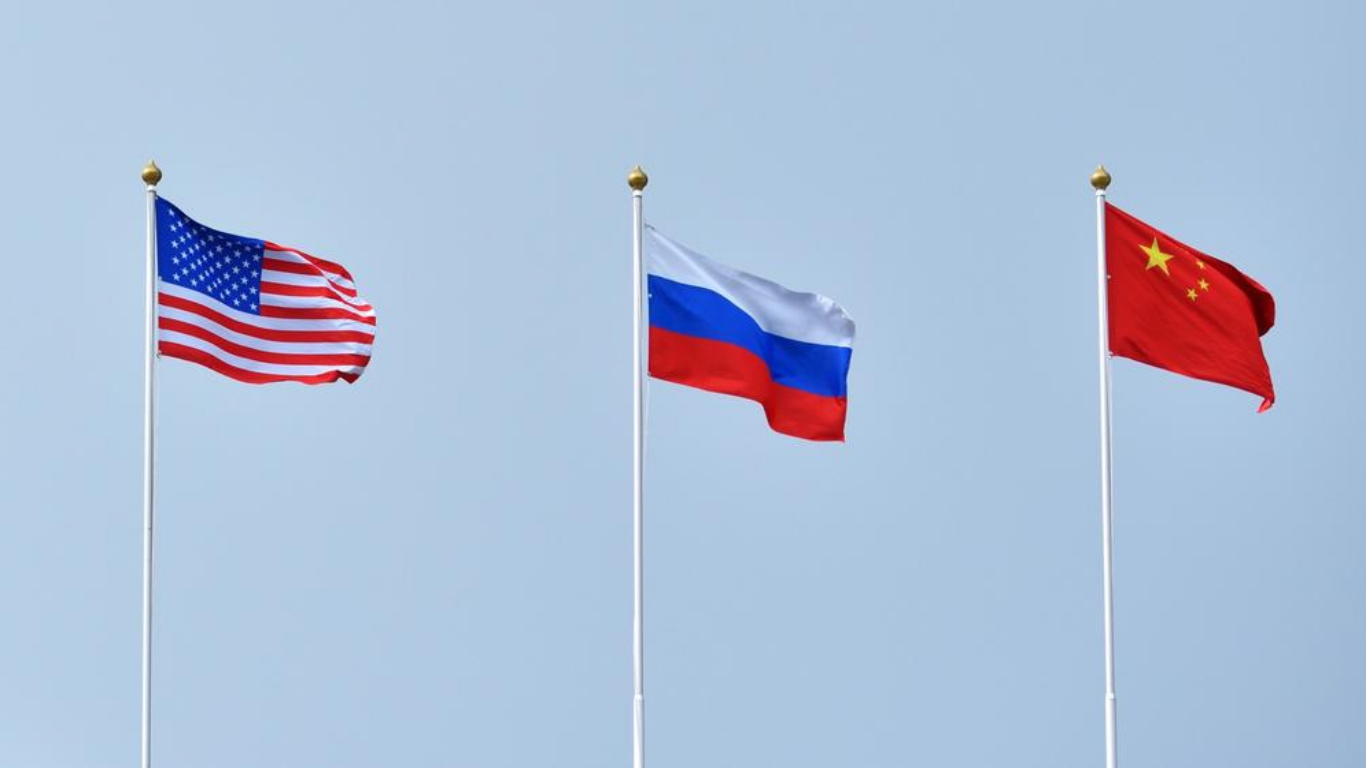
However, this shouldn't dampen the optimism, as expectations of a historic breakthrough should be treated with caution. The three leaders are approaching the meeting with different priorities, unequal leverage and, in several critical areas, fundamentally conflicting strategic objectives. The most plausible outcome is therefore not a comprehensive agreement on the future of international relations, but an attempt to establish boundaries for competition and preserve channels of communication at a moment when miscalculation carries increasingly serious consequences.
Let's take Trump, for whom the summit is an opportunity to demonstrate that American diplomacy can engage its principal strategic competitors without surrendering Washington's position. His priorities include nuclear arms control, the conflict involving Iran and the stabilisation of economic relations with China. The US president is also seeking to establish himself as a leader capable of bringing major international disputes closer to resolution. A successful meeting, even without binding commitments, would provide political evidence that his personal diplomacy can deliver where conventional diplomatic mechanisms have struggled.

The nuclear question, however, exposes the limits of what the three governments can realistically achieve. The expiry of the New START treaty between Washington and Moscow in February removed the last major bilateral framework limiting the two countries' strategic nuclear arsenals. Trump wants China included in future arms control arrangements, but Beijing has little incentive to accept restrictions while its nuclear capabilities remain substantially smaller than those of the United States and Russia. Xi is unlikely to enter negotiations on terms that could constrain China's strategic ambitions without corresponding concessions from the other two powers. A commitment to continue discussions would be achievable, but a new trilateral nuclear agreement would be considerably more difficult.
Regarding China's Xi, the meeting presents a different opportunity. Hosting the gathering in Shenzhen allows Beijing to project itself as a centre of international diplomacy at a time when Beijing is challenging American influence across trade, technology and security. The Chinese president wants to prevent another escalation in the trade dispute with Washington, protect access to international markets and reinforce China's claim to a greater role in shaping global economic rules.
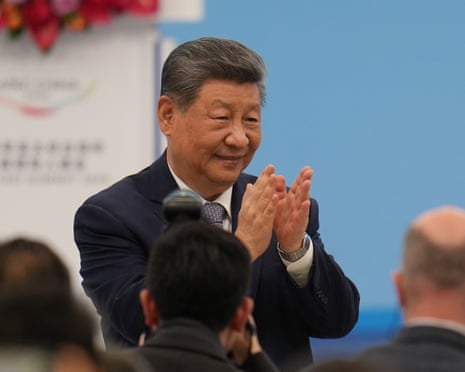
His message at the APEC summit, emphasising open trade and multilateral cooperation, is also politically significant. Beijing is attempting to position itself as a defender of economic openness while US restrictions on Chinese technology and advanced artificial intelligence chips remain a source of tension. This contrast gives Xi an opportunity to appeal to developing economies concerned about protectionism and the fragmentation of global supply chains. Nevertheless, China's economic ambitions cannot be separated from its strategic rivalry with Washington, particularly over Taiwan and technological supremacy.
Putin's calculations are equally important, although his room for manoeuvre is narrower. Besides, appearing alongside Trump and Xi reinforces Moscow's claim to remain a major power in international affairs despite Western sanctions and the continuing consequences of the war in Ukraine. A trilateral meeting also offers an opportunity to establish direct political contact with Washington without relying exclusively on bilateral negotiations or European diplomatic channels.
Ukraine, however, remains the most sensitive dividing line. The White House has indicated that the conflict is not expected to be a principal subject of the trilateral discussion, while Moscow has an obvious interest in keeping it within the broader conversation about European security. Putin would benefit from any indication that Washington is prepared to consider Russian security demands, but a settlement imposed without Ukraine's participation would carry serious political and strategic risks. Xi, meanwhile, has shown little enthusiasm for treating a European conflict as a matter to be settled exclusively by three external powers.
The war involving Iran could provide another test of whether the leaders can find common ground. Washington wants to explore the possibility of diplomatic support from Moscow and Beijing in containing the conflict. China has significant interests in regional energy supplies, while Russia maintains political and strategic ties with Tehran. Their interests in preventing a wider regional confrontation may overlap with those of the United States, although their preferred approaches and tolerance for American pressure are unlikely to be identical.
Meanwhile, the economic dimension should not be underestimated, as trade restrictions, semiconductor supplies, artificial intelligence and investment rules are increasingly central to national security calculations. An understanding that prevents another deterioration in US-China relations would benefit international markets and reduce uncertainty for businesses operating across major supply chains. But a temporary trade accommodation should not be confused with a resolution of the structural competition between the two economies.
The comparison with the 1945 Yalta Conference is tempting, but misleading if taken too literally. The idea that Washington, Beijing and Moscow might determine the broad parameters of international affairs without the participation of smaller countries raises legitimate concerns in Europe and elsewhere. But today's international system is more complex than the post-war order. For instance, neither Russia nor China can simply dictate regional outcomes, and the United States cannot expect its partners to accept decisions made without their involvement.

For countries such as Azerbaijan, the implications are particularly relevant. A change in relations between Washington and Moscow could affect the wider diplomatic environment surrounding the South Caucasus, while China's interest in the Middle Corridor strengthens the strategic importance of Azerbaijan's transport and connectivity infrastructure. Any adjustment in the balance between the three powers could create opportunities as well as new uncertainties for regional states seeking to protect their sovereignty and economic interests.
Ultimately, the Shenzhen meeting will be judged less by the photographs of the three leaders than by what follows. Will Washington and Beijing preserve their fragile economic understanding? Can the three powers establish a serious framework for nuclear dialogue? Will Iran emerge as an area of limited cooperation, or another source of confrontation? And can Moscow use the occasion to improve its diplomatic position without securing concessions at the expense of Ukraine?
The most consequential result may be modest: an agreement to keep talking, avoid uncontrolled escalation and recognise that none of the three powers can manage the international system entirely on its own. That would hardly amount to a new world order. But in a period of growing strategic uncertainty, preventing the existing one from becoming more unstable may itself represent a significant diplomatic achievement.
Here we are to serve you with news right now. It does not cost much, but worth your attention.
Choose to support open, independent, quality journalism and subscribe on a monthly basis.
By subscribing to our online newspaper, you can have full digital access to all news, analysis, and much more.
You can also follow AzerNEWS on Twitter @AzerNewsAz or Facebook @AzerNewsNewspaper
Thank you!