
Transnistria referendum talk signals new phase in Russia’s pressure on Moldova
Akbar Novruz
Read moreLast week, Russian President Putin's United Russia party secured its strongest-ever election result and a constitutional majority in parliament. Some experts assume and predict this outcome could be another motivation for the Kremlin to recalibrate its geopolitical strategy.
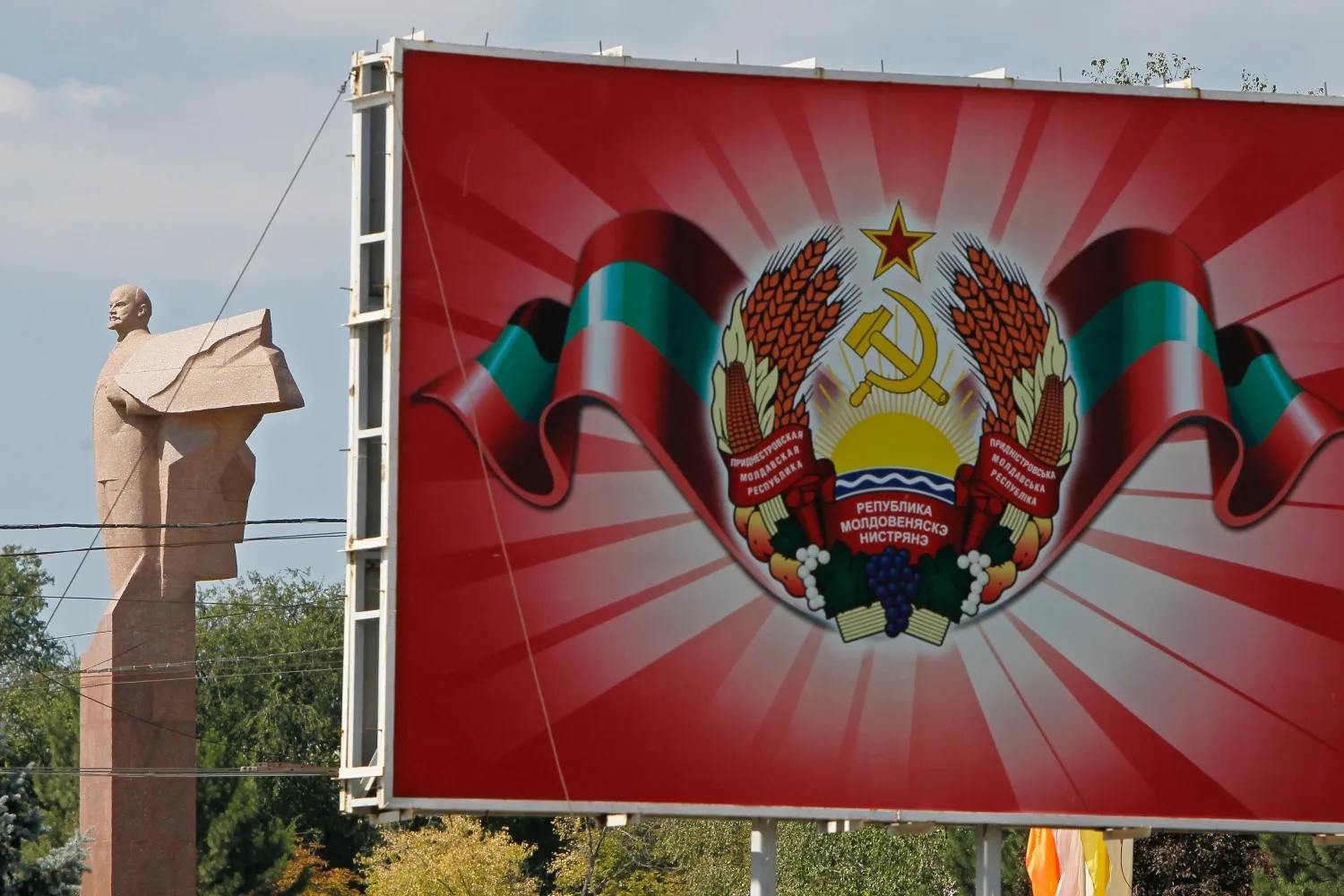
Amid that occurrence, the Transnistrian dispute is once again producing political signals that could have implications far beyond the narrow strip of territory along the Dniester.
Vadim Krasnoselsky, the head of the internationally unrecognized Transnistrian administration, has said that the region is ready to hold another referendum on self-determination, exactly 20 years after the territory held its previous vote. Krasnoselsky recalled that the 2006 referendum produced a claimed 97.1 percent vote in favour of independence and eventual “free reunification” with Russia, and said Tiraspol would be prepared to repeat the exercise if its outcome were accepted by all international participants.
The proposal comes at a particularly sensitive moment. Moldova is deepening its integration with the European Union, while Russia continues to maintain military and political influence in Transnistria. Moscow has also recently facilitated a simplified route to Russian citizenship for residents of the region. Krasnoselsky says more than 60,000 people have registered for the process since the decree signed by Russian President Vladimir Putin in May, while claiming that more than 220,000 residents already hold Russian citizenship. Russian and Transnistrian sources have confirmed the scale of registrations, although the figures should be treated as claims from the authorities in question rather than independently verified demographic data.
Is Tiraspol preparing the ground for another attempt to alter the political status of the region, or is the referendum rhetoric primarily intended to increase pressure on Chisinau?
Speaking to AzerNEWS, German-based analyst Brendan Ziegler said the referendum proposal should be understood less as an immediate blueprint for annexation than as part of a broader strategy of maintaining controlled pressure on Moldova.
“The value of Transnistria for Moscow is not necessarily in an immediate escalation or military confrontation. A much more effective method is to keep the region in a state of constant, controlled tension: not to create war, but to create the feeling that a crisis could flare up at any moment,” Ziegler said.
In his assessment, this approach allows Moscow and Tiraspol to exert pressure on Chisinau without necessarily crossing the threshold into a new armed conflict.
“Instead of one major clash, the strategy can consist of dozens of smaller conflicts, each of which forces Chisinau to redirect political attention, resources and state capacity toward Transnistria,” he said.
The referendum issue, therefore, can serve a purpose even if no vote actually takes place.
According to Ziegler, political escalation is one of the most straightforward mechanisms available to Tiraspol. Raising the prospect of a new referendum, demanding a special status and repeatedly stressing the region's supposed right to determine its own future can reinforce the image of Transnistria as a separate political entity.
“The referendum discussion is important because it attempts to shift the political framework of the conflict. Tiraspol wants to be treated as an equal negotiating subject rather than as a region of Moldova. For Chisinau, accepting that premise would already represent a major political concession,” he said.
That argument runs directly against the established international settlement framework. The OSCE continues to define a settlement in terms of Moldova's sovereignty and territorial integrity within its internationally recognized borders, combined with a special status for Transnistria. Moldova and the EU have reaffirmed the same principle in 2026.
The precedent of the 2006 referendum also matters. Although Tiraspol presented the result as a mandate for independence followed by accession to Russia, the OSCE rejected the vote, arguing that a unilateral referendum challenging Moldova's territorial integrity could not constitute a legitimate settlement mechanism. The organization said a future status referendum could only be considered after a political settlement and under conditions allowing for a free and fair vote.
Ziegler believes the political pressure could nevertheless take forms beyond the referendum itself.
“Social and economic problems can also become instruments of political escalation. Tariffs, taxation, customs regulations, energy supplies and social payments can all be presented as evidence of an alleged blockade by Chisinau,” he said.
“This is particularly effective because Moldova is attempting to apply common economic and legal rules across the country. Measures taken by Chisinau can therefore easily be reframed by Tiraspol as an attack on Transnistria rather than as part of a broader reintegration policy.”
Such tensions are already visible in the Security Zone. Moldovan authorities have reported disputes over Transnistrian checkpoints, inspections and restrictions on movement, as well as disagreements within the Joint Control Commission. In June, Chisinau said the presence of what it described as illegal Transnistrian security posts and restrictions on movement were contributing to the deterioration of the situation in the Security Zone.
For Ziegler, these seemingly limited disputes can be politically significant precisely because they do not require a military confrontation.
“Provocations in the Security Zone are another mechanism for maintaining tension. Illegal posts, restrictions on movement, detentions and disputes over the powers of security structures create a permanent supply of incidents that can be turned into political crises,” he said.
The same logic, he argued, applies to elections and questions of legitimacy.
“Every electoral process in Transnistria can become another confrontation. Chisinau may reject the legitimacy of procedures organised by Tiraspol, while Tiraspol can accuse the Moldovan government of interference and of denying the region its supposed right to choose its own future,” Ziegler said.
“This creates a cycle in which every political process increases the distance between the two banks of the Dniester.”
The citizenship issue adds another layer.
Putin's May decree simplified the procedure for certain Transnistrian residents to apply for Russian citizenship, removing several requirements under Russia's citizenship legislation. By August, Krasnoselsky said more than 60,000 people had registered for the process, while the first Russian passports under the simplified mechanism were subsequently handed out in Tiraspol.
Ziegler said this should be viewed not simply as a bureaucratic development but as a mechanism that strengthens the region's institutional and human links with Russia.
“Russian citizenship has both a practical and a political function in Transnistria. It creates a direct legal connection between residents and Russia, while simultaneously reinforcing the narrative that Russia has a special responsibility toward the population of the region,” he said.
However, he cautioned against interpreting the 60,000 applications as proof that 60,000 people have already become Russian citizens.
“The figure being discussed is the number of people who have registered or applied under the simplified procedure, not the number of passports already issued. That distinction is important. The scale of interest is nevertheless politically significant,” Ziegler said.
The latest developments do not necessarily mean that Moscow has decided to trigger a new crisis in Transnistria, either.
“There is no need to assume that Krasnoselsky received a direct instruction from the Kremlin simply because he raised the referendum issue,” Ziegler said. “The more important point is that the referendum narrative is compatible with Russia's broader interests in maintaining leverage over Moldova.”
He argued that Moscow's most useful strategy may be precisely to preserve uncertainty.
“Russia does not necessarily need to recognise Transnistria or attempt to annex it tomorrow. The region can be more valuable as a permanent strategic pressure point. As long as the conflict remains unresolved, Chisinau has to devote political and institutional resources to it, while Russia retains an additional instrument for influencing Moldova's strategic choices.”
This is particularly relevant as Moldova advances its European integration while maintaining a stated commitment to a peaceful settlement. The EU has reaffirmed support for Moldova's sovereignty and territorial integrity and has called on Russia to withdraw its forces and ammunition from the Transnistrian region.
Ziegler therefore sees the current referendum discussion less as evidence that a new war is imminent and more as a warning that the Transnistrian issue could become increasingly politicised as Moldova moves further toward Europe.
“The greatest danger is not necessarily an immediate military escalation. It is the gradual transformation of every political, economic and security disagreement into another argument over sovereignty and legitimacy,” he said.
“Referendum rhetoric, citizenship, elections, economic disputes, incidents in the Security Zone and claims about an alleged Moldovan military threat can all reinforce the same narrative. Each individual issue may appear manageable, but together they can produce a sustained atmosphere of crisis.”
For Moldova, the challenge will therefore be to prevent the conflict from being repeatedly reset around the question of Transnistria's supposed statehood, while maintaining channels for dialogue and addressing practical problems affecting residents on both banks of the Dniester.
For Russia and Tiraspol, meanwhile, the strategic value may lie precisely in keeping the question unresolved.
“The objective does not necessarily have to be a dramatic event,” Ziegler said. “Sometimes the most effective form of pressure is simply to ensure that the crisis never completely disappears.”
Here we are to serve you with news right now. It does not cost much, but worth your attention.
Choose to support open, independent, quality journalism and subscribe on a monthly basis.
By subscribing to our online newspaper, you can have full digital access to all news, analysis, and much more.
You can also follow AzerNEWS on Twitter @AzerNewsAz or Facebook @AzerNewsNewspaper
Thank you!