
Armenia becomes frontline in Russia-West rivalry as it heads to polls
Elnur Enveroglu
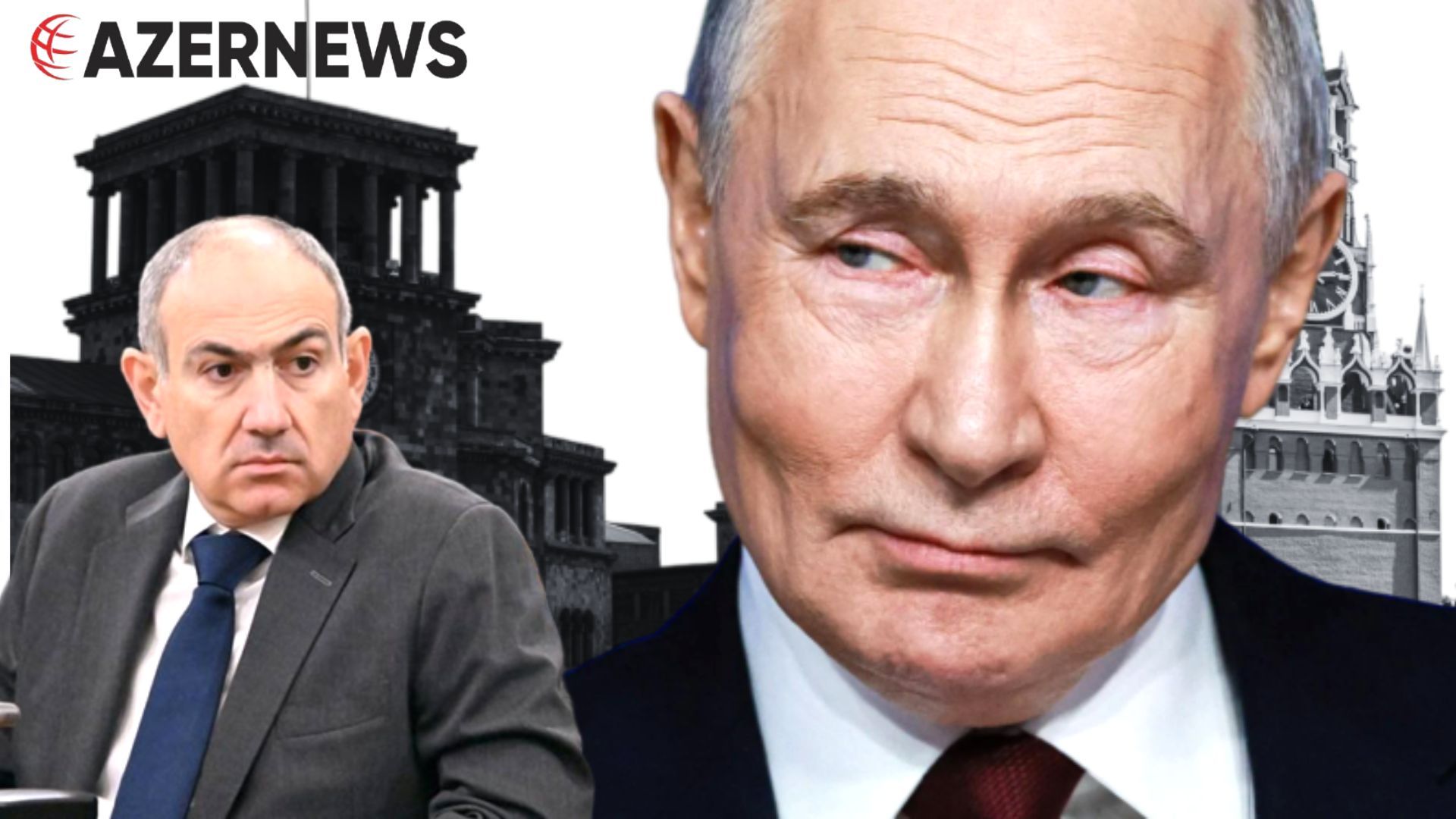
Read moreThe recent polemics between Russian President Vladimir Putin and Armenian Prime Minister Nikol Pashinyan have drawn predictable attention, and the most telling aspect of this exchange lies not in what was said, but in how it is being interpreted. Rather than reducing the dispute to personalities or historical grievances, it is more revealing to view it through the overlapping lenses of Russia–Armenia relations and the broader confrontation between Russia and the West.
At first glance, Moscow’s messaging has been consistent. Russia has emphasised its long-standing role as Armenia’s economic and security partner, pointing to tangible indicators: preferential gas pricing, extensive trade ties, and a bilateral turnover that has surpassed $6bln in recent years. Beneath these figures, however, lies a more complex reality. A significant share of this trade boom has been linked to re-export flows, particularly in the wake of sanctions imposed on Russia. This nuance matters, because it underscores that the economic interdependence between the two countries is not purely structural, but also circumstantial.
Within this context, Putin’s remarks appear less like a sudden escalation and more like a calibrated signal in which the implication is clear. So despite the depth of Russian support, Armenia has been steadily diversifying its foreign policy, deepening engagement with western institutions and partners. And for Moscow, this is not merely a diplomatic adjustment but rather it is perceived as a strategic drift.
Meanwhile, to frame this as a simple case of loyalty versus betrayal would be misleading. Armenia’s foreign policy recalibration reflects a broader pattern seen across post-Soviet states, where smaller countries attempt to hedge between competing power centres. What distinguishes Armenia, however, is the timing. The current tensions coincide with a politically sensitive period at home, where electoral dynamics amplify the stakes of every external signal.
In this sense, the Putin–Pashinyan exchange cannot be divorced from Armenia’s domestic political climate. As the country approaches elections, rhetoric that might otherwise remain within diplomatic channels becomes part of a wider narrative battle. Statements from Moscow, particularly those that appear critical or dismissive of the Armenian leadership, inevitably resonate within the domestic arena. They risk being interpreted not just as foreign policy positions, but as indirect interventions in the country’s political process.
From one perspective, such rhetoric can be read as an attempt by Russia to shape the political environment in Armenia. The suggestion that Moscow might favour alternative political forces, or seek conditions more conducive to pro-Russian actors, feeds into a long-standing concern about external influence. Whether intentional or not, the tone of the discourse risks reinforcing perceptions that Russia views Armenia more than a partner, i.e. as a sphere of influence where political outcomes matter.
However, it would be equally incomplete to overlook the role of the West. Over the past several years, western engagement with Armenia has intensified, spanning governance reforms, economic cooperation, and security dialogue. While often framed in the language of democratic support and human rights, this engagement is not devoid of strategic considerations. The relative restraint shown by western actors in response to internal political tensions in Armenia suggests a degree of pragmatism, if not selectivity, in how these principles are applied.
The result is a layered dynamic in which both Russia and the west are actively engaged in Armenia’s trajectory. Unlike Ukraine, where confrontation has taken a devastatingly kinetic form, Armenia represents a different kind of battleground. It is the one that is defined by influence, narratives, and political alignment. If Ukraine is the site of a “hot” conflict, Armenia increasingly resembles a theatre of “cold” competition.
This competition is not necessarily visible in overt confrontation. Instead, it manifests through economic incentives, diplomatic messaging, and symbolic gestures. Each side seeks to position itself as the more reliable partner, while simultaneously questioning the intentions of the other. For Armenia, this creates both opportunities and vulnerabilities. The ability to engage multiple partners can enhance strategic flexibility, and it also increases exposure to external pressures.
Amid this shifting landscape, it is instructive to consider the regional contrast. Azerbaijan, under the leadership of Ilham Aliyev, has pursued a notably different approach. Rather than aligning decisively with any single power centre, Baku has sought to maintain a balanced network of relations, engaging with Russia, the west, and other regional actors on its own terms. This strategy, grounded in a clear articulation of national interests, has allowed Azerbaijan to navigate a complex geopolitical environment with a degree of autonomy.
The comparison is not intended to prescribe a model. It aims to highlight the range of strategic choices available to states in the region. So, Armenia’s current predicament reflects the difficulty of managing these choices under conditions of heightened external competition and internal political uncertainty.
Ultimately, the Putin–Pashinyan polemics should not be overstated as a rupture, nor understated as mere rhetoric. They are indicative of a deeper recalibration that encompasses not only bilateral relations, but also the evolving balance between Russia and the West in the South Caucasus.
As Armenia moves closer to elections, this recalibration is likely to intensify. External actors will continue to signal preferences, whether explicitly or implicitly, while domestic political forces interpret and respond to these signals. The risk is that foreign policy becomes entangled with electoral politics in ways that constrain strategic decision-making.
For observers, the key is to resist simplistic narratives. This is neither a story of inevitable realignment nor one of irreversible conflict. It is, rather, a reflection of a country navigating competing pressures in an increasingly polarised geopolitical landscape, where every statement carries weight, and every silence becomes expressive.
Here we are to serve you with news right now. It does not cost much, but worth your attention.
Choose to support open, independent, quality journalism and subscribe on a monthly basis.
By subscribing to our online newspaper, you can have full digital access to all news, analysis, and much more.
You can also follow AzerNEWS on Twitter @AzerNewsAz or Facebook @AzerNewsNewspaper
Thank you!