
April clashes and four days that shattered frozen conflict myth

Elnur Enveroglu
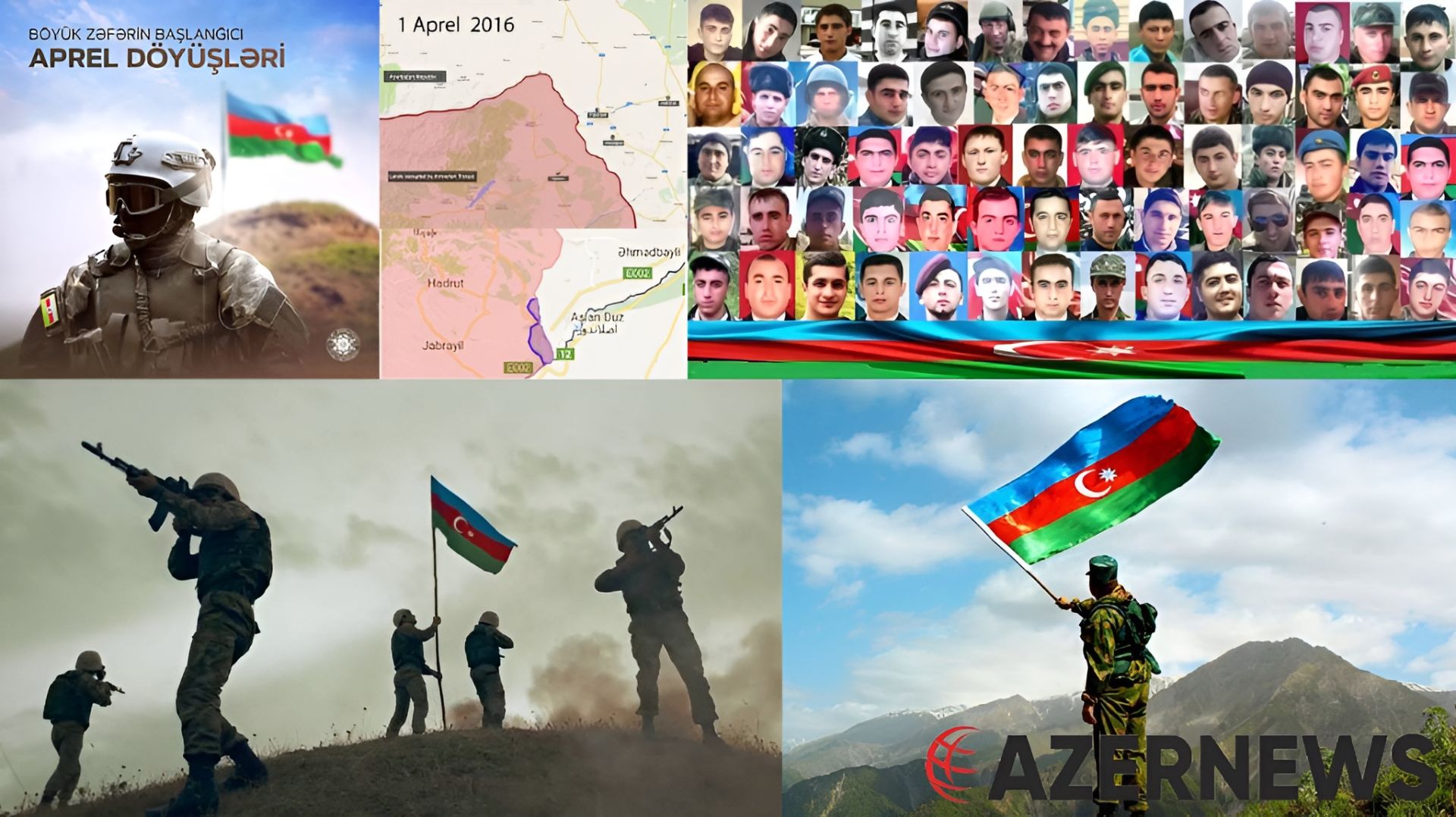
Read moreOn 1 April 2016, the long-simmering conflict between Azerbaijan and Armenia erupted into what would later be known as the “Four-Day War”, a brief but decisive escalation that shattered illusions, redrew assumptions, and quietly set the stage for a far larger reckoning.
For years, the conflict over Karabakh had been lazily labelled a “frozen” one. Diplomats spoke in rehearsed phrases, while negotiations under the OSCE Minsk Group drifted into stagnation. However, beneath this veneer of stability, tensions were anything but dormant.
The April escalation did not occur in a vacuum. It was preceded by sustained provocations from the Armenian side, where ceasefire violations increased, intensified shelling of Azerbaijani positions, and a growing sense that the status quo was being exploited rather than resolved. For Baku, patience had worn thin. The line had been tested too often.
What followed was swift, calculated, and revealing.
In just four days, the Azerbaijani army demonstrated a level of combat readiness that took many observers by surprise. More importantly, it dismantled one of the most enduring myths of the conflict: the supposed invincibility of Armenia’s defensive lines. The much-vaunted fortifications, often portrayed as impenetrable, proved anything but.
This gives grounds to say that it was not merely a tactical success but was a psychological rupture.
For years, Armenian narratives had leaned heavily on the idea of an unassailable frontline, reinforcing a belief that territorial realities were permanent. The April fighting punctured that illusion. It showed, in stark terms, that the status quo was neither stable nor sustainable.
In Azerbaijan, the impact was immediate and profound. After decades of fruitless negotiations, the events of April rekindled public confidence. The message was clear: occupation was not a fait accompli, and change, even if not through diplomacy, could be enforced through strength.
Internationally, the shock was equally significant. The idea of a “frozen conflict” suddenly looked dangerously misleading. Mediators were forced to confront an uncomfortable truth: the longer a resolution was delayed, the higher the risk of renewed war.
Perhaps the most important legacy of those four days lies not in what they achieved at the time, but in what they foretold.
The April clashes became, in effect, a rehearsal, a testing ground for tactics, technologies, and command structures that would later define the outcome of the Second Karabakh War. Azerbaijan used the moment to assess its capabilities, refine its military doctrine, and strengthen coordination within its armed forces.
It is no coincidence that four years later, in 2020, a 44-day war would decisively alter the balance of power in the region.
If one were inclined to symbolism, one might even call it a “4+4=44” equation - four days that paved the way for forty-four. But beyond the arithmetic lies a more sobering lesson.
Conflicts left to fester do not remain frozen. They evolve, harden, and eventually erupt.
Today, as tensions rise across the Middle East and states like Qatar warn against attacks on critical infrastructure and the dangers of escalation, the lessons of April 2016 feel strikingly relevant. Escalation, once triggered, rarely remains contained. Miscalculations carry consequences that ripple far beyond the battlefield.
The Four-Day War was a warning, the one that many chose to overlook.
It exposed the fragility of illusions, the cost of complacency, and the risks of ignoring provocations until they spiral into open conflict. Above all, it demonstrated that unresolved disputes are not static; they are merely waiting for their moment.
In April 2016, that moment arrived. And it changed everything.
Here we are to serve you with news right now. It does not cost much, but worth your attention.
Choose to support open, independent, quality journalism and subscribe on a monthly basis.
By subscribing to our online newspaper, you can have full digital access to all news, analysis, and much more.
You can also follow AzerNEWS on Twitter @AzerNewsAz or Facebook @AzerNewsNewspaper
Thank you!