
What Iran’s strike on Nakhchivan reveals about its view of region

Qabil Ashirov
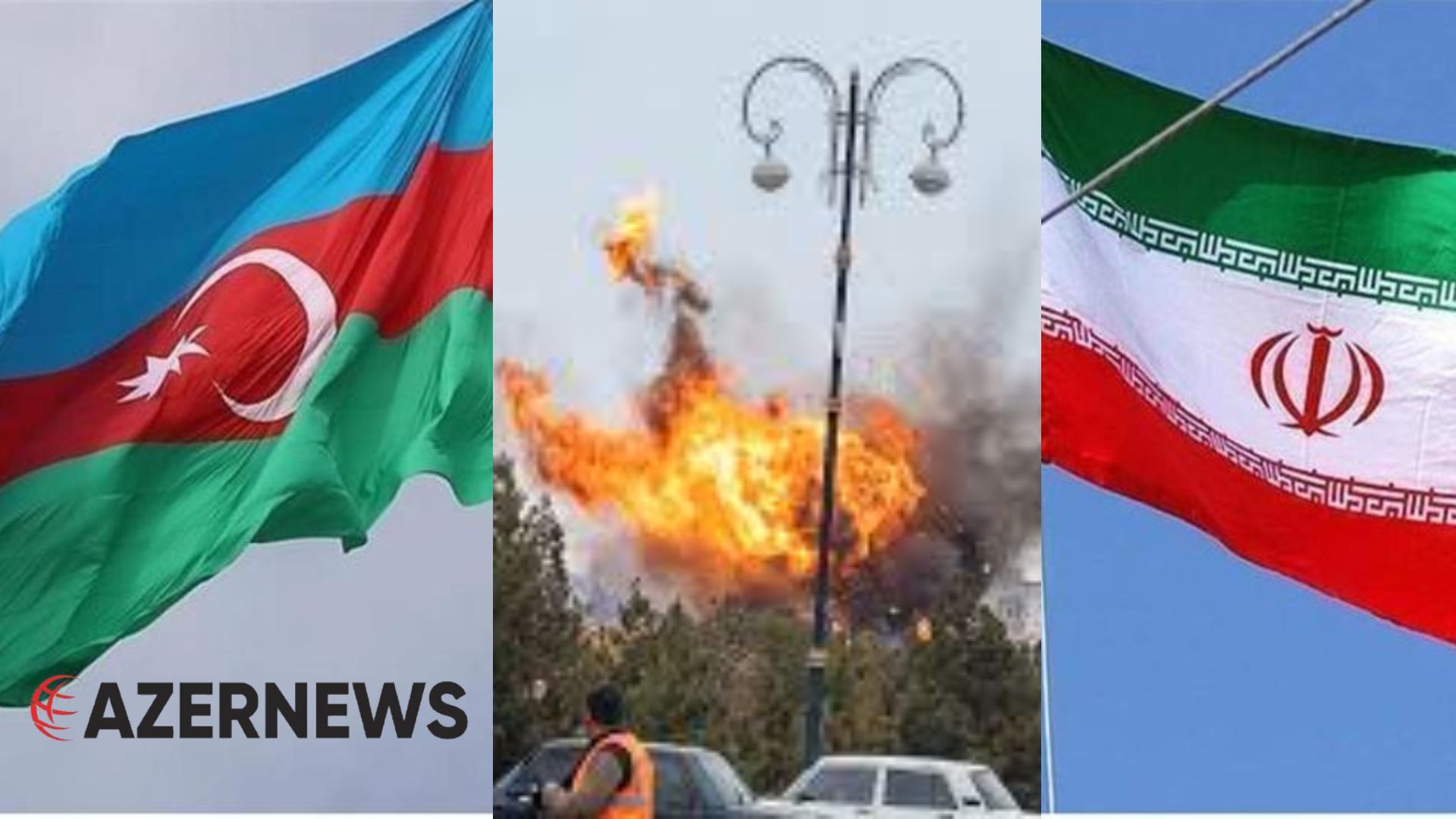
Read moreIran’s recent strike on Nakhchivan is a textbook case of barking up the wrong tree. At a time when the United States and Israel are steamrolling over Iran, the regime has chosen to lash out at its neighbors. This choice is neither accidental nor unprecedented; it reflects a deeper pattern in Iran’s foreign policy—a mix of jealousy, insecurity, and aggression toward surrounding states, particularly Muslim-majority countries that it paradoxically claims to defend.
From the earliest days of the current regime, Iran has cloaked its actions in religious rhetoric, presenting itself as the guardian of Islam. Yet its record tells a different story. During the first days of the ongoing conflict, Iran targeted Muslim countries in the Gulf. On March 4, it escalated further by striking Turkey, and the following day, Azerbaijan. Some observers may dismiss these incidents as technical errors or defensive reflexes. But history reveals a consistent pattern: Iran has always regarded its neighbors with enmity and envy.
Consider the South Caucasus a century ago. When Armenia, Georgia, and Azerbaijan declared independence, Iran did not challenge the two Christian states. Instead, it directed hostility toward Azerbaijan, the sole Muslim nation among them. Tehran even attempted to annex Azerbaijani territory, though it failed. This selective aggression exposes the hollowness of Iran’s claim to defend Muslim nations. Similarly, when Gulf countries gained independence, Iran responded with hostility. It occupied islands belonging to the United Arab Emirates, clashed with Iraq over borders, and later plunged into a full-scale war with Baghdad. From the moment the clerical regime seized power, Saudi Arabia was cast as an enemy.
The 1990s brought Azerbaijan’s independence second time, and once again Iran’s hostility surfaced. While Azerbaijan sought peaceful coexistence, Iran pursued pro-Armenian policies, attempting to destabilize its northern neighbor. Tehran’s actions were not driven by security concerns but by resentment of Azerbaijan’s sovereignty and success. In contrast, Azerbaijan consistently adopted a constructive stance toward Iran. It has never posed a threat to Iranian territory, nor has it used its land as a platform against Tehran. On the contrary, Azerbaijan has demonstrated goodwill: President Ilham Aliyev offered condolences upon the death of Iran’s Supreme Leader, visited the Iranian embassy, and even planned humanitarian aid. This stands in stark contrast to Iran’s duplicity.
When Iran suffered a devastating earthquake years ago, Azerbaijan was the first country to send humanitarian aid. Yet Tehran refused to accept it, even as ethnic Azerbaijanis in northern Iran endured freezing conditions. Such cruelty illustrates the regime’s disregard for its own people. The same brutality was evident during recent protests, when Iranian forces killed tens of thousands of civilians. What can be expected from a government that does not hesitate to slaughter its own citizens?
Iran’s leaders attempt to disguise their aggression with religious slogans. They claim to fight Israel and the United States in defense of Palestine. But history shows otherwise. The Palestinian issue has only worsened since Iran’s involvement. Israel, in fact, serves as a convenient scapegoat—a mask for Tehran’s ambitions. A century ago, when Iran pursued its jealous policies against Azerbaijan, Israel did not even exist. Similarly, Iran’s territorial disputes with Iraq and the UAE predated the clerical regime. These examples prove that Iran’s hostility is not about Islam or Israel. It is about power, control, and resentment. Religion is merely a costume; Israel is merely a curtain.
Therefore, the recent drone strike on Nakhchivan’s civilian airport is therefore not only an act of hostility but also a form of terrorism against peaceful residents and infrastructure. It reveals the regime’s ingratitude and cowardice.
Launching drone attacks on civilian infrastructure is not a sign of strength but of weakness. It is the act of a regime too fearful to confront its real adversaries, choosing instead to terrorize neighbors. History offers a clear lesson: those who attack Azerbaijan always regret it. Iran will be no exception. Its cowardly strike on Nakhchivan will not intimidate Azerbaijan but will expose Tehran’s hypocrisy and isolation.
Here we are to serve you with news right now. It does not cost much, but worth your attention.
Choose to support open, independent, quality journalism and subscribe on a monthly basis.
By subscribing to our online newspaper, you can have full digital access to all news, analysis, and much more.
You can also follow AzerNEWS on Twitter @AzerNewsAz or Facebook @AzerNewsNewspaper
Thank you!