
Iran war risk sends oil soaring — What Middle East conflict could mean for Azerbaijan’s economy

Qabil Ashirov
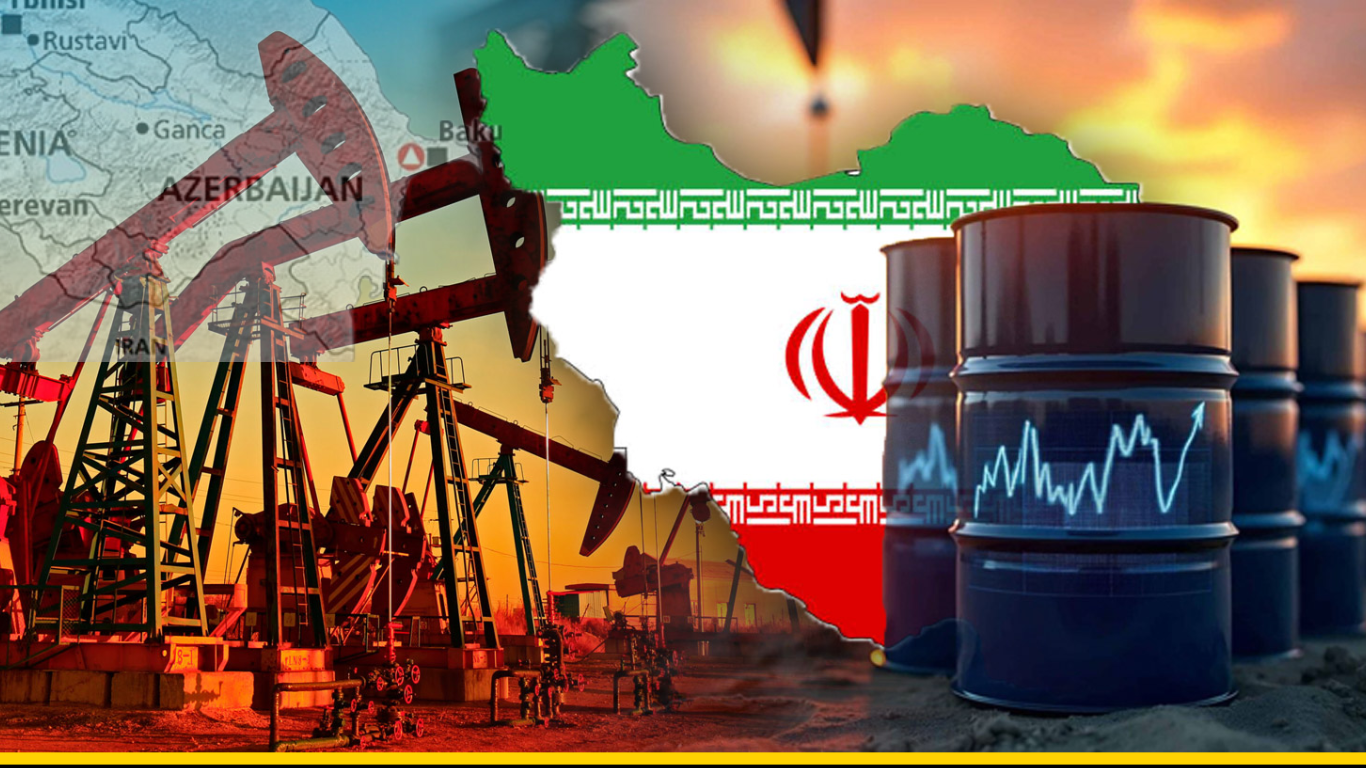
Read moreA potential war between Iran and the United States, alongside Israel, would not merely redraw security lines across the Middle East. It would fundamentally reshape the region’s political and economic landscape. The first tremors are already visible in global energy markets: oil prices have risen by 9–10 percent, while natural gas prices have surged by as much as 50 percent following reductions in LNG exports from Gulf producers.
For Azerbaijan, this emerging crisis presents a dual reality — a mixture of tangible risks and undeniable opportunities.
Let us begin with trade. In January 2026, trade turnover between Azerbaijan and Iran reached $57.1 million, marking a modest 2.1 percent increase compared to the same period last year. However, the structure of this trade reveals a clear imbalance. Of the total $644 million trade turnover recorded in 2025, $624 million consisted of imports from Iran, while Azerbaijan’s exports amounted to just $20 million. This left Baku facing a negative trade balance of $604 million.
In this context, a disruption in trade ties with Iran would not significantly harm Azerbaijan’s export sector. The primary risk lies in reduced imports. Azerbaijan relies on Iran for various food and construction materials, including oranges, potatoes, butter, cheese, nitrogen, argon, marble chips and Portland cement. Wartime disruptions could complicate the supply of these goods, requiring swift diversification toward alternative markets.
Yet perspective is crucial. Iran accounts for only 1.3 percent of Azerbaijan’s total foreign trade turnover and 2.6 percent of annual imports. These figures suggest that while short-term supply pressures are possible, a systemic shock to the national economy is unlikely — provided alternative supply chains are activated without delay.
The larger economic story, however, lies in energy.
Rising oil prices would significantly boost Azerbaijan’s budget revenues. Transfers from the State Oil Fund would increase, strengthening fiscal stability. Higher export earnings would improve the trade balance and bolster foreign currency reserves, providing the government with additional financial space.
But there is a caveat. Elevated oil prices often fuel global inflationary pressures. As the cost of imported goods rises, domestic consumers may face higher prices, particularly for food and industrial products. The same conflict that strengthens Azerbaijan’s fiscal position could simultaneously strain household budgets.
The gas market tells a similarly complex story. As Gulf countries reduce LNG exports, global gas prices have climbed sharply. In this environment, Azerbaijani gas exported to Europe via the Southern Gas Corridor becomes even more strategically valuable.
For European states struggling with LNG shortages, Azerbaijan represents reliability and geographic proximity. Higher prices translate into stronger revenues for Baku and enhanced geopolitical leverage. Energy diplomacy, already central to Azerbaijan’s foreign policy, would gain renewed weight. The country’s role as a stable supplier could elevate its standing in European capitals.
Nevertheless, the benefits come with strategic vulnerabilities. War increases transit risks across the region. The security of export routes — pipelines, terminals and shipping lanes — becomes paramount. Any disruption could undermine economic stability and investor confidence.
In essence, a war between Iran, the United States and Israel would not deliver a direct economic blow to Azerbaijan. The indirect effects, however, are unavoidable. Reduced imports from Iran and potential price increases in certain consumer goods represent manageable but real challenges.
At the same time, rising energy prices offer Azerbaijan a short-term economic windfall and a strengthened strategic position in Europe. The true test lies not in enjoying the revenue surge, but in managing it wisely.
If additional energy income is directed toward economic diversification, domestic production capacity and reduced import dependence, Azerbaijan could transform a regional crisis into a structural advantage. If not, the country risks remaining tied to the volatility of commodity markets.
War may create opportunity — but only disciplined economic policy can turn opportunity into lasting strength.
Here we are to serve you with news right now. It does not cost much, but worth your attention.
Choose to support open, independent, quality journalism and subscribe on a monthly basis.
By subscribing to our online newspaper, you can have full digital access to all news, analysis, and much more.
You can also follow AzerNEWS on Twitter @AzerNewsAz or Facebook @AzerNewsNewspaper
Thank you!