
Gold prices surge as Israel and US target Iran - $6,000 seen possible

Qabil Ashirov
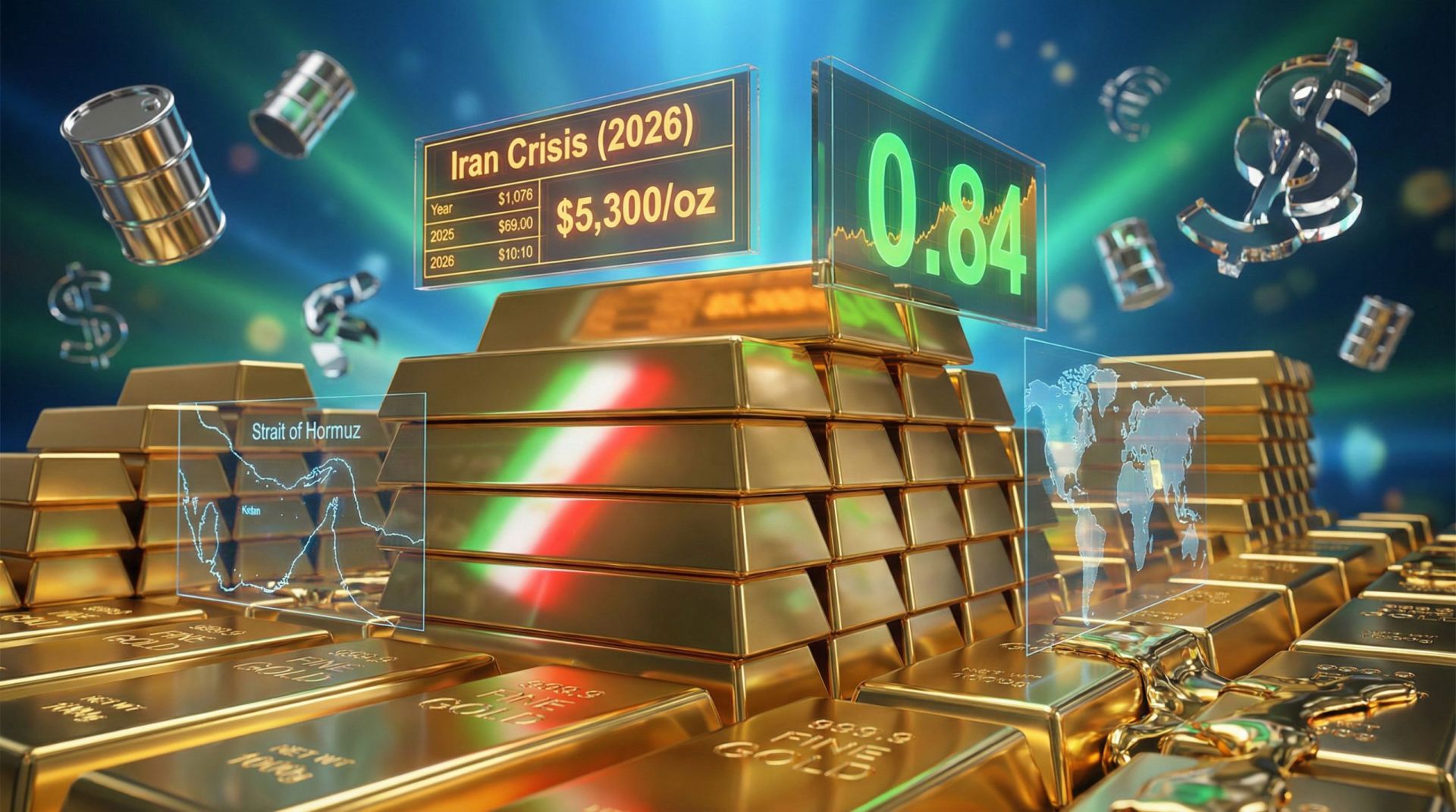
Read moreGold has never been merely a commodity quoted on a trading screen. Across centuries, it has served as a barometer of anxiety — a quiet but powerful indicator of war, instability, and systemic doubt. In recent days, reports of Iran being bombed in the Middle East sent gold soaring to a record $5,400 per ounce. This was not simply a technical market fluctuation. It was a psychological reflex deeply embedded in the architecture of global finance.
Whenever geopolitical tremors intensify, investors instinctively retreat from risk. Equities lose momentum, emerging-market currencies come under pressure, and capital seeks shelter. Historically, that shelter has often meant gold. The pattern has repeated itself with remarkable consistency, transcending eras, continents, and monetary regimes.
During the 2003 U.S. invasion of Iraq, gold prices jumped roughly 5–6 percent within days. Yet once the war formally began and markets absorbed the initial shock, prices retreated. A similar sequence unfolded in 2022, when Russia launched its invasion of Ukraine. Gold briefly surged above $2,000 per ounce, only to ease back toward $1,800 in the months that followed as the Federal Reserve embarked on an aggressive cycle of interest-rate hikes. The lesson from both episodes was clear: war headlines ignite sharp, emotional spikes; monetary tightening and market recalibration often impose discipline afterward.
Yet the current Iran episode appears different in scope and potential consequence. Iran is not merely another flashpoint in a volatile region. It is a significant player in global energy markets, and any disruption involving Iran reverberates immediately through oil supply expectations. Rising oil prices feed directly into inflation fears. Inflation fears, in turn, elevate gold’s appeal as a hedge against currency erosion and purchasing-power decline. This feedback loop explains why the recent 8 percent surge does not look accidental or purely speculative. Markets are pricing in the possibility that the conflict’s consequences could extend far beyond the battlefield.
Gold’s “safe haven” status is neither myth nor marketing slogan. In times of uncertainty — whether war, recession, banking instability, or currency depreciation — its store-of-value function tends to strengthen. When the dollar weakens, when investors anticipate rate cuts, or when energy shocks threaten global price stability, gold frequently becomes the first refuge. The mechanism is both psychological and structural. Fear amplifies demand, while macroeconomic fundamentals often justify it.
Unlike fiat currencies, gold does not rely on the credibility of a central bank or the fiscal discipline of a government. It is not tied to the balance sheet of any sovereign authority. For that reason, it carries an aura of neutrality. In moments when political decisions appear unpredictable and alliances fragile, that neutrality becomes extraordinarily valuable. Investors may debate equity valuations or bond yields, but gold’s appeal in crisis rests on something more elemental: trust that exists outside the political sphere.
If the Iran conflict proves short-lived and contained, historical precedent suggests that prices could moderate. The Iraq and Ukraine cases both demonstrated that once the initial shock subsides and supply chains adjust, speculative premiums tend to fade. Markets dislike uncertainty more than bad news; once outcomes become clearer, volatility often declines. In such a scenario, gold could experience a corrective phase, particularly if central banks signal tighter policy to counter inflationary pressures.
However, if hostilities persist or expand, the calculus changes significantly. A prolonged disruption in the Middle East would likely sustain elevated energy prices, reinforcing inflation expectations across advanced and emerging economies alike. That would complicate the policy choices of central banks, including the Federal Reserve, which must balance growth risks against price stability mandates. Should policymakers hesitate to tighten aggressively for fear of undermining economic recovery, real interest rates could remain subdued — a condition historically supportive of higher gold prices.
Historical data suggest that while gold often exhibits volatility after the initial shock, average gains over a 12-month horizon during wartime periods have hovered around 8–9 percent. In environments where both geopolitical and inflationary pressures coincide, those gains can be more pronounced. This dual driver — war anxiety combined with structural inflation expectations — provides a stronger foundation for sustained price appreciation than conflict headlines alone.
What distinguishes this moment is the direct energy channel linking military escalation to consumer prices, monetary policy, and currency valuations simultaneously. Gold is responding not only to fear, but to a tangible macroeconomic risk matrix. Against this backdrop, forecasts suggesting a potential move toward $6,000 per ounce no longer seem implausible. They reflect not exuberance, but a recalibration of perceived systemic risk.
Whether this surge proves temporary or structural will depend on the trajectory of the conflict and the response of policymakers. Yet one principle endures. In moments when the world feels less predictable, capital searches for permanence. And for centuries, that permanence has been found in gold.
Here we are to serve you with news right now. It does not cost much, but worth your attention.
Choose to support open, independent, quality journalism and subscribe on a monthly basis.
By subscribing to our online newspaper, you can have full digital access to all news, analysis, and much more.
You can also follow AzerNEWS on Twitter @AzerNewsAz or Facebook @AzerNewsNewspaper
Thank you!