
Beyond optics: How Israel–India partnership alters Pakistan and Iran’s calculus

Elnur Enveroglu
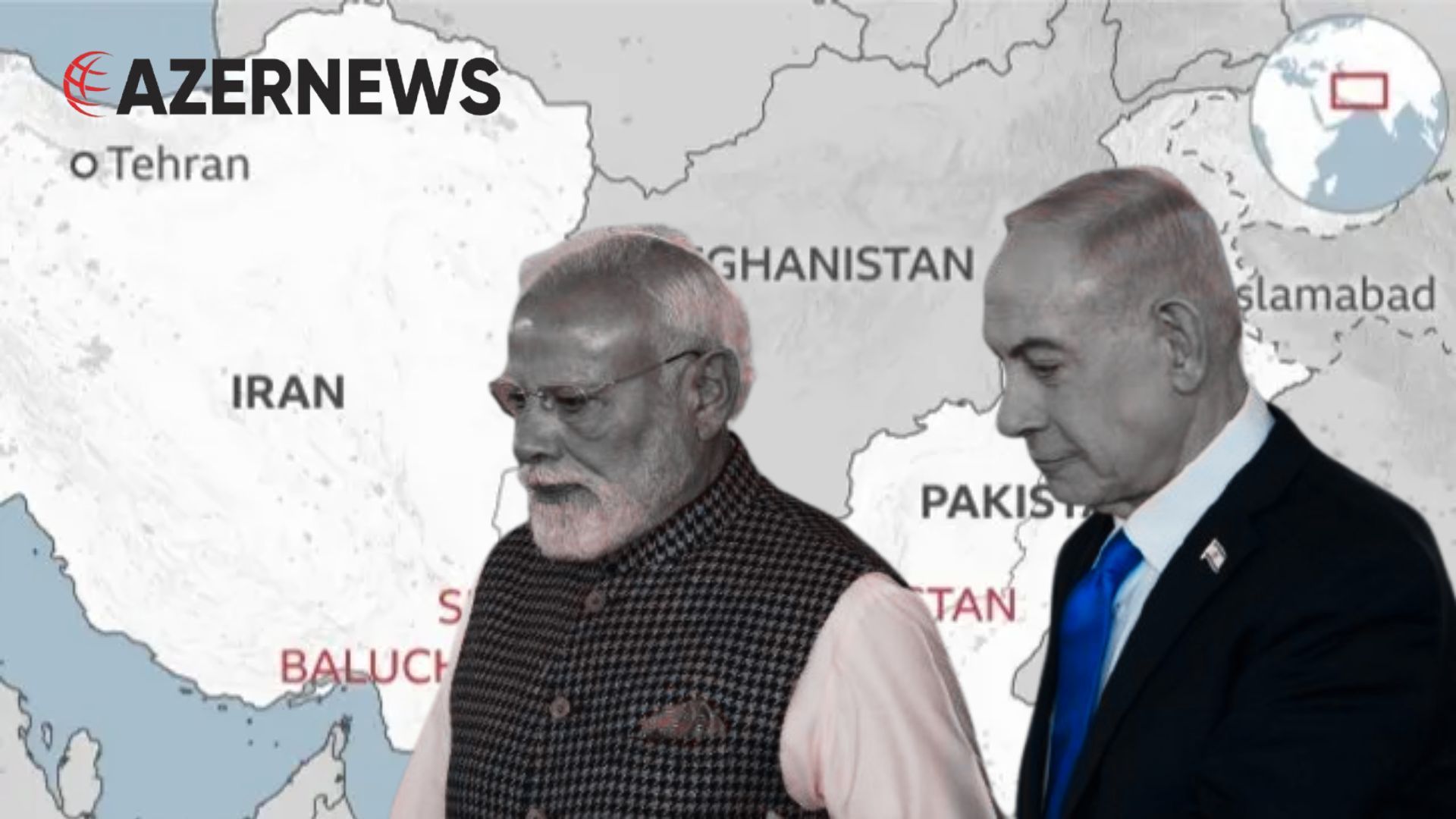
Read moreThe increasingly visible alignment between Israel and India is often framed as a meeting of like-minded nationalist leaders in Benjamin Netanyahu and Narendra Modi. But beneath the symbolism lies a harder strategic reality. Even reports framed in global media headlines as signs of personal affinity and special sympathy have begun to multiply by the day. While some interpret this as merely an emotional dimension of diplomacy, it is becoming increasingly evident that what lies beneath is a shifting geopolitical and geostrategic balance rather than sentiment alone. As Delhi and Tel Aviv draw closer, the regional consequences are most sharply felt in Islamabad and Tehran.
For Pakistan, the Israel–India relationship touches directly on its core security doctrine. India remains Pakistan’s primary strategic concern, and any enhancement of Indian military capability is obviously viewed through that lens. Moreover, Israel has emerged as one of India’s most significant defence suppliers, providing drones, missile defence systems, surveillance platforms and advanced munitions.
This is not merely transactional. Israeli technology has played a role in India’s border management, including along the Line of Control with Pakistan. In Islamabad, the concern is not simply about hardware but about qualitative military edge.
Israeli systems act as force multipliers for India’s existing platforms. By integrating advanced technology into established infrastructure, India enhances capability without overhauling its entire arsenal. A clear example is India’s A 50 Phalcon, a quintessential hybrid that uses a Russian IL 76 airframe fitted with the Israeli EL W 2090 radar. This configuration allows India to see deep into Pakistani airspace without crossing the border.
Pakistan’s security establishment calculates power in terms of deterrence balance. Advanced Israeli systems embedded within India’s military architecture alter that balance incrementally but meaningfully. The shift may be gradual, but in a region where strategic equilibrium is fragile, even incremental changes carry weight.
There is also a symbolic dimension. Pakistan does not recognise Israel and has historically positioned itself as a vocal supporter of the Palestinian cause. The warmth between Delhi and Tel Aviv reinforces Islamabad’s perception of diplomatic encirclement, particularly as India deepens ties with Gulf Arab states as well. The old assumption that Arab solidarity would restrain India’s overtures toward Israel no longer holds.
Nevertheless, Pakistan’s response remains constrained, and any confrontation with Israel is unlikely. Instead, Islamabad quietly strengthens ties with China and maintains a strategic partnership with Turkiye, while preserving cautious engagement with Iran. The Israel–India convergence adds another layer to an already complex security environment rather than creating a wholly new one.
As regards Iran’s case, the calculus is more layered.
Tehran’s rivalry with Israel is apparently direct and ideological. India, by contrast, has long been a pragmatic partner. Despite American pressure, India continued purchasing Iranian oil until sanctions tightened. The two share civilisational ties and economic interests, notably the development of Iran’s Chabahar port, which gives India access to Afghanistan and Central Asia while bypassing Pakistan. In the meantime, while the Chabahar port remains a symbol of Indo-Iranian cooperation, the emergence of the India-Middle East-Europe Economic Corridor (IMEC) introduces a new structural reality. By linking India to Europe through the UAE, Saudi Arabia, and the Israeli port of Haifa, Delhi is building a trade architecture that potentially bypasses the transit relevance of both Islamabad and Tehran, further anchoring India into a new Western-aligned regional order.
For 75 years, Pakistan’s primary strategic asset was its geography. Because India is essentially a peninsula blocked to the north by the Himalayas and to the west by a hostile Pakistan, India had no overland way to reach Central Asia, the Middle East, or Europe. Previously, India had to ask for transit rights through Pakistan or rely on the Suez Canal. While Chabahar is a tactical win, it has been plagued by US sanctions and Iranian political volatility.
However, India’s expanding defence and intelligence cooperation with Israel introduces strategic ambiguity for Tehran. Iran must ask whether sensitive regional dynamics could be influenced by Israeli technological integration within Indian systems. While there is no public evidence of intelligence sharing targeting Iran through Indian channels, suspicion is a structural feature of Middle Eastern geopolitics.
The dilemma for Tehran is that India is too important to alienate. However, as Western pressure intensifies and sanctions remain a persistent constraint, Iran requires diversified economic partnerships. Here, India represents a vast market and a potential geopolitical counterweight to total isolation, particularly in Iran’s case. Severing or downgrading ties with Delhi would be strategically self-defeating.
Instead, Iran appears to compartmentalise. It criticises Israel rhetorically while maintaining working relations with India. Tehran’s foreign policy tradition, often described as multi-vector, allows it to pursue parallel tracks even when those tracks intersect awkwardly.
When viewed from a different time frame, at a broader level, the Israel–India alignment reflects the fragmentation of traditional blocs. During the Cold War and its aftermath, alignments were more predictable. India leaned toward the Non-Aligned Movement and maintained distance from Israel. Iran, before 1979, had covert ties with Israel. However, after the revolution, it became one of its most vocal adversaries.
Today, these older certainties are diluted. India balances Israel and Iran simultaneously. Gulf states normalise relations with Israel while retaining dialogue with Tehran. Russia cooperates with Iran while maintaining relations with Israel. Strategic pragmatism increasingly overrides ideological rigidity.
In our days, for Pakistan and Iran, the best option for challenging is adaptation rather than confrontation. This also coerces Islamabad to contend with a technologically advancing India whose partnerships extend beyond traditional Western suppliers. And with no other alternatives, it forces Tehran to navigate a regional order in which even long-standing partners engage with its principal adversary.
Besides, when looking through several news headlines, the notion of an “axis” between Israel and India may be overstated. In fact, their partnership is driven less by grand ideological design and more by converging security interests, defence economics and technological exchange. However, it is undeniable that its ripple effects seem more than real.
For Pakistan, it reinforces the centrality of military modernisation and external balancing, particularly through China. For Iran, it underscores the urgency of maintaining economic corridors and diversified partnerships in a region where isolation is a constant risk.
The Israel-India relationship is therefore not simply about two leaders embracing on camera. It is part of a wider reconfiguration of Asian and Middle Eastern geopolitics, one in which middle powers pursue overlapping partnerships without exclusive loyalties. In that fluid landscape, both Pakistan and Iran find themselves recalculating rather than reacting.
Here we are to serve you with news right now. It does not cost much, but worth your attention.
Choose to support open, independent, quality journalism and subscribe on a monthly basis.
By subscribing to our online newspaper, you can have full digital access to all news, analysis, and much more.
You can also follow AzerNEWS on Twitter @AzerNewsAz or Facebook @AzerNewsNewspaper
Thank you!