
Iran turns to South Caucasus corridors as Western pressure mounts and Hormuz risks rise

AzerNEWS Staff
Read moreThe ongoing geopolitical shifts worldwide are inevitably affecting the region. Against the backdrop of nuclear negotiations with the United States, regional directions in Iran’s foreign policy have once again gained relevance. On the one hand, Tehran seeks to mitigate the impact of Western sanctions; on the other hand, it intensifies efforts to establish alternative economic and transport platforms. In this context, the South Caucasus may serve not merely as a neighbouring geography but as a strategic lifeline corridor for Iran.
Iran’s prolonged exposure to international sanctions has significantly constrained its access to global markets, limiting trade flows, financial integration and broader economic engagement. Nevertheless, through the expansion of relations with neighbouring states and the strengthening of cross-border connectivity, Tehran has managed to partially bypass the impact of this external pressure.
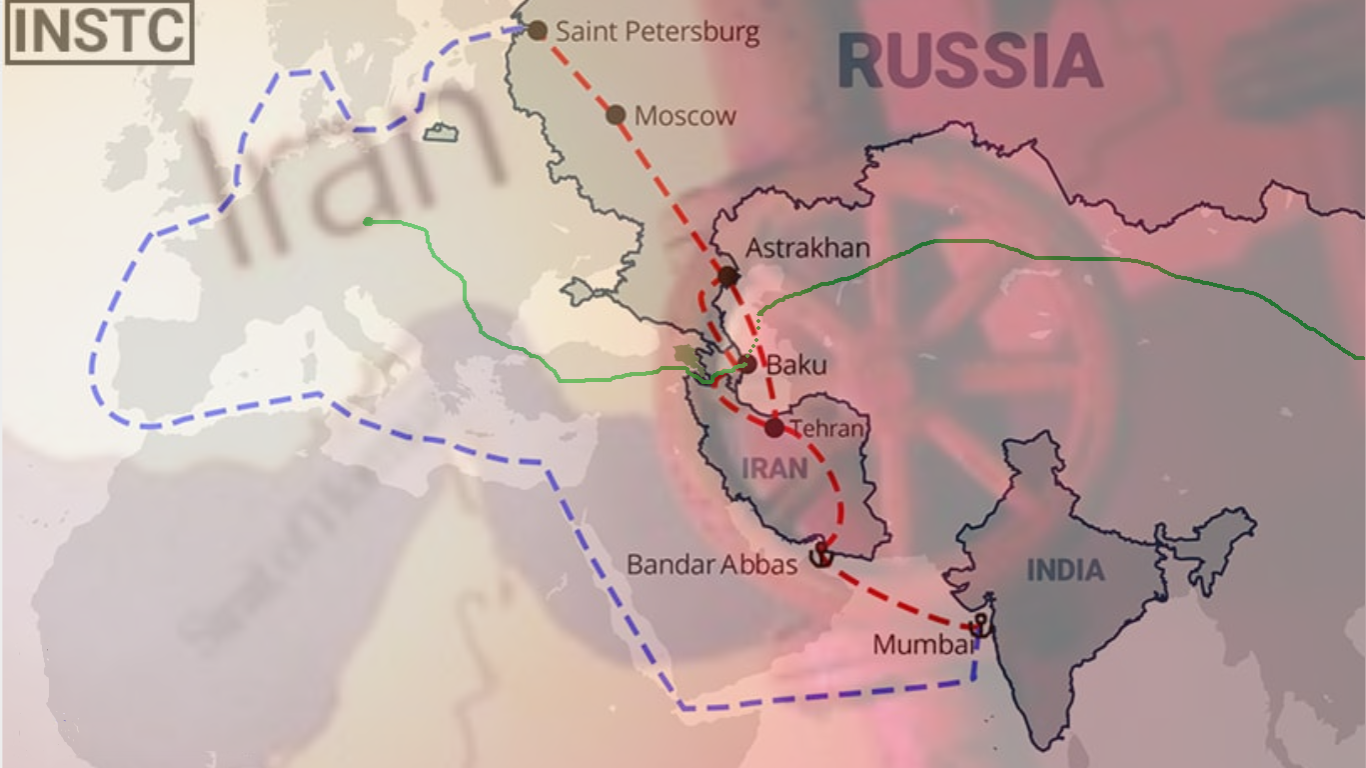
It would not be an exaggeration to state that transport and communication corridors have become strategically vital for Iran under current conditions. In particular, the International North–South Transport Corridor has assumed critical importance. In practical terms, the corridor functions as a strategic safety cushion for Tehran, softening the economic blow of sanctions by facilitating alternative trade routes and regional economic integration.
The planned construction of the Rasht-Astara railway line (162 km) is considered the missing link of the International North-South Transport Corridor. This route connects Russia to Iran via Azerbaijan, and subsequently to the Indian market. Russia has already announced that practical implementation of the project will begin in April 2026, noting that the legal and technical issues causing delays have been resolved.
For Iran, this corridor represents a land-based alternative to the Suez Canal; for Russia, it provides southern access amid sanctions. For Azerbaijan, it means increased transit revenues and enhanced geo-economic significance.
Even if an agreement with the United States is reached, Tehran will not abandon its alternative route policy. On the contrary, nuclear negotiations may serve to make Iran’s regional economic opening strategy more flexible.
Zangazur Corridor: Could Iran shift its position?
The Zangazur Corridor, also known as TRIPP, is a project capable of reshaping the geopolitical architecture of the South Caucasus. It is not only a matter of strategic balance for Azerbaijan but also for Turkiye, Russia, and Iran. Initially, Iran approached this project cautiously and negatively. The primary concern was the potential weakening of its land border with Armenia. Another major issue for Tehran was the anticipated increase in Turkiye’s regional influence, as the corridor would clearly strengthen trade ties. This, in turn, could diminish Iran’s role as a transit hub.
However, given the evolving geopolitical realities, Iran may not wish to maintain a fully obstructive stance. If the corridor is developed within a framework of regional cooperation and takes Iran’s interests into account, Tehran may soften its position.
In other words, Iran’s stance appears pragmatic rather than ideological. If its main priority is to preserve regional balance and avoid isolation, openness to cooperation would be desirable.
Strait of Hormuz: Real threat or geopolitical lever?
Approximately 20% of the global oil supply passes through the Strait of Hormuz. Iran has periodically declared that it could block this strategic passage. Looking back, in 2011-2012, Tehran raised this issue amid sanctions, but a full and long-term blockade was never implemented.
The reason is clear: such a move would provoke military retaliation from the United States and its allies. Moreover, Iran’s own oil exports would be jeopardized. A severe shock to the global energy market would contradict the interests of Iran’s key buyers, China and India.
Nevertheless, even short-term tensions or military incidents could trigger sharp spikes in oil prices. For exporters like Azerbaijan, this could mean temporary revenue increases. Yet, prolonged instability would negatively affect regional economic projects.
Ultimately, Iran’s South Caucasus policy is not emotional but rather balanced and multi-vector in nature. Tehran seeks, on one hand, to establish economic security through the North-South Corridor and to avoid exclusion in the Zangazur issue, while on the other hand maintaining the Strait of Hormuz as a strategic instrument of pressure.
Regardless of the outcome of nuclear negotiations with the United States, Iran intends to remain an active player in shaping the region’s transport and energy landscape. Taking into account Azerbaijan’s considerable strategic importance in the region, Iran must recognize that openness to cooperation would bring only positive changes to the broader regional environment, especially since Iran is not the sole active player in this arena.
Here we are to serve you with news right now. It does not cost much, but worth your attention.
Choose to support open, independent, quality journalism and subscribe on a monthly basis.
By subscribing to our online newspaper, you can have full digital access to all news, analysis, and much more.
You can also follow AzerNEWS on Twitter @AzerNewsAz or Facebook @AzerNewsNewspaper
Thank you!