
Beyond border: how civil society talks hint at fragile thaw between Armenia and Azerbaijan
Elnur Enveroglu
Read morePeace does not take root merely in the absence of guns or open conflict. It flourishes where justice, equality and, above all, human rights are upheld. Yet justice and equality rarely arrive of their own accord; they are secured through persistence, difficult choices and sustained resolve.
Since the 2020 Patriotic War, Azerbaijan has sought to move in that direction. Many believed that the liberation of Qarabag and the end of three decades of occupation marked a decisive turning point, i.e. the beginning of normalisation. But as events have unfolded, it has become clear that history carries layers which never truly fade from memory.
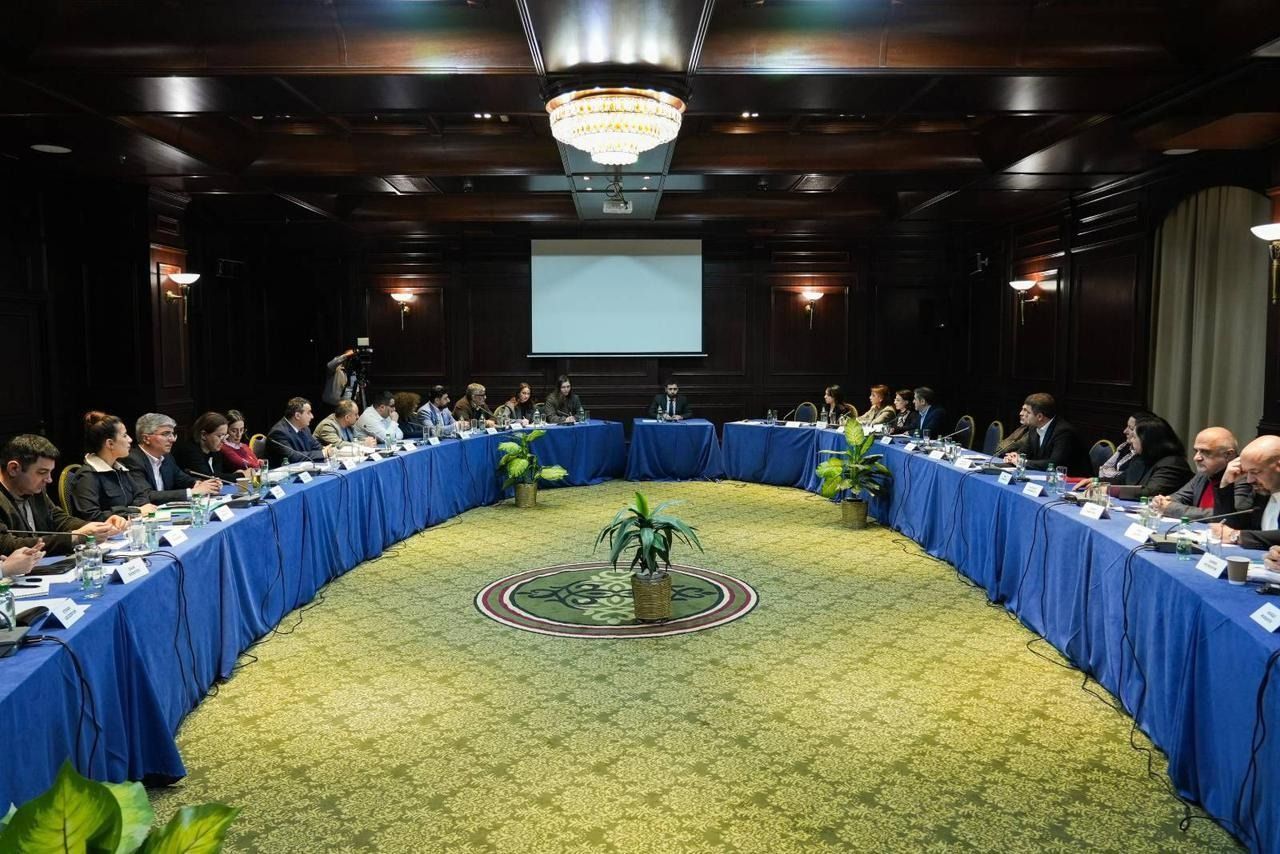
A significant moment unfolded last week. For the first time, a delegation of Azerbaijani civil society representatives crossed the land border into what is now the territory of Armenia. They entered through the recently demarcated and delimited section of the border near Ashagi Askipara, an area that has only recently been reintegrated into Azerbaijan.
All formal procedures were completed and for the participants, this was more than a logistical crossing. It was a practical confidence-building measure, which means tangible evidence that normalisation can move beyond statements and communiqués.
The visit to Tsaghkadzor, historically known as Derechichek (Valley of Flowers), for a civil society roundtable under the “Peace Bridge” initiative was itself a message. Dialogue, it suggested, need not remain confined to official diplomacy. It can also take place around shared tables, through face-to-face conversations and genuine exchanges of views.
Over two days of discussion, the language of peace reflected both fragility and cautious responsibility. Trust in the South Caucasus remains uneven and incomplete, but the talks reinforced the idea that it can be rebuilt gradually through sustained human contact and sincere dialogue.
The discussions began within a broad political context. Participants assessed the current stage of Armenia–Azerbaijan relations, including the future trajectories opened by the peace agenda initialled at leaders’ level during the August summit in Washington. Regional security dominated the agenda, followed by new economic prospects emerging from potential connectivity and cooperation. Informal cultural and social activities also helped soften the atmosphere, allowing space for more open exchanges.
Emin Aliyev, editor-in-chief of the Trend news agency, who was part of the Azerbaijani delegation, described the atmosphere as notably constructive.
“Frankly, there was an environment beyond rigid formality,” he said. “Beyond official statements and panel discussions, the overall tone was defined less by emotional gestures and more by a sense of practicality.”
According to Aliyev, the meetings with the Armenian delegation were marked by pragmatism and composure. “The pragmatic and constructive approach on both sides outweighed any emotional undertones and created a high-level environment. After decades of hostility, such calm and measured behaviour sent a clear signal about reconciliation and the management of this process.”
He added that even sensitive topics were addressed without disruption. Discussions included issues of direct relevance to Azerbaijani society: the restoration of transport communications, the TRIPP project, confidence-building measures between the two societies, and related matters. Participants, he noted, were able to articulate their views openly and without hesitation. Meetings were also held with senior Armenian officials during the roundtable discussions.
Aliyev observed that the sessions focused less on grievances and more on the wider regional picture. Themes included the evolving regional security architecture, the tangible benefits of peace, public perceptions in both societies regarding interstate relations, economic cooperation prospects, and the role of civil society.
Peacebuilding, he stressed, is not an event to be declared overnight. “It is a long and demanding process. Peace is not something that can simply be announced. It is the result of gradual work carried out in parallel by state institutions and civil societies. Trust-building is part of that process.”
The dialogue held on 13–14 February demonstrated that building peace and restoring trust need not be an impossible task. It is neither searching for water in the desert nor looking for a needle in a haystack. The process is undeniably slow and complex, but the very act of sustained dialogue offers grounds for cautious optimism about more substantive engagement in the future.
Here we are to serve you with news right now. It does not cost much, but worth your attention.
Choose to support open, independent, quality journalism and subscribe on a monthly basis.
By subscribing to our online newspaper, you can have full digital access to all news, analysis, and much more.
You can also follow AzerNEWS on Twitter @AzerNewsAz or Facebook @AzerNewsNewspaper
Thank you!