
Why Serbia matters to Azerbaijan in fractured Europe?
by AzerNews Staff
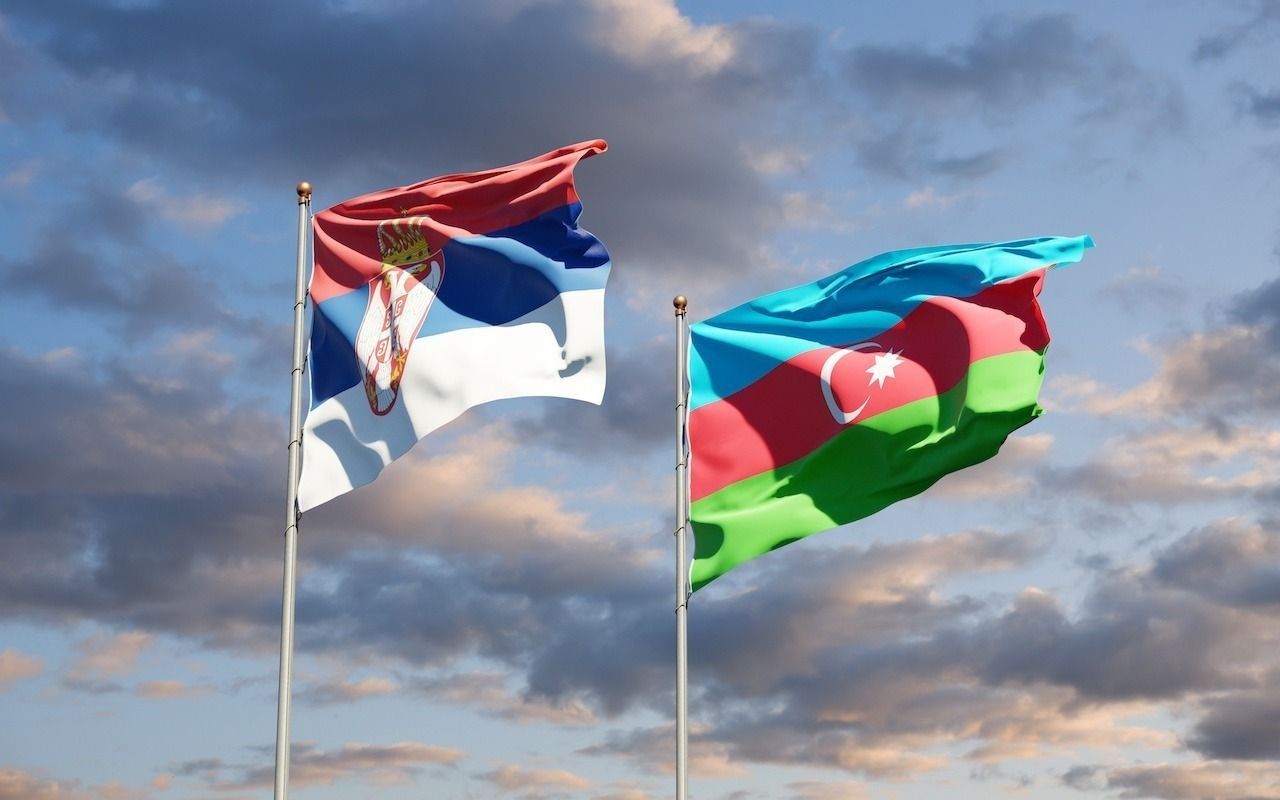
Serbia marks its Statehood Day today with the usual mix of ceremony and symbolism. Flags line Belgrade’s boulevards, speeches dwell on sovereignty and continuity, and history is pressed into service for the present. Yet this year, the celebrations carry an added diplomatic undertone: the visit of Ilham Aliyev, timed deliberately to Serbia’s national holiday, a gesture Belgrade reads as respect, and Baku as strategy.
Diplomatic relations between Azerbaijan and Serbia were formally established in the late 1990s, but it was only in the past decade that the relationship acquired real political weight. Since the signing of the declaration on friendship and strategic partnership in Baku in the early 2010s, the two countries have quietly constructed a dense web of ties: political, economic, energy-related and increasingly symbolic. That architecture has since been reinforced by joint action plans, a bilateral strategic partnership council, and a rhythm of regular high-level visits.
Personal diplomacy has mattered. President Aliyev has visited Serbia several times, while Aleksandar Vučić has made multiple trips to Azerbaijan in return. The two leaders were most recently seen together on a Davos stage, discussing Eurasia’s economic identity, a phrase that neatly captures how both countries see themselves: neither core nor periphery, but connective tissue.
That political alignment rests on a rare symmetry of positions. Serbia has consistently supported Azerbaijan’s sovereignty and territorial integrity. Azerbaijan, in turn, has refused to recognise Kosovo and has objected to its representation in international fora. In an international system where neutrality is often rhetorical, this has been a case of mutual clarity.
The dividends are increasingly material. Trade flows between the two countries remain modest by global standards, but they are broad-based and politically supported. Azerbaijani exports to Serbia range from natural gas and refined fuels to agricultural products and industrial goods. Serbian exports back include pharmaceuticals, machinery, plastics and foodstuffs, the kind of trade basket that signals complementarity rather than dependency. Intergovernmental economic cooperation mechanisms, in place for more than a decade, have provided a bureaucratic spine to these exchanges.
Energy has become the relationship’s strategic core. As Europe redraws its gas map, Azerbaijan has positioned itself as a reliable supplier, and Serbia, heavily dependent on imported energy, has emerged as a key partner in south-east Europe. Gas deliveries via the Bulgaria–Serbia interconnector, operational since the mid-2020s, have turned political declarations into physical flows. Azerbaijan’s state energy company SOCAR has supplied Serbia not only with gas but also with refined fuels, while plans for a jointly built gas-fired power plant near Niš point to a longer-term energy compact.
The relationship is no longer confined to hydrocarbons. Serbian construction companies have expressed interest in working in Azerbaijan’s recently liberated territories, while Serbian-invested firms are already operating in the Azerbaijani market. Tourism, too, has moved from memoranda to timetables: from May, Air Serbia is expected to launch direct flights between Belgrade and Baku, reducing both distance and abstraction.
Soft power has followed. Cities such as Shusha and Novi Pazar have signed cooperation agreements spanning culture, urban planning and education. Azerbaijan has confirmed its participation in EXPO 2027, to be held in Belgrade, while Serbian military representatives have taken part in commemorations marking Azerbaijan’s wartime victory, a signal of trust in a sensitive domain.
What distinguishes this partnership is not scale, but coherence. Both states occupy geopolitical fault lines. Both place a premium on sovereignty. Both seek partners who treat them as actors rather than arenas. In that sense, today’s visit is less about ceremony than about calibration: aligning interests across energy security, connectivity and regional stability at a time when Europe’s old assumptions are fraying.
Serbia’s national day celebrates statehood. Azerbaijan’s presence underlines something subtler, that in a fragmented Europe, influence increasingly belongs to those who show up, stay consistent and build partnerships that endure beyond headlines.
Here we are to serve you with news right now. It does not cost much, but worth your attention.
Choose to support open, independent, quality journalism and subscribe on a monthly basis.
By subscribing to our online newspaper, you can have full digital access to all news, analysis, and much more.
You can also follow AzerNEWS on Twitter @AzerNewsAz or Facebook @AzerNewsNewspaper
Thank you!