
Experts examine how Azerbaijan pursued justice outside international courts
Elnur Enveroglu
Read moreBy restoring its territorial integrity and bringing alleged war criminals before the courts, Azerbaijan has pursued a rare post-conflict path that links sovereignty with legal accountability.
In modern conflict history, it is uncommon for a state to both restore full territorial control and subsequently conduct domestic judicial proceedings against individuals accused of war crimes and crimes against humanity linked to that conflict. Azerbaijan’s post-war trajectory stands out precisely because it has attempted to do both.
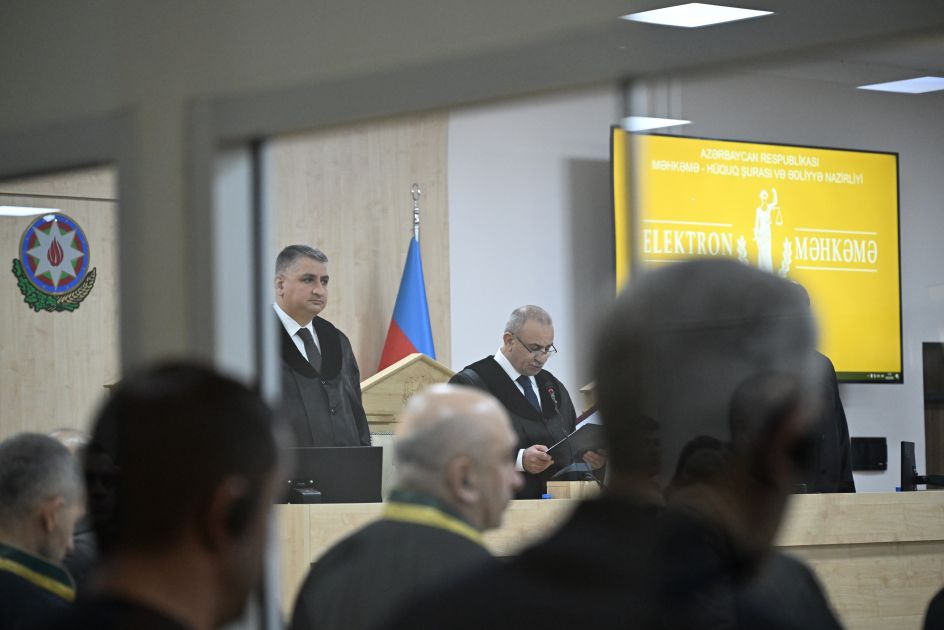
Yesterday, after a long trial, the Baku Military Court finally pronounced its final verdict on several Armenian citizens imprisoned for serious crimes. A group of individuals who were once found guilty of illegal military activities in Karabakh, as well as war crimes, massacres of civilians, and acts of terrorism, received the punishment they deserved in the eyes of justice. However, this was justice achieved not by international law, but by Azerbaijan itself. The trials have been conducted in open court, with documentary evidence presented, witness testimonies heard, and defendants given the opportunity to speak.
But despite all this, there are many who want to justify crime or criminals in international tribunals. Several foreign experts who approach the issue from a legal perspective also note that such an indifferent, and even ambiguous approach to criminal acts in the international community clearly demonstrates personal goals and biased positions. For example, American political expert Peter Tase notes that the opinions voiced in the parliament of a country like France demonstrate a literal disrespect for the country's legal principles. He assessed this act of France as a blow to the peace-building plan today.
"It is an incredible moment for the US government to achieve such an achievement after thirty years of conflict in the South Caucasus. I think that every state that wants stability in the region should express its support for these processes today. But I must say with regret that the voices coming from France today disappoint us. I think that President Macron is demonstrating his hatred for both Washington and Baku," Tase said.
President Ilham Aliyev had publicly stated years before the war that those responsible for crimes such as the Khojaly massacre and other grave violations would eventually be held accountable. This position was reiterated repeatedly in official speeches and statements prior to 2020. The initiation and continuation of judicial proceedings after the conflict demonstrate a direct alignment between those statements and subsequent state action.
Azerbaijan’s experience is notable in comparative terms. Many conflicts end with ceasefires or political agreements while accountability for crimes against civilians remains unresolved. In numerous post-conflict environments, individuals implicated in mass violence avoid prosecution altogether, either due to political compromises, lack of jurisdiction, or international inaction. In this sense, unresolved justice often becomes part of what scholars describe as an “incomplete peace”.
British journalist Neil Watson says justice cannot be restored unless culprits are brought to court. He says historical precedents illustrate both the difficulty and importance of accountability. "Israel, for example, pursued Nazi perpetrators decades after the end of the Second World War, locating and prosecuting some individuals across multiple jurisdictions. Yet even in that case, many perpetrators were never brought to justice. Similarly, following the wars in the former Yugoslavia, only a portion of those responsible for war crimes were prosecuted, largely due to the involvement of international tribunals and coordinated international pressure."
Neil Watson also underlined the diminishing effectiveness and limited enforcement power of international law in the current global climate, particularly in light of prevailing foreign political pressures. In his view, this reality reinforces Azerbaijan’s determination to ensure that the law is applied under such circumstances.
"Against this backdrop, Azerbaijan’s decision to pursue domestic trials, despite sustained external political pressure, represents a deliberate assertion of judicial sovereignty. International criticism and political lobbying surrounding the trials have been well documented, yet these pressures have not altered the course of the proceedings. The trials have continued based on national legislation and evidentiary standards," he added.
Crucially, the court hearings have also produced material relevant to the broader question of state responsibility. Testimonies and documentary evidence presented during proceedings indicate direct links between Armenia’s state institutions and the armed structures operating in the occupied territories. Former military figures, including Levon Mnatsakanyan, stated openly in court that the so-called separatist armed forces were not an independent entity but were structurally integrated into Armenia’s military system. According to his testimony, senior appointments were approved in Yerevan, logistics and supplies were organised within the Armenian armed forces, and the formations constituted Armenia’s largest military grouping in the area.
Additional evidence shown during the proceedings has included footage and records relating to the military service of Arayik Harutyunyan and the participation of Bako Sahakyan in the occupation of Shusha. These materials contribute to the factual record regarding the chain of command and operational control during the occupation period.
The court proceedings have also clarified the function of the so-called “Nagorno-Karabakh Republic”. Testimonies and evidence suggest that this entity was created to obscure direct state responsibility for occupation policies. Its leadership operated as local administrators implementing Armenia’s military and political strategy in the occupied territories rather than acting as an autonomous authority.
From a legal perspective, as is heard also from experts, the trials reinforce a key principle of international humanitarian law: occupation does not dissolve responsibility, and the passage of time does not erase criminal liability. The presentation of victim testimonies, forensic evidence, and defendants’ own statements has contributed to establishing a detailed factual record of the occupation and the crimes associated with it.
More broadly, Azerbaijan’s approach offers a model that contrasts sharply with many unresolved post-conflict situations. By linking the end of occupation with judicial accountability, the state has pursued what may be described as a comprehensive form of conflict resolution — one that addresses not only territorial sovereignty but also justice for victims.
Whether this model will influence future post-conflict processes elsewhere remains uncertain. What is clear, however, is that the trials have established a documented legal narrative of the conflict, one grounded in evidence rather than political assertion. In that sense, the proceedings represent not only a domestic judicial process, but also an attempt to close a long chapter of conflict through law.
Here we are to serve you with news right now. It does not cost much, but worth your attention.
Choose to support open, independent, quality journalism and subscribe on a monthly basis.
By subscribing to our online newspaper, you can have full digital access to all news, analysis, and much more.
You can also follow AzerNEWS on Twitter @AzerNewsAz or Facebook @AzerNewsNewspaper
Thank you!