
War crimes, justice and Karabakh: inside Azerbaijan’s landmark trial
By AzerNEWS Staff
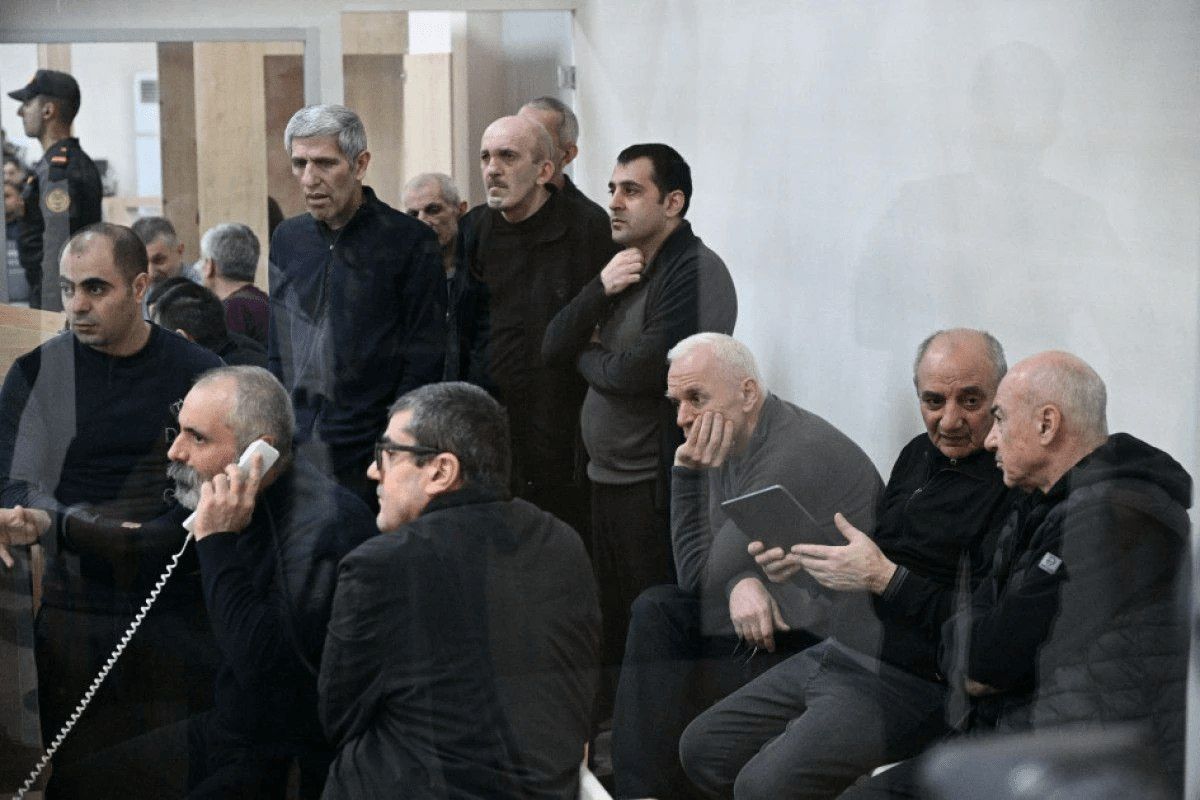
Today, the Baku Military Court delivered its verdict on a group of Armenian citizens found guilty of committing war crimes during Armenia’s military aggression against Azerbaijan, which signifies one of the most consequential moments in the post-conflict justice process in the South Caucasus. Long framed internationally as an intractable territorial dispute, the Armenia-Azerbaijan conflict is now being revisited through the lens of accountability, criminal responsibility, and international law.
The defendants include former leaders of the illegal Armenian administration in Garabagh, among them Arayik Harutyunyan, Arkadi Ghukasyan, Bako Sahakyan, Davit Ishkhanyan, David Babayan, Levon Mnatsakanyan, and others. Azerbaijani prosecutors accuse them not merely of participation in hostilities, but of playing leading roles in the planning, execution, and political management of a campaign marked by crimes against peace and humanity, war crimes, terrorism, and genocide. The scope of the indictment is vast, reflecting the scale and duration of the violence inflicted on Azerbaijani civilians over decades.
At the heart of these proceedings is Azerbaijan’s argument that the war in Garabagh (Karabakh) was not an isolated local conflict, but an organised and state-backed military aggression by Armenia, carried out through its armed forces and illegal armed groups operating on Azerbaijani territory. According to the prosecution, these structures acted under centralised command, supported logistically and politically by Armenian state institutions and senior officials. The charges draw directly on international humanitarian law and mirror categories used in international tribunals, including genocide, forcible deportation, torture, and the intentional targeting of civilians.
One of the most sensitive aspects of the trial concerns crimes committed against Azerbaijani civilians during the early 1990s, particularly the Khojaly massacre of February 1992. During the proceedings, defendant Madat Babayan confessed to participating in the killing of civilians in Khojaly as part of Armenian armed formations. That admission, alongside extensive documentary and testimonial evidence, has reinforced Azerbaijan’s long-held claim that mass atrocities against civilians were not accidental by-products of war, but deliberate acts intended to terrorise and expel the local population.
The sentences handed down so far reflect both the gravity of the crimes and the constraints of Azerbaijani law. Bako Sahakyan and Arkadi Ghukasyan were each sentenced to 20 years in prison, despite prosecutors initially seeking life sentences. Azerbaijani legislation prohibits life imprisonment for individuals who have reached the age of 65 at the time of sentencing, a provision that has shaped several verdicts. Madat Babayan received a 19-year sentence, while other defendants were sentenced to between 15 and 19 years, depending on their level of involvement and command responsibility.
Critics abroad may view these trials through a political prism, questioning timing or motive. Yet to dismiss them as mere victor’s justice risks ignoring the broader context. For decades, Azerbaijani civilians were killed, forcibly displaced, or deprived of basic rights in territories under Armenian occupation. Entire cities and villages were razed. Hundreds of thousands were expelled from their homes. Until now, no meaningful legal process had addressed these crimes or the individuals who oversaw them.
What distinguishes the current proceedings is their openness and their grounding in codified law. The trial is public, defendants are represented by lawyers, evidence is examined in court, and verdicts are delivered with reference to specific articles of the criminal code. This is not a symbolic exercise, but a judicial one, aimed at establishing individual responsibility rather than collective guilt.
More broadly, the trials signal a shift in how post-Soviet conflicts may be reckoned with. Azerbaijan is asserting that reconciliation cannot rest solely on ceasefires and diplomatic statements, but must also confront the legacy of mass violence. Accountability, from this perspective, is not an obstacle to peace but a precondition for it.
Whether international audiences are willing to engage seriously with this process remains an open question. But what is clear is that the trials in Baku represent a deliberate attempt to anchor the post-war order in legal judgment rather than historical denial. For Azerbaijan, this is not only about the past in Garabagh, but about setting a precedent: that crimes against civilians, however politically complicated, will not remain beyond the reach of justice.
Here we are to serve you with news right now. It does not cost much, but worth your attention.
Choose to support open, independent, quality journalism and subscribe on a monthly basis.
By subscribing to our online newspaper, you can have full digital access to all news, analysis, and much more.
You can also follow AzerNEWS on Twitter @AzerNewsAz or Facebook @AzerNewsNewspaper
Thank you!