
Grain, fuel and politics of peace: How trade redrawing Armenia–Azerbaijan relations
By AzerNEWS Staff
For three decades, the Armenia–Azerbaijan conflict was defined almost exclusively by ceasefires, diplomatic deadlock and periodic violence. Today, something far quieter but potentially far more consequential is taking shape across the South Caucasus: trains loaded not with weapons, but with grain and fuel.
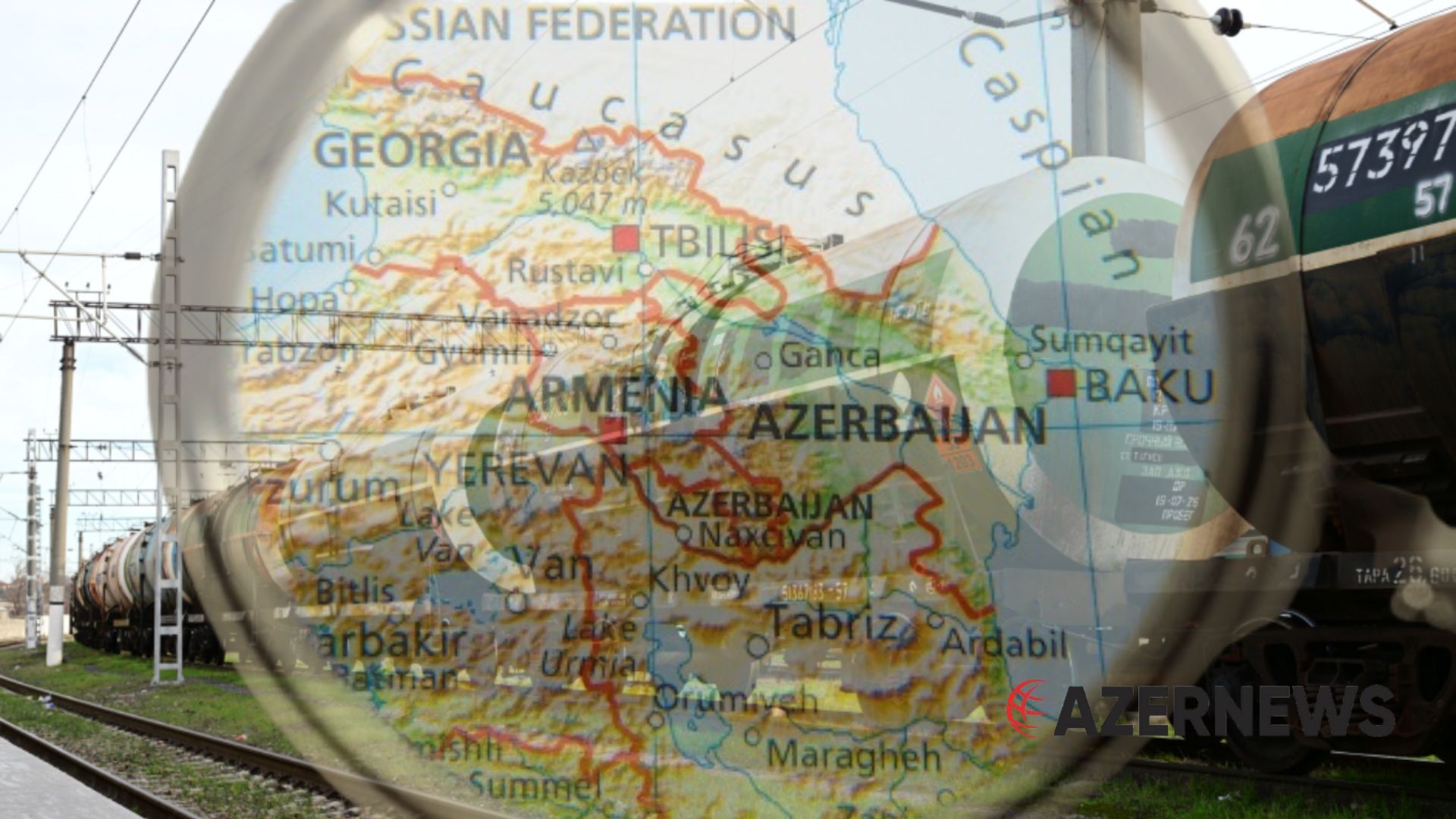
The recent transit of 25 grain wagons carrying 1,746 tonnes of product through Azerbaijani territory to Armenia is not an isolated event. It follows months of steadily expanding logistical cooperation. Nearly 20,000 tonnes of grain have already passed the same route, alongside multiple fuel shipments - AI-92, AI-95 and diesel - moving directly from Azerbaijan toward Armenia via Georgia. The first such fuel delivery in December 2025 marked a symbolic turning point: for the first time, Azerbaijan was not merely a neighbour or former adversary, but an energy lifeline.
These movements matter precisely because they appear mundane. Economic normalisation, not political theatre, is beginning to shape the post-war order.
Azerbaijan and Armenia have fought two wars since the collapse of the Soviet Union. Both inflicted deep human losses and entrenched national trauma. The Second Karabakh War, however, fundamentally altered the strategic landscape. Azerbaijan’s victory ended a 30-year occupation and dismantled the status quo that had frozen diplomacy in place.
Since then, the question has not been whether peace is necessary, but whether it is possible. Armenia’s approach to negotiations today is shaped less by historical claims than by geopolitical necessity. The country’s isolation, limited energy resources and disrupted trade routes have left it acutely dependent on external supply chains.
It is within this context that grain and fuel shipments acquire political meaning.
Washington talks and the opening of economic channels
The diplomatic catalyst for this shift was the Azerbaijan–Armenia meeting in Washington, which created the political space for pragmatic cooperation. While no final peace treaty emerged, the talks helped unblock economic mechanisms that had been frozen for decades.
The November 2025 delivery of 1,000 tonnes of Kazakh grain to Armenia through Azerbaijan, the first such transit in 30 years, was a clear signal. Russian grain soon followed, using the same corridor. These routes are not emergency measures; they are structural changes to how Armenia accesses food security.
President Ilham Aliyev’s confirmation that Azerbaijan now permits grain transportation to Armenia underscores the strategic intent behind these decisions. As he noted, such mechanisms strengthen peace and expand economic cooperation. The message is clear: stability is no longer pursued solely through deterrence, but through interdependence.
Energy dependence as a driver of reconciliation
Armenia’s growing reliance on Azerbaijani transit and fuel supplies reveals an uncomfortable truth for Yerevan: sustainable security cannot be built in isolation. Energy, unlike ideology, demands continuity. Fuel shortages are politically destabilising, economically damaging and socially corrosive.
This reality is also reshaping Armenia’s approach to Türkiye. Rebuilding relations with Ankara is no longer framed only as a historical debate, but as a logistical imperative. Together, Azerbaijan and Türkiye form the backbone of the region’s transport and energy architecture. Armenia’s reintegration into that system requires accommodation, not confrontation.
From Baku’s perspective, this is not charity. It is strategic foresight. Economic leverage, when exercised predictably and transparently, is more durable than military pressure. By positioning itself as a reliable transit and energy hub, Azerbaijan increases the cost of renewed hostility—without firing a shot.
What makes the current moment distinct is that cooperation is no longer limited to third-party transit. Analysts increasingly expect a shift toward direct bilateral trade. Fuel and grain are merely the opening chapter.
Armenia has the potential to export processed food, construction materials and manufactured goods, particularly in the non-oil sector. Azerbaijan, meanwhile, offers scale, infrastructure and access to wider regional markets. If political momentum holds, economic complementarities could gradually replace zero-sum thinking.
This does not mean reconciliation will be quick or linear. Deep mistrust remains, and a peace treaty is still under negotiation. Yet history suggests that peace sustained by economic interest tends to outlast peace imposed by diplomacy alone.
Grain wagons crossing borders do not erase the past. They do something more pragmatic: they anchor the future in shared necessity. For Armenia, access to food and fuel is existential. For Azerbaijan, regional stability is a prerequisite for long-term development and connectivity.
The South Caucasus has entered a phase where war is no longer the most rational option for either side. That shift did not come from speeches or slogans, but from logistics, supply chains and energy flows.
If this trajectory continues, historians may one day mark these grain and fuel shipments not as footnotes, but as the quiet beginning of a peace built not on sentiment, but on survival—and sustained by mutual dependence.
Here we are to serve you with news right now. It does not cost much, but worth your attention.
Choose to support open, independent, quality journalism and subscribe on a monthly basis.
By subscribing to our online newspaper, you can have full digital access to all news, analysis, and much more.
You can also follow AzerNEWS on Twitter @AzerNewsAz or Facebook @AzerNewsNewspaper
Thank you!