
How Brussels sabotaging Armenia–Azerbaijan peace process [OPINION]
![How Brussels sabotaging Armenia–Azerbaijan peace process [OPINION]](https://www.azernews.az/media/2026/02/01/732675672457.jpg)
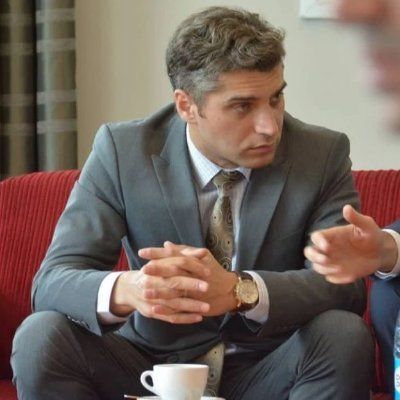
Elnur Enveroglu
Read moreThe European Union’s decision to allocate €20 million to Armenia through the European Peace Facility raises serious and unavoidable questions, not only about Brussels’ judgment, but about its credibility as a neutral actor in the Armenia–Azerbaijan peace process.
At a moment when the South Caucasus stands at a fragile but historic crossroads, such a move sends precisely the wrong signal. Rather than consolidating peace, it risks destabilising a region that has only recently emerged from decades of conflict.
From Azerbaijan’s perspective, the decision directly contradicts the spirit and substance of the 8 August 2025 Washington agenda, which prioritised de-escalation, confidence-building, and a comprehensive peace settlement between Baku and Yerevan. That agenda was meant to close the chapter of confrontation. The EU’s action, by contrast, appears to reopen it.
If the conflict is indeed over, as European officials themselves frequently assert, then the logic of channeling funds through a military-linked mechanism becomes deeply questionable. What threat, exactly, is being addressed? Against whom? And why now? These questions have yet to receive credible answers.
The European Peace Facility is not a humanitarian instrument. It is a security and defence tool. Dressing military assistance in the language of peace does not change its substance; and regional actors understand this perfectly well. In the South Caucasus, where trust is scarce and memories of war are fresh, symbolism matters. This decision symbolises imbalance, not reassurance.
Worse still, it undermines the very peace-building process that the EU claims to support. Sustainable peace between Azerbaijan and Armenia can only be achieved through parity, restraint, and mutual confidence, not through actions that strengthen one side while leaving the other sidelined. By acting unilaterally, Brussels risks injecting new tensions into an already delicate environment.
The message received in Baku is unmistakable: the EU is drifting away from a balanced approach and edging towards selective engagement. This is not a theoretical concern. The consequences are practical and immediate. Such decisions complicate negotiations, erode trust, and create incentives for hardliners rather than moderates.
This is not the first time the EU has misstepped. Earlier documents outlining a so-called “strategic agenda” with Armenia included language that revived outdated narratives and implicitly legitimised positions that belong firmly in the past. Instead of supporting reconciliation, those texts echoed grievances that fuelled conflict in the first place. The €20 million allocation fits into a worrying pattern rather than standing as an isolated error.
What makes the situation more perplexing is that Azerbaijan has taken concrete steps to steer relations with the EU in a positive and forward-looking direction. From energy security to regional connectivity and post-conflict reconstruction, Baku has repeatedly demonstrated willingness to engage constructively. Yet these efforts are met not with balance, but with policies that appear indifferent to Azerbaijani concerns.
If Brussels genuinely seeks stability in the South Caucasus, then equilibrium must be restored. A peace-oriented policy cannot favour one party while ignoring the other. If funds are allocated through the Peace Facility, they should be matched, in equal measure, for Azerbaijan. Anything less constitutes a structurally imbalanced approach that undermines the EU’s claim to impartiality.
Absent such balance, the EU risks being perceived not as a mediator, but as a participant, the one whose actions could unintentionally push the region towards renewed confrontation. That would be a tragic irony for an institution that defines itself as a champion of peace.
The South Caucasus does not need symbolic gestures disguised as stabilisation. It needs consistency, fairness, and restraint. Europe still has an opportunity to correct course. Whether it chooses to do so will determine whether it is remembered as a facilitator of peace or as an actor that, through miscalculation, helped derail it.
Here we are to serve you with news right now. It does not cost much, but worth your attention.
Choose to support open, independent, quality journalism and subscribe on a monthly basis.
By subscribing to our online newspaper, you can have full digital access to all news, analysis, and much more.
You can also follow AzerNEWS on Twitter @AzerNewsAz or Facebook @AzerNewsNewspaper
Thank you!