
Trump’s second term and Iran: Strategic shift or renewed confrontation?
By AzerNEWS Staff
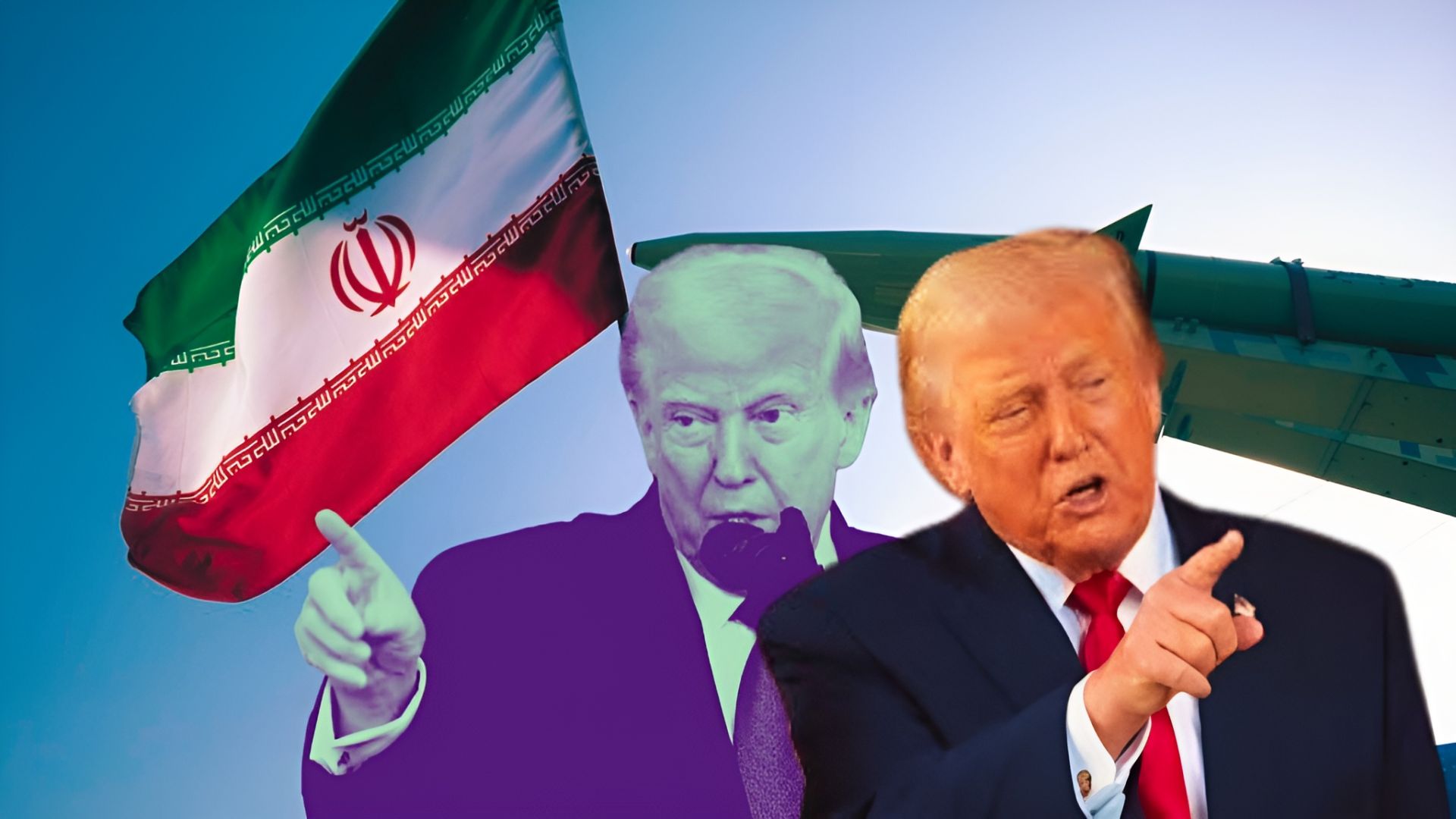
When Donald Trump returned to the White House for a second presidential term in 2025, many international analysts predicted that his foreign policy would avoid costly new wars. Having left office in 2021 amid controversy over his first-term Middle East record, including heightened tension with Iran, Trump’s re-election prompted expectations that he would lean less on kinetic force and more on “economic tools” to confront adversaries such as Tehran and Beijing. For China, this has largely held true: tariffs, export controls and technology bans have become Washington’s preferred levers of competition. But with Iran, the record so far tells a more complex and contradictory story. It is the one that blends intense economic pressure with the very real possibility of military escalation, especially in the strategically vital Strait of Hormuz.
Within weeks of his inauguration, Trump revived a more aggressive version of his 2018–2020 “maximum pressure” policy against Iran. A National Security Presidential Memorandum signed in February 2025 directed U.S. agencies to intensify sanctions with clear strategic goals: reduce Iranian oil exports to zero, dismantle Tehran’s nuclear and ballistic missile capabilities, and constrain its regional influence. This campaign combined traditional sanctions with stricter enforcement and targeted financial measures aimed at isolating Iran economically, while also warning foreign firms and insurers away from doing business with Tehran.
In theory, this approach signalled Trump’s preference to starve Iran of economic lifelines, forcing it to negotiate or capitulate without resorting to direct combat. The economic strategy certainly deepened Tehran’s domestic struggles and eroded confidence in its political and financial institutions. But the policy’s implementation quickly intersected with larger regional dynamics in ways that fuelled military escalation rather than suppressing it.
By mid-2025, the tensions that had been simmering between Israel and Iran over alleged nuclear activity and proxy conflicts escalated into direct conflict. U.S. forces conducted strikes on key Iranian nuclear facilities, a dramatic departure from pure economic pressure. Tehran responded with increased military rhetoric and threats against U.S. interests and allies in the region.
One flashpoint in this escalation has been the Strait of Hormuz, the narrow waterway linking the Persian Gulf to the Gulf of Oman. Roughly 20% of the world’s crude oil and liquefied natural gas pass through this chokepoint. Iran has periodically threatened to close or mine the strait in retaliation for U.S. or Israeli strikes - a move that would have immediate and severe global economic implications.
Washington, for its part, has responded with warnings that any attempt to close Hormuz would be “economic suicide” for Tehran’s economy, given its own dependence on oil exports. Yet despite these warnings, Iran’s parliament even voted on non-binding plans to close the strait - a political signal of rising hostility.
In late January 2026, President Trump openly described a U.S. naval “armada” positioned near Iran as both a deterrent and a means to reinforce U.S. capacity for defence though he stated he hoped military conflict could still be avoided. Iran, however, responded that any U.S. attack would be treated as a declaration of all-out war. The deployment of the aircraft carrier USS Abraham Lincoln and accompanying destroyers signals that the administration is willing to back economic pressure with credible military deterrence, a combination that blurs the line between diplomacy and confrontation.
Trump’s Iran policy in his second term is therefore not easily reduced to a single strategy of “economic pressure instead of war.” The reality is more nuanced: his administration has sought to integrate economic sanctions with force projection, punitive strikes, and high-stakes deterrence in an attempt to check Iran’s nuclear ambitions and regional influence. This hybrid approach reflects Washington’s belief that economic tools alone may not compel Tehran to capitulate, especially given Iran’s historical record of resisting external pressure.
It also reveals the inherent tension in U.S. strategy: heavy economic sanctions squeeze Iran’s economy, but they can also incentivise Tehran to respond with asymmetric military measures, including threats to the maritime routes that underpin global energy markets. The Strait of Hormuz remains the ultimate geopolitical lever in this confrontation, capable of turning economic sanctions into a broader strategic crisis with worldwide repercussions.
Here we are to serve you with news right now. It does not cost much, but worth your attention.
Choose to support open, independent, quality journalism and subscribe on a monthly basis.
By subscribing to our online newspaper, you can have full digital access to all news, analysis, and much more.
You can also follow AzerNEWS on Twitter @AzerNewsAz or Facebook @AzerNewsNewspaper
Thank you!