
Ukraine, Russia and United States: What can realistically emerge from tripartite meeting?
Elnur Enveroglu
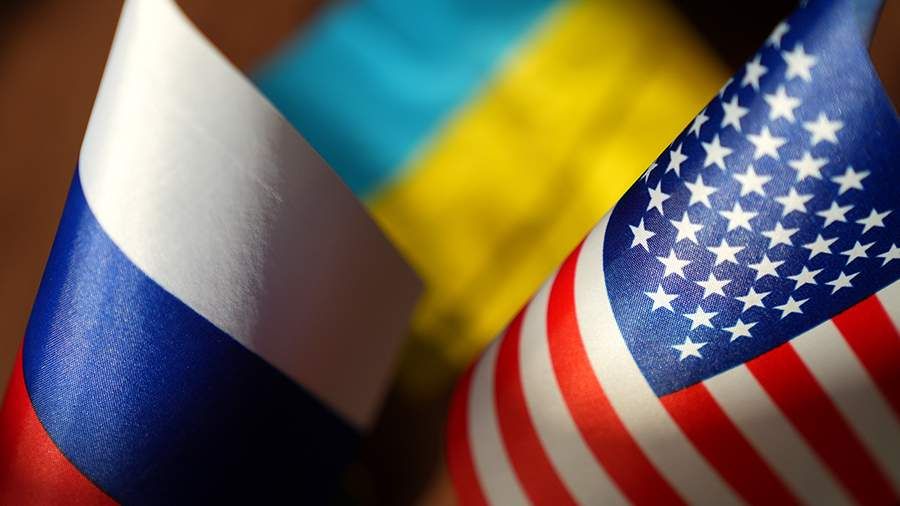
Read moreOn one front, the war grinds on without respite: drone swarms, missile strikes and intelligence operations continue to define daily life along the Ukrainian frontline. On another, almost paradoxical front, two sworn enemies - Ukraine and Russia - appear ready, after nearly four years of relentless conflict, to sit across the same table. The prospect of a tripartite meeting involving the United States has therefore drawn intense scrutiny, not because expectations are high, but because exhaustion is deep.
Both Kyiv and Moscow are visibly worn down. Despite last-ditch efforts to mobilise remaining military, economic and political resources, neither side can plausibly claim momentum decisive enough to dictate terms outright. The war, it seems, must be paused or reshaped, if not resolved. For Ukraine, the urgency is acute. Repeated Russian drone attacks on energy infrastructure, combined with a harsher winter and a perceptible cooling of US generosity since Donald Trump’s return to centre stage, have pushed Kyiv into a deepening energy and social crisis. Survival, not victory, is once again the immediate concern.
It is in this context that Trump’s carefully calibrated pressure campaign must be understood. At the World Economic Forum in Davos, he delivered what appeared to be oblique remarks, but the message was unmistakable: the war must end, and delay would be an act of strategic folly. Kyiv, which continues to see US backing as existential, has little room to refuse such an invitation. With EU leaders locked in strained relations with Trump and Ukrainian civilians facing rolling blackouts and bitter cold, President Volodymyr Zelensky has scant political capital to issue counter-demands or to walk away from the table altogether.
All eyes are now fixed on Abu Dhabi, where the proposed tripartite meeting is expected to take place. Speculation has filled newsrooms and diplomatic corridors alike, not because a comprehensive peace is anticipated, but because even a temporary freeze would mark a fundamental shift. For many analysts, the Ukraine-Russia war is no longer merely a regional conflict; it has become a test case for Europe’s future security architecture. Brussels, in particular, finds its relevance under scrutiny.
This is not without precedent. Previous negotiation attempts faltered amid discord within the EU and sharp reactions from Brussels, where member states struggled to reconcile their strategic instincts. Trump’s earlier peace packages, which blended ceasefire proposals with territorial ambiguity, collapsed either because Moscow rejected them as insufficient or because Kyiv, under European pressure, deemed them unacceptable. The EU repeatedly framed such initiatives as dangerously legitimising Kremlin gains.
Today, however, the calculus has changed. Trump’s blunt assessment in Davos, that failure to make peace would amount to collective irrationality, signalled impatience not only with Kyiv and Moscow, but also with Brussels. Ukraine knows that reclaiming roughly 20 per cent of its lost territory through force, even with frozen Russian assets or symbolic European support, borders on fantasy. With the immediate task of getting through winter and preventing social collapse, Kyiv cannot afford to fight to the last transformer.
Moscow, meanwhile, finds itself in a curious position. Despite limited territorial advances, Russia has been unable to move decisively beyond entrenched lines. Yet recent activity near Poland’s border suggested a deliberate attempt to test NATO’s nerves. Whether this reflects waning US attention to the alliance or a calculated warning to the EU remains open to interpretation. Either way, the Kremlin senses a vacuum and vacuums invite ambition.
Abu Dhabi, chosen deliberately, offers Trump a neutral stage, distant from European capitals and their reflexive objections. For Trump, symbolism matters. He appears keen to turn what he frames as an “eight-year failure” into a ninth-year breakthrough, regardless of who resists. Ukrainian realism and Russian recuperation plans may, for the first time in years, overlap just enough to permit a provisional arrangement.
Yet Trump’s strategy does not end there. A crucial and often overlooked element of his approach lies in distraction. By resurrecting the Greenland issue, Trump has skilfully diverted European attention away from Ukraine at a moment when EU interference could again derail talks. Previously, Panama had featured in Trump’s geopolitical signalling. Greenland, however, is far more potent: it touches NATO sensitivities, Arctic security, climate routes and European sovereignty anxieties all at once.
By floating Greenland as a strategic concern, Trump forces Brussels into a reactive posture. Instead of micromanaging Ukraine diplomacy, EU leaders are compelled to defend their northern flank and internal cohesion. The timing is not accidental. Trump understands that the EU has consistently resisted any provisional peace it did not shape, branding such efforts as Kremlin appeasement. Greenland, therefore, functions as a geopolitical decoy.
Even if the EU attempts to sabotage or delegitimise a temporary Russia-Ukraine arrangement - 'something it has never fully supported' - Trump retains leverage. Hovering over Greenland keeps Brussels distracted, divided and strategically overstretched. In this sense, Trump’s approach is not about Greenland itself, but about neutralising European veto power over a US-driven settlement.
What, then, can realistically emerge? Almost certainly not a final peace. But a conditional ceasefire, territorial ambiguity without formal recognition, and security guarantees deferred rather than denied all remain plausible. Crucially, there is little indication that Ukrainian territory would be irrevocably absorbed by Russia under such terms, despite European fears. The arrangement would be fragile, temporary and deeply unpopular in some quarters, yet it may still be the only viable pause in a war that neither side can win outright.
Here we are to serve you with news right now. It does not cost much, but worth your attention.
Choose to support open, independent, quality journalism and subscribe on a monthly basis.
By subscribing to our online newspaper, you can have full digital access to all news, analysis, and much more.
You can also follow AzerNEWS on Twitter @AzerNewsAz or Facebook @AzerNewsNewspaper
Thank you!