
Dugin and Solovyov’s rhetoric reveals Kremlin’s new priorities in post-soviet space
Qabil Ashirov
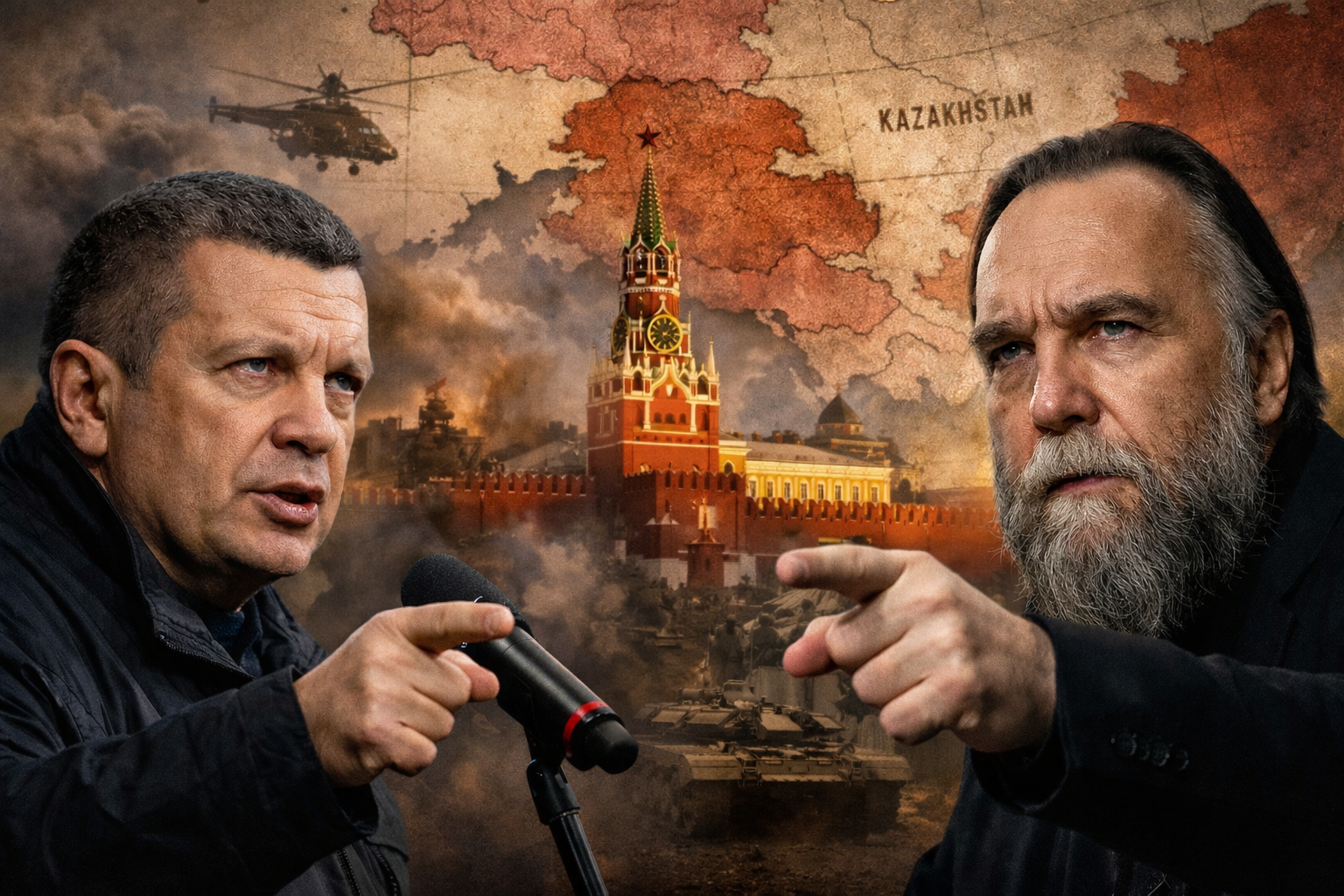
Read moreRussia’s prominent figures linked to the Kremlin continue to challenge the sovereignty of the former Soviet republics. As is known, pro-government journalist Solovyov opened Pandora’s box, calling for a “special military operation,” similar to the Ukrainian war, in Armenia and Kazakhstan. Later, Russia’s Foreign Ministry spokeswoman Maria Zakharova walked back his words, describing them as the thoughts of an independent journalist.
In the wake of Zakharova’s comments, another public figure, Aleksandr Dugin, went further, calling for the annihilation of the sovereignty of all countries in the South Caucasus and Central Asia, labeling their sovereignty “trash.” Despite widespread protests in the media of the affected regions, the Kremlin did not disapprove of Dugin’s words as it had previously. In contrast, Nikolai Sergeyevich Valuev, an MP and former boxer, added fuel to the fire by supporting Dugin’s statements on camera.
All of this indicates that the Kremlin is opening a new chapter in its relations with the former Soviet republics. Experts and political analysts are trying to read between the lines of Dugin's interview, which provides important clues about the Kremlin’s new policy. Notably, the omission of Ukraine’s and Moldova’s sovereignty in the interview draws special attention. Some interpret this as Russia having accepted defeat and now going the extra mile to maintain its leverage in the South Caucasus and Central Asia.
Speaking to Azernews on the issue, Raza Syed, editor of the London Post, shared his thoughts on the issue and noted that the statements by Alexander Dugin and Vladimir Solovyov represent a calculated escalation in Russia's ideological warfare, revealing both strategic anxieties and potential future vectors of confrontation. He noted that while neither figure formally sets state policy, their proximity to Kremlin narratives requires treating their rhetoric as a form of high-level political signaling.
“On the omission of Ukraine and Moldova, interpreting this as Russia accepting a loss of influence is an oversimplification. A more nuanced reading suggests these nations are not subjects of theoretical debate but active, contested fronts. Ukraine remains the primary military theater where Russia's ambitions have been costly but not abandoned. Moldova faces persistent hybrid pressure via Transnistria. Dugin's silence likely indicates these are operational realities, not ideological targets. His explicit focus on the South Caucasus and Central Asia signals a recalibration of priorities, a pivot toward regions where Russia perceives greater vulnerability among local elites and less immediate Western deterrence. It is less a concession in Eastern Europe than a pragmatic, and aggressive, attempt to shore up influence in what Moscow still considers its "near abroad," where tools like the CSTO and EEU provide leverage,” he opined.
Regarding future conflict, the editor told that Solovyov’s invocation of a "special military operation" is profoundly alarming and cannot be dismissed as mere bluster. It serves multiple functions: normalizing the concept of intervention for domestic audiences, testing international red lines, and applying psychological coercion against governments in Yerevan and Astana.
“Armenia, disillusioned after Nagorno-Karabakh, and Kazakhstan, navigating a delicate multi-vector foreign policy, are clear targets for such destabilizing rhetoric. This pattern mirrors pre-2022 propaganda techniques used against Ukraine. However, critical context tempers immediate alarm. The Kremlin has historically allowed propagandists like Solovyov to voice extreme positions as pressure valves and trial balloons, occasionally walking them back officially, as seen with Maria Zakharova's disavowals. Russia's current military and economic constraints also limit its capacity for simultaneous, large-scale invasions,” Raza Syed underscored.
He said that ultimately, these statements are best understood as early warning indicators of a shifting strategic focus. They expose Moscow's imperial anxieties as it confronts a diminished role in Europe and seeks to reassert dominance in regions where Chinese and Turkish influence is growing.
“The rhetoric itself becomes a weapon of hybrid warfare, fostering a climate of uncertainty and intimidation. While not a definitive blueprint for imminent invasion, it creates a permissive environment for future coercion, ranging from political destabilization to limited military interventions. The international response must be one of calibrated vigilance, firmly upholding the sovereignty of these nations through diplomatic and security partnerships while recognizing that Moscow's rhetoric often aims to provoke overreaction. The goal is to deter conflict without conceding to psychological manipulation,” Raza Syed concluded.
Here we are to serve you with news right now. It does not cost much, but worth your attention.
Choose to support open, independent, quality journalism and subscribe on a monthly basis.
By subscribing to our online newspaper, you can have full digital access to all news, analysis, and much more.
You can also follow AzerNEWS on Twitter @AzerNewsAz or Facebook @AzerNewsNewspaper
Thank you!