
Azerbaijan growing gas exports to Germany and Austria win for economy and diplomacy

Qabil Ashirov
Read moreOver the past decade, Azerbaijan has steadily transformed from a regional energy player into a pivotal supplier for multiple countries across Europe and the Middle East. This evolution is not merely a story of pipelines and gas volumes; it is a testament to the strategic foresight, economic planning, and diplomatic acumen of the country. The latest developments indicate that Azerbaijan is now delivering natural gas to a record number of nations, a trend that promises significant economic, geopolitical, and social benefits for the country.
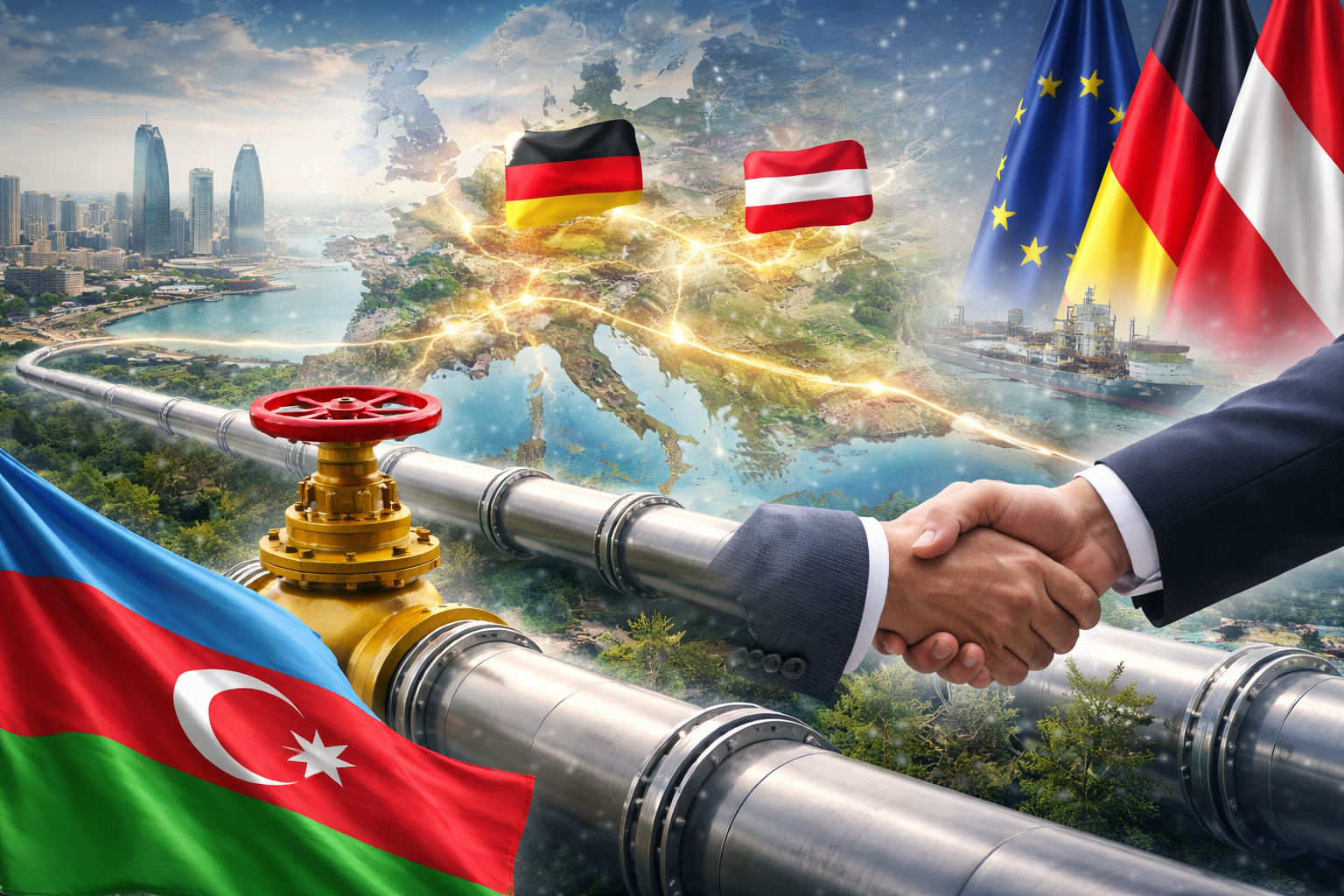
Traditionally, Azerbaijan’s natural gas exports were concentrated in its immediate neighborhood. Turkiye and Georgia have long been the cornerstone partners, receiving steady supplies that support domestic energy needs and foster regional interdependence. However, the country’s recent expansion of gas deliveries to a broader array of European nations—including Italy, Greece, Bulgaria, Romania, Hungary, Serbia, Slovenia, Croatia, North Macedonia, Slovakia, and Ukraine—marks a decisive shift. In fact, the number of countries receiving Azerbaijani gas is now approaching sixteen, with Germany and Austria joining the network in early 2026. This expansion reflects both the technical achievements of the Southern Gas Corridor and Azerbaijan’s ability to align its energy strategy with the growing demands of a continent seeking secure and sustainable gas sources.
The implications for Azerbaijan’s economy are substantial. Increasing the number of importers naturally diversifies revenue streams, reducing dependency on any single market and stabilizing national income. Gas exports have consistently been a significant contributor to Azerbaijan’s GDP, and with the addition of new markets, this contribution is set to grow further. Diversification also mitigates potential risks associated with fluctuating prices or regional instabilities, ensuring that Azerbaijan’s energy sector remains resilient in a rapidly changing global environment.
Furthermore, the expansion of the gas network fosters long-term economic opportunities beyond energy alone. Countries importing Azerbaijani gas are often interested in broader trade partnerships, investment projects, and infrastructure cooperation. By securing a place in the energy portfolios of multiple European nations, Azerbaijan enhances its geopolitical relevance, creating pathways for investments in sectors such as construction, logistics, and technology. In essence, every new gas contract can become a gateway to deeper bilateral relations and economic growth that extend far beyond the energy sector.
On a diplomatic level, Azerbaijan’s growing gas reach demonstrates its capacity to act as a stabilizing and reliable partner in regional and international energy security. In a Europe increasingly focused on reducing reliance on less stable energy suppliers, Azerbaijan’s consistent deliveries provide a secure alternative. This reliability strengthens trust, paving the way for collaborative projects and strategic dialogues that enhance the country’s global standing. Energy diplomacy, after all, is as much about credibility as it is about infrastructure; Azerbaijan’s expanding customer base reflects a reputation built on dependable supply, technical proficiency, and transparent agreements.
Technically, the achievements are no less impressive. The Southern Gas Corridor, connecting Azerbaijani gas fields to European markets through TANAP and TAP pipelines, represents one of the most complex energy infrastructure projects in recent decades. Its successful operation not only underscores Azerbaijan’s engineering and logistical capabilities but also reinforces its position as a hub linking East and West. By steadily increasing the number of countries that benefit from its gas, Azerbaijan demonstrates the practical advantages of long-term investment in energy infrastructure—a model that other countries can look to when considering how to leverage natural resources for broader national benefit.
Finally, the societal and domestic advantages should not be overlooked. Revenues from expanded gas exports support public services, infrastructure development, and social programs. This creates a virtuous cycle: energy sales fund national development, which in turn strengthens the country’s ability to maintain and expand its energy sector. By increasing the number of countries it serves, Azerbaijan effectively multiplies the positive impact on its citizens’ daily lives.
In conclusion, the expansion of Azerbaijan’s natural gas export network is more than an economic statistic; it is a narrative of strategic foresight, technical achievement, and national growth. Each new country added to the list of gas importers represents a step forward in economic diversification, diplomatic influence, and societal benefit. With Europe and neighboring regions increasingly seeking reliable and sustainable energy sources, Azerbaijan stands out as a trusted partner, converting its natural resources into tangible advantages for both the nation and its global partners. The rising number of gas importers is not just a milestone—it is a reflection of Azerbaijan’s growing role on the world stage, a role defined by reliability, innovation, and mutually beneficial cooperation.
Here we are to serve you with news right now. It does not cost much, but worth your attention.
Choose to support open, independent, quality journalism and subscribe on a monthly basis.
By subscribing to our online newspaper, you can have full digital access to all news, analysis, and much more.
You can also follow AzerNEWS on Twitter @AzerNewsAz or Facebook @AzerNewsNewspaper
Thank you!